Best Probiotics for Bad Breath
Oral probiotics can stop bad breath in its tracks and improve your oral and dental health. We break down the science and reveal the market’s best products.
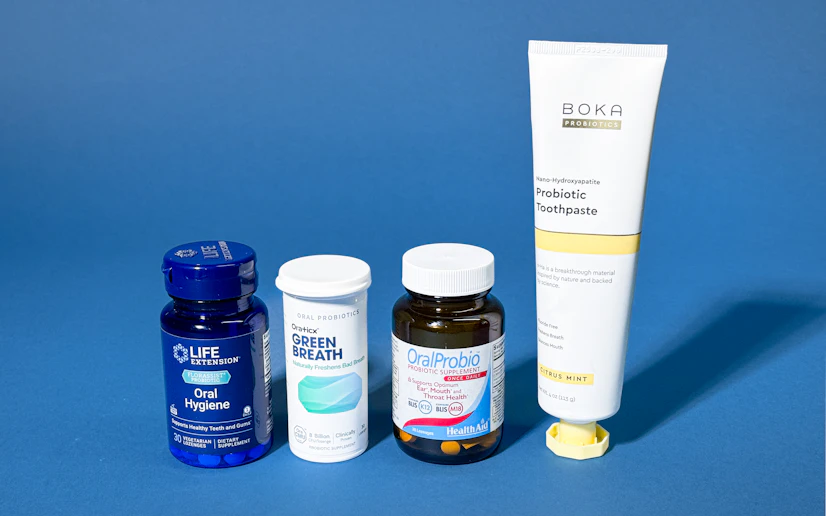
Photo by Innerbody Research
Few things are as socially devastating as realizing you have bad breath. Maybe you catch a whiff of it yourself, or maybe you have someone in your life who loves you enough to tell you (gently). However you find out, you want to fix it, and fast.
In the moment, you can tackle temporary bad breath with some gum or a quick brushing. But when it becomes chronic, even regular maintenance can fall short. That’s where probiotics for bad breath come in. These aren’t pills you swallow. They’re more like breath mints laced with probiotics that colonize the oral cavity and starve the bacteria in your mouth that are causing your bad breath in the first place.1
Our team has taken a deep dive into the root causes of chronic bad breath, and we’ve discovered a handful of promising probiotic strains that could make a real difference for most people. But only a few products on the market deal in these strains. This guide will break that science down for you and point you in the direction of the products you’ll want to try first.
If you’re in a hurry, you can check out our summary of recommendations here.
Summary of recommendations
- Best for most people: Oraticx Green Breath
- Best budget pick: Life Extension FLORASSIST Oral Hygiene
- Best tasting: Oraticx Green Breath
- Best toothpaste: Boka Probiotic n-Ha Toothpaste
Jump to:
Why you should trust us
At Innerbody Research, we thoroughly scrutinize each and every product category we review, including these probiotics for bad breath. Our team spent more than 200 hours reviewing dozens of published, peer-reviewed science studying the oral microbiome, the causes of bad breath, and the potential for probiotic supplements to help.
We then scoured the market for products that lived up to what the science says, settling on the small handful you’ll find presented here. We ordered them for ourselves and tested them extensively, so we could provide you with real, firsthand accounts of their efficacy, taste, and more.
Additionally, like all health-related content on this website, this guide was thoroughly vetted by one or more members of our Medical Review Board for accuracy and will continue to be monitored for updates by our editorial team.
Over the past two decades, Innerbody Research has helped tens of millions of readers make more informed decisions about staying healthy and living healthier lifestyles.
How we evaluated probiotics for bad breath
To evaluate probiotic products aimed at treating bad breath, we looked at four criteria we thought consumers would care about the most: potential efficacy, safety, cost, and taste.
In total, we tried over a dozen probiotic products that had the potential to work, but factors like cost or taste eliminated many from the running. Here, we’ll discuss which products held a distinct advantage in each criterion after our extensive testing process was complete.
Effectiveness
Advantage: Oraticx Green Breath
Several probiotic strains have research supporting their ability to treat bad breath, but some boast more than others, and a few bear specific caveats that might make them less effective in real-world situations. We’ll take a closer look at each strain and the evidence supporting them in a later section, but the individual strain with the most evidence specifically indicating its potential as a treatment for bad breath is Weissella cibaria CMU.
By way of example, a 2023 study of 100 adults with halitosis measured volatile sulfur compounds (VSCs, a marker of bad breath), self-reported bad breath improvement scores, and oral colonization of W. cibaria CMU.2 It found that a single daily chewable tablet containing 100 million colony forming units (CFU) of W. cibaria CMU significantly reduced the presence of VSCs, improved breath scores, and effectively colonized the oral cavity.
In our research, only one company is currently offering products containing a clinical dose of W. cibaria CMU, and that’s Oraticx. Its Green Breath lozenges are simple, containing only that one probiotic ingredient, but it’s provided there at 8 billion CFU at manufacture. That’s significantly more than the 100 million CFU used in the study we just referenced, and it’s enough to still have at least 100 million CFU viable by the end of the product’s shelf life. (Probiotic products lose their potency at a greater rate than most other supplements, necessitating some degree of overdosing — usually within safe parameters — to ensure efficacy across a shelf life.)
Safety
Advantage: HealthAid OralProbio
On the safety front, there are a few probiotic strains that not only show a great deal of efficacy in multiple clinical trials, but are also remarkably well-tolerated by study participants. While that might not leave a lot to differentiate these strains from one another in terms of tolerability and safety, there are a couple of other considerations worth mentioning that allow HealthAid’s product to take the advantage here.
First, there’s the question of research volume. Compared to W. cibaria CMU alone, the two strains in OralProbio — Streptococcus salivarius K12 and S. Salivarius M18 — together boast significantly more research between them. At the time of this writing, there are more than two dozen human studies looking at that pair, compared to just a handful looking at W. cibaria CMU.
CMU still takes the cake for breath treatment because the lion’s share of its research is breath-related, which can’t be said for M18 or K12. But the higher volume of research for those latter two strains means there have been many more opportunities for noteworthy adverse effects to arise, and they have not.
The other consideration is the dose range deployed in studies. As we’ve mentioned, probiotics need to provide larger-than-clinical doses at manufacture to ensure a viable product by the end of shelf life. That means overages that sometimes dwarf doses used in studies. CMU has only been studied in doses up to 400 million CFU in research, but CMU products measure in the billions of CFU.3 There’s a knowledge gap regarding potential adverse effects. K12 and M18 have been studied at much higher doses than those used in OralProbio, and they’ve been shown to be safe.4 5
None of this is to say that CMU should cause concern. It’s just that, if safety is your number one priority, you might be better off starting somewhere else.
Cost
Advantage: Life Extension FLORASSIST Oral Hygiene
Oral probiotics typically aren’t that expensive per dose compared to many other supplement classes out there. And the range they run is pretty limited, with the least expensive starting as low as $16 for a bottle and the most expensive reaching up to around $50. Most cost around $30.
Life Extension gets the advantage here as that $16 option, but it’s no slouch for efficacy, either. In fact, it’s probably a better all-around oral probiotic than Oraticx Green Breath; its ingredients just don’t have the same quantity or quality of research supporting breath-improvement outcomes.
Let’s take a closer look at the cost of some of the market’s top oral probiotics:
| One-time $ | $ per dose | Subscription $ | Subscription $ per dose | |
|---|---|---|---|---|
| Life Extension FLORASSIST Oral Hygiene | $18 | $0.60 | $16 | $0.53 |
| Oraticx Green Breath | $25 | $0.83 | N/A | N/A |
| BioGaia ProDentis | $20 | $0.67 | $17 | $0.57 |
| NatureCity Quick Melts | $28 | $0.93 | $24 | $0.80 |
| Naturewise Oral Health Probiotics | $30 | $0.50 | $25 | $0.42 |
| Burst | $30 | $0.67 | $25 | $0.56 |
| HealthAid OralProbio | $33 | $1.10 | $30 | $1.00 |
| Bristle | $50 | $1.67 | $45 | $1.50 |
As you can see, there aren’t a lot of companies competing with Life Extension’s price point, with BioGaia being the only one to come close. However, at both the one-time and subscription purchasing levels, Life Extension has BioGaia beat. Take into account that Life Extension’s formula contains ingredients with better breath-enhancing support than BioGaia’s, and it’s clear why FLORASSIST got the advantage.
Taste
Advantage: Oraticx Green Breath
There are times when our testing team gets together and declares with one clear voice a winner for taste. This was not one of those times. There was a fair bit of disagreement about which oral probiotics tasted best. However, Oraticx was at or near the top of everyone’s list, even those who liked another brand better. It was the preferred flavor, to be sure, though it wasn’t a landslide.
Some of this comes down to the sweeteners used, and flavorings certainly played a part, as well. Flavorings can be hard to quantify, but it’s interesting that our top two ranked products for taste — Oraticx Green Breath and Biogaia Prodentis — both use isomalt as their primary sweetener and xylitol only secondarily.
Xylitol is technically the sweeter of the two, so perhaps it comes second because less is needed for it to impart its flavor than isomalt.6 But xylitol is also the most potent sugar alcohol for oral health, specifically for preventing cavities, so we’d prefer to see it first on a list of other ingredients here.7 But there’s no denying that we prefer the taste of products that put isomalt first.
A broad look at these probiotic products

Photo by Innerbody Research
Probiotics for bad breath are usually oral chews or lozenges designed to deliver beneficial probiotic bacteria directly to the mouth, where they can colonize and outcompete bad bacteria for food. This should theoretically starve out the bad bacteria, leaving you with a healthier oral microbiome, which is directly associated with improvements in breath.8
More than anything else, these products resemble breath mints in size, texture, and taste. Many are made with the same ingredients you’d find in a breath mint — sugar alcohol sweeteners, mint flavor, etc. — just with the addition of probiotic cultures. Some come in pill bottles, while others arrive in containers that even resemble some commercial mints.
However, the experience of consuming oral probiotics is somewhat different from that of the average mint. With mints, you can eat them as you like. Chew them up quickly, let them dissolve, take two at a time — it’s really up to you. With oral probiotics, there’s the dose to consider, so you typically can’t take too many at once. Then, there are typically instructions to either let the probiotic product dissolve, chew it, or chew it and swish for a set period before finally swallowing. Oral probiotics are also typically less flavorful than breath mints. After all, the flavor isn’t the only thing doing the work. It only needs to be pleasant enough for you to enjoy, letting the helpful bacteria take it from there.
How can probiotics treat bad breath?
If all you know about probiotics relates to gut health, it might not seem obvious how these products can help improve your breath. But there’s more to the microbiota than just your gut; several major organs and systems in your body have their own microbiota, and your mouth is on that list.
When your oral microbiome is out of whack, especially if a particular enemy bacterium known for causing bad breath takes up residence there, an oral probiotic might be able to help. There’s also evidence that certain probiotic strains and other ingredients commonly found in oral probiotics can positively impact overall oral health, including things like plaque buildup and cavities, which can further bolster you against bad breath.
The two biggest, baddest characters who show up consistently in breath and cavity research are S. mutans and F. nucleatum, responsible for increased cavity risk and halitosis, respectively, though the rap sheets of both S. mutans and F. nucleatum include many more potential ailments.9 10 11 12
Let’s take a quick look at the top bacterial strains included in oral probiotics to see how they might be able to fight against S. mutans and F. nucleatum in particular, and improve breath and oral health more broadly.
W. cibaria CMU
Of all the probiotic strains currently available on the market, this one has the most research support behind its potential to treat bad breath. We cited one study earlier of 100 people with halitosis taking either 100 million CFU or a placebo, in which researchers conclusively showed improvements in breath.2
Another study of the same dose, this time on 92 adults, showed a significant reduction in F. nucleatum after just four weeks.13 And a 400 million CFU study in 80 adults showed significant reductions in VSCs, as well as improvements in breath test scores and gum health markers, while another study using that same dose further illustrated CMU’s benefits for gingival health.3 14 Finally, a study using 100 million CFU showed significant reductions in cavity risk, though the study wasn’t measuring markers for breath.15
These consistent results, looking at specific markers for breath alongside other markers for oral health, are why we consider W. cibaria CMU to be the probiotic strain most likely to make a significant difference for people seeking breath treatment.
S. salivarius K12 and S. salivarius M18
K12 and M18 have been studied together and apart over the years, with one paired study showing significant reductions in cavity incidence in a population with high cavity risk.16 Individual studies have illustrated M18’s bona fides to improve gum health and reduce plaque, while individual K12 studies have illustrated improvements in immunity, aural health, and oral microbial balance.17 18 19 20 21
On the breath side, research is positive, but it may not translate to real-world applications. For instance, M18 has shown the ability to improve halitosis markers, but only at a dose of 3.6 billion CFU delivered twice daily.22 That’s about seven times what’s used in oral health studies and what we usually see in products on the market. K12 tells a similar tale, with one good study illustrating improvements in breath, but only when paired with tongue scraping, something not everyone does before bed.23
So, for oral health benefits and the positive impact those could have on breath, K12 and M18 are among the best, but their individual impacts on breath are likely more muted than those of CMU.
L. reuteri DSM 17938 and L. reuteri ATCC PTA 5289
These two probiotic strains form the core of at least one prominent player on the market, and there’s good research backing up their use for general oral health. But there’s a big caveat, too.
First, the good news: This pair is among the most widely studied in oral probiotics. Trials such as one from 2016, in which 100 million CFU of each strain significantly improved both plaque and gingival indices, are fairly commonplace.24
However (the bad news), that large volume of research contains some contradictory evidence. For example, an earlier study from 2012 using the same 200 million CFU dose saw no impact on salivary S. mutans levels.25 What’s more, the strains are rarely studied in isolation from one another, making it hard to determine whether both are truly necessary. With other strains like K12 and M18 showing promise for both general oral health and, in some cases, breath, it’s hard to justify reaching for these two instead.
HK L-137
This heat-killed (HK) lactobacillus strain isn’t technically a probiotic, because it’s dead. However, it serves as a postbiotic — a field of research later to the party than probiotics — which research indicates can provide specific benefits to a host. It turns out, the benefits prebiotics confer to a host are complex enough that their remains serve a distinct purpose.
In 137’s case, the research points toward improvements in several oral health markers, including probing depth (a measure of gum health) and oral immunity.26 27 Because most oral probiotics contain fermentable sugar alcohols in their formulas, the inclusion of heat-killed postbiotics rounds out the full synbiotic approach, with a probiotic, prebiotic, and postbiotic in a single formula.
L. paracasei SD1
SD1 shows great promise in its research, with numerous papers looking at how it can positively shift the balance of bacteria in the oral microbiota, and even some research into its potential to reduce plaque and cavity risk.28 29 But there’s a problem with the current body of research: doses and delivery methods almost never align. SD1 has been delivered in milk or a milk powder, as well as a more conventional lozenge. But the milk and milk powder studies fail to clarify how much SD1 is being delivered with each treatment, and the one lozenge study used an exceedingly small group size from a very specific cohort. That gives its results only the smallest ability to translate to a larger population.
There are dozens of other strains actively being studied for oral health, but many run into similar problems as the ones we described in a couple of the entries above. What we’ve just discussed represents the best of the available probiotics for oral health that can also potentially help with bad breath, with W. cibaria CMU, S. salivarius M18 and K12, and HK L-137 proving to be the most effective of the bunch.
How sugar alcohols play a role in oral health
Oral probiotics are more or less universally sweetened with sugar alcohols. These compounds have an inherent sweetness to them, but they don’t cause tooth decay the way that actual sugars can. In fact, research has shown that certain sugar alcohols can work to protect teeth from decay and plaque buildup.30
But not all sugar alcohols are created equal. Specifically, research indicates that the number of hydroxyl groups in a given sugar alcohol’s molecular structure is inversely correlated to its oral health benefits.30 So, fewer hydroxyl groups lead to better results for oral health.
Here’s a quick breakdown of the available hydroxyl groups in the most commonly used sugar alcohols, along with their fermentability.
| Hydroxyl groups | Fermentable? | How beneficial? | |
|---|---|---|---|
| Erythritol | 4 | No | Somewhat |
| Xylitol | 5 | Yes | Most |
| Sorbitol | 6 | Yes | Very |
| Mannitol | 6 | Yes | Very |
| Isomalt | 11 | Yes | Not very |
As you can see, erythritol has the fewest hydroxyl groups, but it’s also the only one here that isn’t fermentable. That means it can’t act as a probiotic fiber for the good bacteria in your mouth, and that’s why it’s typically not considered a viable candidate for oral health treatment. The next best thing on the list is xylitol, which has only five hydroxyl groups and is fermentable in the mouth.
Isomalt, one of the most commonly used sugar alcohols in oral probiotics — often the first thing we see in ingredient lists — is actually the least helpful and is only included for flavor.
Couldn't mouthwash stop bad breath?
A good mouthwash can serve as a temporary solution to bad breath, but it can’t address underlying imbalances in the oral microbiota that are causing it in the first place — and it can also cause detrimental disruptions to your oral microbiome.
If you have an overabundance of something like F. nucleatum causing chronic breath issues, an alcohol-based mouthwash could kill a lot of that bacteria, but it’ll also wipe out all of the good bacteria in your mouth. (Think of what antibiotics do to your beneficial gut bacteria; it’s a similar situation here.) And a more wholesome, alcohol-free mouthwash will likely leave all those bad breath-causing bacteria in place.
Instead of either undertreating the problem or fire-bombing the entire oral microbiota for better or worse, oral probiotics help the good bacteria while harming the bad. Of course, there is some research on mouthwashes laced with probiotics, but there isn’t as much data to support that approach as there is for probiotic chews and lozenges. And the market agrees; there are only one or two probiotic mouthwashes on the market, and they aren’t very well-formulated.
Who should take probiotics for bad breath?
These probiotic products could be an ideal solution for anyone concerned with oral malodor, whether arising from a clinical halitosis diagnosis or just as something they notice about their daily life. If you do have a clinical diagnosis or experience bad breath chronically, oral probiotics could be helpful adjunct treatments alongside a proper oral healthcare regimen.
Certain of these products are also great for people concerned with maximizing their oral health in general, not just for the sake of their breath. Plenty of research points to oral probiotics having the ability to tame not only bad breath, but also cavities, plaque buildup, and even gum decay.1
For some people, oral probiotics will also serve as potentially beneficial mints where they would have previously reached for a tin of Altoids. To be clear, this is certainly a pricier mint habit, but it could be a significant upgrade health-wise.
Who might want to look elsewhere?
All that said, oral probiotics as a category can only lay claim to around a dozen or so well-designed human trials for breath improvement and halitosis management. Those results are encouraging, but if your case is especially severe, you might need prescription-strength assistance.
Oral probiotics also aren’t a replacement for good oral hygiene. No amount of bacteria can take the place of minimum twice-daily brushing and regular flossing. You can’t slam a sleeve of Pez every hour, wash it down with a Coke, then pop a probiotic lozenge before bed and expect anything other than a mouthful of cavities.
Another important caveat: Very few probiotic strains can survive the acidic environment of the stomach without being broken down and rendered inert.31 So don’t expect oral probiotics to confer much benefit for gut health. Gut health probiotics work best when delivered in a capsule or similar mechanism that can protect them from stomach acid and deliver them to the intestines, where they can do their work.
Are these probiotic strains safe?
For the most part, the probiotic strains typically used in oral probiotics for bad breath are extremely safe, with the research that’s been done on them showing good tolerability at doses far above what these products usually contain.
That said, there are some relatively common but mild side effects in the oral probiotic space worth considering, as well as a couple of instances where you might want to steer clear, or at least have a long conversation with your doctor first.
On the side effect front, the most common ones we found in the research were:
- Dry mouth
- GI upset
- Unpleasant taste from a lozenge or chew
For the most part, these cropped up in a small fraction of participants. For example, only 6% of participants in a study from 2016 objected to the taste, and only one participant from an M18 study experienced dry mouth.32 17
It’s also important to note that side effects often occur in both treatment and placebo groups, often at similar rates, indicating that other ingredients in test lozenges may be to blame for certain adverse events. Take a K12 study from 2026, for example. It doesn’t specify which adverse events occurred, but it says they occurred equally across treatment and placebo groups, pointing to the safety of the K12 strain itself.20
Oral probiotic overages
A particular caveat for safety that’s worth mentioning is that, because probiotics degrade at such a high rate, many companies will manufacture them with what are called overages — a significant increase in the dose at the time of manufacture that can guarantee a viable minimum dose by the end of a product’s shelf life.
Suppose you want to manufacture a product that’s guaranteed to deliver 1 billion CFU of a given strain 18 months after its production. You might end up with an overage that starts the dose out closer to 10 billion CFU, or even more, depending on the strain. In most cases, there’s no evidence supporting the safety of doses so much higher than those that have been more commonly studied.
At present, this is simply a risk that both manufacturers and consumers are willing to take for the former to produce viable oral probiotics and for the latter to reap their benefits. It’s also why it's important to have a conversation with your doctor or dentist before incorporating these products into your regimen, and to be on the lookout for specific adverse effects.
Oraticx Green Breath
Best for most people and best tasting

Photo by Innerbody Research
Pros
- Contains the most well-studied probiotic for bad breath
- Dose aligns with or exceeds successful human trials
- Best-tasting option in our guide
- Middle of the road for cost, despite its high quality
- Bulk savings available
- Non-GMO and gluten-free
- Sweetened, in part, with xylitol
- Peppermint flavor is natural, not artificial
Cons
- No other probiotics included
- Primarily sweetened with isomalt and stevia
- No direct subscription option (Amazon only)
- No money-back guarantee
- May contain traces of milk and soy
- Other products in the lineup contain some less well-studied strains
While oral probiotic research isn’t entirely new, and some strains have been included in products dating back over a decade, W. cibaria CMU has more recently gained interest as a strain capable of treating halitosis, chronic oral malodor, and general oral health. Oraticx was one of the first companies to build a lineup around CMU, leading off with its Green Breath lozenges and growing to include a handful of other interesting products.
Green Breath remains the focus of our attention here, as it’s the one product in the company’s lineup that targets bad breath exclusively, using a well-studied probiotic strain. Elsewhere in its lineup, you’ll find another W. cibaria strain, one called CMS1. To date, there have only been a few studies looking at CMS1, and though the results are encouraging, they pale in comparison to the success of CMU.33 There’s also a lot more evidence for the general oral benefits of K12 and M18 strains compared to CMS1.
Specifically, Oraticx Green Breath contains:
- W. cibaria CMU: 8 billion CFU
- Isomalt
- Xylitol
- Peppermint flavor
- Silicon dioxide
- Magnesium stearate
- MCT oil
- Enzyme-treated stevia
- Green tea extract
The use of CMU is exciting, and the dose is excellent. With 8 billion CFU at the time of manufacture, even a 50% reduction in probiotic viability leaves you with a strong, clinically relevant dose. These probiotics should remain effective throughout their shelf life. However, the lozenge leads with isomalt instead of xylitol, meaning there’s less xylitol present than would likely prove very beneficial outside of acting as a small amount of prebiotic for the CMU.
Our Oraticx testing experience
When we tested Oraticx, our team was generally surprised by two things. First, its peppermint flavor was excellent. It was fresh without being toothpastey, and it didn’t linger too long after consumption. Second, the stevia didn’t have that distinct bitterness you can sometimes get from it. Whether this is a result of it being “enzyme-treated” is unclear, but these were generally regarded as the best-tasting oral probiotics we tried when building this guide.
Oraticx pricing
Oraticx doesn’t offer any kind of subscription model on its website, where a one-time purchase of Green Breath costs $25. If you want to subscribe, you’ll need to go through Amazon, where Green Breath is actually less expensive, at just $17.20 per bottle. That’s nearly as inexpensive as our top budget pick from Life Extension. Oraticx offers some bulk savings on its website that get you closer to $20 per pack, but the Amazon route is still cheaper.
Insider Tip: Do not follow the Amazon link on the Oraticx product page. It leads directly to a checkout process that charges $27 for a single bottle of Green Breath, not the $17.20 you’d pay from navigating through the links on this page, or from navigating there independently.
Life Extension FLORASSIST Oral Hygiene
Best budget pick
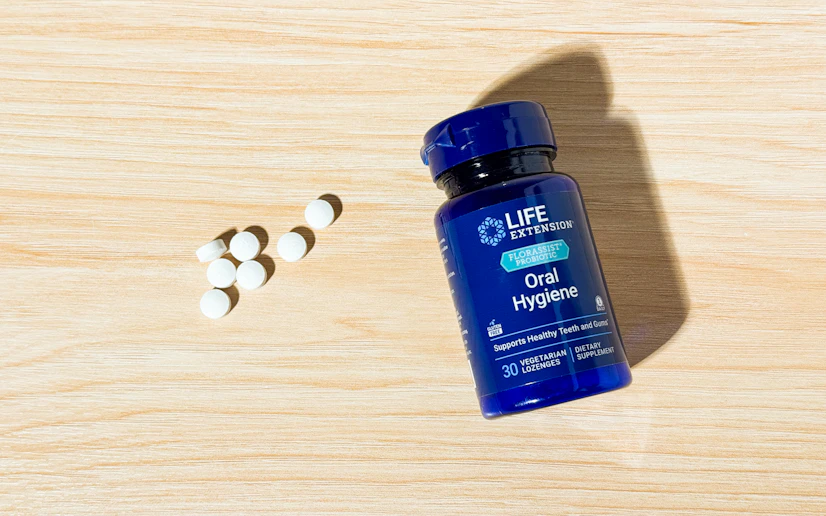
Photo by Innerbody Research
Pros
- Relies on a well-studied probiotic strain (M18)
- Also contains a heat-killed postbiotic
- Primarily sweetened with xylitol
- Gluten-free and vegetarian-friendly
- Extremely low price for subscribers
- Subscription orders ship free
- 365-day money-back guarantee
Cons
- Lowest-rated taste in our guide
- Also contains mannitol
- More excipient ingredients than competitors
- Flavors are likely artificial
- Contains milk
- No non-GMO designation
While Oraticx is one of the only companies offering W. cibaria CMU, Life Extension FLORASSIST Oral Hygiene is one of the only products on the market offering heat-killed L-137, a postbiotic capable of delivering some unique benefits for oral health.28 And it does so alongside M18, which we’ve established as one of the most well-rounded and extensively studied oral probiotics.17
Here’s a closer look at the ingredients:
- S. salivarius BLISS M18: 2.5 billion CFU
- Immuno-LP20 (heat-treated L. plantarum L-137): 50mg
- Xylitol
- Mannitol
- Dextrin
- Microcrystalline cellulose
- Croscarmellose sodium
- Food starch-modified
- Spearmint flavor
- Cherry flavor
There isn’t a whole lot here to hang your hat on if you’re seeking a silver bullet for bad breath, but the improvements that this formula can make in general oral health should translate to improvements in breath in the long term. That said, it’s important to note that the M18 dose listed is what’s present at the time of manufacture. Depending on how old your bottle is when you start to take it, enough probiotic material may have degraded to take the dose below clinical relevance.
Our Life Extension FLORASSIST testing experience
FLORASSIST got the worst taste ranking of the products that made it into this guide. There were worse oral probiotics we tested that didn’t make the cut at all, so this is less an indictment of the flavor here than you might think. Ultimately, it was fine, with the hint of cherry balancing nicely with the mint. However, it was mostly just a question of it being underwhelming, uninteresting, and not especially pleasant to take.
The other three products in this guide all taste very good, with distinct and interesting flavors that are fresh and specific. FLORASSIST is far too bland by comparison.
Life Extension pricing
Life Extension gets our nod for best budget pick here because it’s so reliably inexpensive on its company website. True, Oraticx is a better bad breath fighter, and its price gets nearly as low as Life Extension’s on Amazon, but it’s hard to swear by Amazon pricing, which typically fluctuates more than company website pricing.
You can get FLORASSIST Oral Hygiene as a one-time purchase or a subscription for the following prices:
| Price | Cost per dose | |
|---|---|---|
| One-time | $18 | $0.60 |
| Subscription | $16 | $0.53 |
Shipping is free on subscription purchases, which helps keep costs in check here, as well. But it’s Life Extension’s money-back guarantee that takes the cake, with a 365-day policy that lets you try a product thoroughly to ensure it’s a good fit. Compared to Oraticx and HealthAid, neither of which has any money-back guarantee, this is an exceptional difference.
HealthAid OralProbio

Photo by Innerbody Research
Pros
- Simple formula with two of the best probiotics for oral health
- Sweetened only with xylitol
- Uses natural peppermint flavor
- Up to 10% off for subscribers
- Gluten-free and non-GMO
Cons
- Dose is only clinically relevant at manufacture (will degrade below that quickly)
- No money-back guarantee
- Subscriptions don’t ship for free ($50 free-shipping threshold)
HealthAid OralProbio didn’t earn a spot in our summary of recommendations, but it did take the advantage for safety in our evaluation criteria. That’s because it has one of the simplest formulas in our guide, built around two of the most well-studied strains in the scientific literature.
Those two strains — K12 and M18 — are among the best for improving overall oral health, including tooth and gum health, as well as potentially improving breath. HealthAid doesn’t play around with overages the way other companies do, either, meaning that it provides exactly the doses shown to be safe and effective in the literature without adding more to protect against its product’s inevitable degradation over its shelf life. That’s a double-edged sword, of course. OralProbio is reliably safer than others, but also less reliably effective, especially the further you get from the date of manufacture.
Taking the formula further, the lozenges are sweetened only with xylitol, meaning there’s likely more present here than in competing probiotics from other brands.
Here’s the whole formula:
- S. salivarius K12: 1 billion CFU
- S. salivarius M18: 1 billion CFU
- Xylitol
- Stearic acid
- Microcrystalline cellulose
- Natural peppermint flavor
This is also the shortest list of ingredients in our guide, with fewer excipients and a peppermint flavor that the company outwardly verifies as natural. (In contrast, we had to reach out to Oraticx to confirm that its peppermint wasn’t artificial.)
Our HealthAid testing experience
OralProbio tastes pretty good. The lozenges are mild and minty enough to feel like they could freshen your breath on their own, but likely not if you’ve just eaten a whole bulb of roasted garlic. Overall, they were ranked third for flavor among the sea of oral probiotics we’ve tried, just behind Oraticx and BioGaia (the latter of which didn’t have a good enough formula to earn a spot in this guide).
HealthAid pricing
You can purchase HealthAid OralProbio once or sign up for a subscription, though HealthAid does something we rarely see in the subscription space. Typically, you can subscribe to a product, reap whatever subscription discount is offered, and set your shipping interval as you see fit. But here, if you want a shipping interval any less frequent than monthly, your subscription discount is cut in half.
Here’s what that looks like:
| Price | Cost per dose | |
|---|---|---|
| One-time | $32.99 | $1.10 |
| Subscription (monthly) | $29.69 | $0.99 |
| Subscription (every 2 or 3 months) | $31.34 | $1.04 |
Shipping costs another $5.99 unless you get your purchase up over $50. There’s also no money-back guarantee, which, along with the shipping charge, makes this a harder product to recommend than Oraticx or Life Extension if your primary goal is fighting bad breath.
BOKA Probiotic n-Ha Toothpaste
Best toothpaste
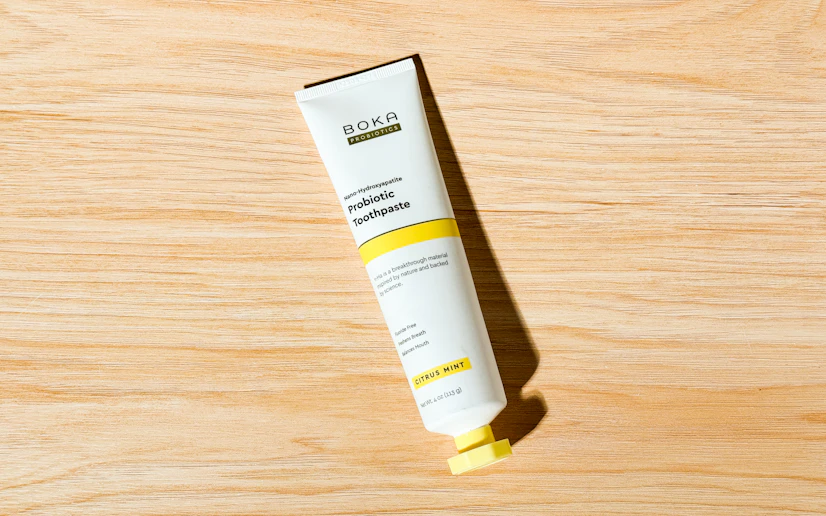
Photo by Innerbody Research
Pros
- Research indicates equal or better performance than fluoride toothpaste
- Flavors are unusual but genuinely enjoyable
- Relatively well-priced for a specialty toothpaste
- Uses a probiotic species shown to be effective for oral health
- Contains xylitol for sweetness
Cons
- Probiotic included isn’t strain-specific
- Our testers’ teeth didn’t feel clean for as long as with regular toothpaste
- No money-back guarantee
It’s rare to find a really good probiotic toothpaste, partly because so much of the research into oral probiotic use centers around chews or lozenges. There are some toothpaste and mouthwash studies, but they’re definitely less common.
In one such study, researchers compared a toothpaste containing 200 million CFU of B. coagulans to a mouthwash using 1.5 billion CFU of a probiotic blend that wasn’t specified.34 The toothpaste outperformed the mouthwash, but the data were both too specific and too vague to translate well into product development.
To make matters even more confusing, BOKA’s chosen probiotic species is L. paracasei, without a strain specified on the label. The good news is that L. paracasei research shows strong potential for oral health, including healthy shifts in microbial composition in the mouth and reduced indices of plaque-induced gingivitis.35 36
Perhaps more important than the included probiotic, however, is that BOKA doesn’t use fluoride. Instead, it relies on nano-hydroxyapatite (n-Ha), a form of calcium that research indicates works at least as well as fluoride at both remineralizing current cavities and preventing future cavities.37
Our BOKA testing experience
Our testers were a little mixed about the results they had using BOKA. On the one hand, the taste was really good. It’s deep and sweet, but has a kind of grown-up feeling to it, as though the people who engineered it would make good mixologists at a high-end bar. On the other hand, the actual performance left something to be desired. On more than one occasion, a tester reported feeling like their oral biofilm had reformed faster than it had when using a standard toothpaste by Crest.
Other variables may have influenced this, and our product testing is intended as anecdotal experience without the scientific rigors of placebo controls or blinding. But it’s worth noting because BOKA doesn’t have a money-back guarantee. If you find yourself similarly disappointed, you’ll have no recourse.
BOKA pricing
A single tube of BOKA toothpaste costs $13.94, but you can save a couple of dollars by subscribing, which brings the cost down to $11.85. How much that ends up costing you per use will come down to how much you put on your brush.
You can also save a bit by buying a two- or three-pack, which can bring your cost per tube down to $10.66 for one-time purchases or $9.07 as a subscription.
Probiotics for bad breath FAQ
Sources
Innerbody uses only high-quality sources, including peer-reviewed studies, to support the facts within our articles. Read our editorial process to learn more about how we fact-check and keep our content accurate, reliable, and trustworthy.
Inchingolo, F., Inchingolo, A. M., Malcangi, G., Leonardis, N. D., Sardano, R., Pezzolla, C., Venere, D. D., Palermo, A., Inchingolo, A. D., Corriero, A., & Dipalma, G. (2023). The Benefits of Probiotics on Oral Health: Systematic Review of the Literature. Pharmaceuticals, 16(9), 1313.
Han, H. S., Yum, H., Cho, Y. D., & Kim, S. (2023). Improvement of halitosis by probiotic bacterium Weissella cibaria CMU: A randomized controlled trial. Frontiers in Microbiology, 14, 1108762.
Lee, S. K., Lim, K. O., Yang, K. I., You, S. J., Kang, M. S., & Lee, W. P. (2026). Oral probiotic Weissella cibaria improves halitosis and reduces periodontal pathogens: A randomized, double-blind, placebo-controlled trial. BMC Oral Health, 26, 649.
Bertuccioli, A., Gervasi, M., Annibalini, G., Binato, B., Perroni, F., L Rocchi, M. B., Sisti, D., & Amatori, S. (2023). Use of Streptococcus salivarius K12 in supporting the mucosal immune function of active young subjects: A randomised double-blind study. Frontiers in Immunology, 14, 1129060.
Burleigh, M. C., Rosier, B. T., Simpson, A., Sculthorpe, N., Henriquez, F., & Easton, C. (2023). The Probiotic Streptococcus salivarius M18 Increases Plasma Nitrite but Does Not Alter Blood Pressure: A Pilot Randomised Controlled Trial. Applied Microbiology, 3(3), 774-785.
Dragomir, N., Grigore, D. M., & Pogurschi, E. N. (2025). Beyond Sugar: A Holistic Review of Sweeteners and Their Role in Modern Nutrition. Foods, 14(18), 3182.
Söderling, E., & Pienihäkkinen, K. (2021). Effects of xylitol chewing gum and candies on the accumulation of dental plaque: A systematic review. Clinical Oral Investigations, 26(1), 119.
Petralia, L. S., Chawaguta, A., Ruzsanyi, V., Mayhew, C. A., & Sanders, D. (2025). The oral microbiome and its effect on exhaled breath volatile analysis-the elephant in the room. Journal of Breath Research, 19(4).
Mazurel, D., Brandt, B., Boomsma, M., Crielaard, W., Lagerweij, M., Exterkate, R., & Deng, D. (2025). Streptococcus mutans and Caries: A Systematic Review and Meta-Analysis. Journal of Dental Research, 104(6), 594.
Liu, P. F., Haake, S. K., Gallo, R. L., & Huang, C. M. (2009). A novel vaccine targeting Fusobacterium nucleatum against abscesses and halitosis. Vaccine, 27(10), 1589.
Fang, Y., Chen, X., Chu, C. H., Yu, O. Y., He, J., & Li, M. (2024). Roles of Streptococcus mutans in human health: Beyond dental caries. Frontiers in Microbiology, 15, 1503657.
Yang, X., Zhang, S., Ning, T., & Wu, J. (2025). Fusobacterium nucleatum in Health and Disease. MedComm, 6(11), e70465.
Kang, M.S., Lee, D.S., Lee, S.A. et al. (2020). Effects of probiotic bacterium Weissella cibaria CMU on periodontal health and microbiota: a randomised, double-blind, placebo-controlled trial. BMC Oral Health 20, 243.
Jeon, H. W., Yang, K. I., Yu, S. J., Kang, M. S., & Lee, W. P. (2026). Clinical Efficacy of the Probiotic Weissella cibaria CMU in Adults with Gingivitis: A Randomized, Double-Blind, Placebo-Controlled Clinical Trial. Journal of Medicinal Food.
Kang, M. S., Lee, D. S., Kim, M., Lee, S. A., & Nam, S. H. (2021). A Randomized, Double-Blind, Placebo-Controlled Trial to Assess the Acidogenic Potential of Dental Biofilms through a Tablet Containing Weissella cibaria CMU. International Journal of Environmental Research and Public Health, 18(9), 4674.
Poorni, S., Nivedhitha, M., Srinivasan, M., & Balasubramaniam, A. (2022). Effect of Probiotic Streptococcus salivarius K12 and M18 Lozenges on the Cariogram Parameters of Patients With High Caries Risk: A Randomised Control Trial. Cureus, 14(3), e23282.
Babina, K., Salikhova, D., Makeeva, I., Zaytsev, A., Sokhova, I., Musaeva, S., Polyakova, M., & Novozhilova, N. (2024). A Three-Month Probiotic (the Streptococcus salivarius M18 Strain) Supplementation Decreases Gingival Bleeding and Plaque Accumulation: A Randomized Clinical Trial. Dentistry Journal, 12(7), 222.
Burton, J. P., Drummond, B. K., Chilcott, C. N., Tagg, J. R., Thomson, W. M., Hale, J. D. F., & Wescombe, P. A. (2013). Influence of the probiotic Streptococcus salivarius strain M18 on indices of dental health in children: a randomized double-blind, placebo-controlled trial. Journal of Medical Microbiology, 62(Pt 6), 875–884.
Laws, G. L., Hale, J. D. F., & Kemp, R. A. (2021). Human Systemic Immune Response to Ingestion of the Oral Probiotic Streptococcus salivarius BLIS K12. Probiotics and Antimicrobial Proteins, 13(6), 1521–1529.
Shi, J., Liu, Y., Chen, X., Hou, X., Chen, H., Chen, L., & Li, L. (2026). Effect of probiotic lozenges on improvement in tympanometric classification within 12 weeks in children aged 3–6 years with adenoid hypertrophy and otitis media with effusion undergoing non-surgical management: A randomized controlled trial. Frontiers in Cellular and Infection Microbiology, 15, 1736602.
Sarlin, S., Tejesvi, M. V., Turunen, J., Vänni, P., Pokka, T., Renko, M., & Tapiainen, T. (2020). Impact of Streptococcus salivarius K12 on Nasopharyngeal and Saliva Microbiome: A Randomized Controlled Trial. The Pediatric Infectious Disease Journal, 40(5), 394.
Benic, G. Z., Farella, M., Morgan, X. C., Viswam, J., Heng, N. C., Cannon, R. D., & Mei, L. (2019). Oral probiotics reduce halitosis in patients wearing orthodontic braces: a randomized, triple-blind, placebo-controlled trial. Journal of Breath Research, 13(3), 036010.
He, L., Yang, H., Chen, Z., & Ouyang, X. (2020). The Effect of Streptococcus salivarius K12 on Halitosis: a Double-Blind, Randomized, Placebo-Controlled Trial. Probiotics and Antimicrobial Proteins, 12(4), 1321–1329.
Schlagenhauf, U., Jakob, L., Eigenthaler, M., Segerer, S., & Rehn, M. (2016). Regular consumption of Lactobacillus reuteri‐containing lozenges reduces pregnancy gingivitis: An RCT. Journal of Clinical Periodontology, 43(11), 948.
Keller, M. K., Hasslöf, P., Dahlén, G., Stecksén-Blicks, C., & Twetman, S. (2012). Probiotic supplements (Lactobacillus reuteri DSM 17938 and ATCC PTA 5289) do not affect regrowth of mutans streptococci after full-mouth disinfection with chlorhexidine: a randomized controlled multicenter trial. Caries Research, 46(2), 140–146.
Iwasaki, K., Maeda, K., Hidaka, K., Nemoto, K., Hirose, Y., & Deguchi, S. (2016). Daily Intake of Heat-killed Lactobacillus plantarum L-137 Decreases the Probing Depth in Patients Undergoing Supportive Periodontal Therapy. Oral health & Preventive Dentistry, 14(3), 207–214.
Nakai, H., Murosaki, S., Yamamoto, Y., Furutani, M., Matsuoka, R., & Hirose, Y. (2021). Safety and efficacy of using heat-killed Lactobacillus plantarum L-137: High-dose and long-term use effects on immune-related safety and intestinal bacterial flora. Journal of Immunotoxicology, 18(1), 127–135.
Ritthagol, D. W., Saetang, D. C., & Teanpaisan, D. R. (2014). Effect of Probiotics Containing Lactobacillus paracasei SD1 on Salivary Mutans Streptococci and Lactobacilli in Orthodontic Cleft Patients: A Double-Blinded, Randomized, Placebo-Controlled Study. The Cleft Palate-Craniofacial Journal.
Chaturvedi, S., Jain, U., Shukla, C., Prakash, A., Sharma, A., & Chhajed, R. (2016). Efficacy of probiotic lozenges to reduce Streptococcus mutans in plaque around orthodontic brackets. Journal of Indian Orthodontic Society, 50(4), 222–227.
Mäkinen, K. K. (2010). Sugar Alcohols, Caries Incidence, and Remineralization of Caries Lesions: A Literature Review. International Journal of Dentistry, 2010, 981072.
Bezkorovainy, A. (2001). Probiotics: Determinants of survival and growth in the gut. The American Journal of Clinical Nutrition, 73(2), 399s-405s.
Kraft-Bodi, E., Jørgensen, M. R., Keller, M. K., Kragelund, C., & Twetman, S. (2015). Effect of Probiotic Bacteria on Oral Candida in Frail Elderly. Journal of Dental Research, 94(9 Suppl), 181S–6S.
Park, M. J., Park, S. Y., Kim, K. J., Oh, B., & Kim, J. Y. (2024). Effect of the probiotic Weissella cibaria CMS1 on the immune response and the oral microbiome: a randomized, double-blind, placebo-controlled, parallel study. Food & function, 15(8), 4409–4420.
Patel, J., Sharma, P., & Patel, K. (2025). A Comparison of Efficacy of Probiotic Toothpaste and Probiotic Mouthwash to Reduce Streptococcus mutans in Plaque Around Orthodontic Brackets: An In Vivo Study. Journal of Applied Dentistry and Oral Sciences.
Lee, M. K., Chen, I. H., Hsu, I. L., Tsai, W. H., Lee, T. Y., Jhong, J. H., Liu, B. C., Huang, T. Y., Lin, F. K., Chang, W. W., & Wu, J. H. (2024). The impact of Lacticaseibacillus paracasei GMNL-143 toothpaste on gingivitis and oral microbiota in adults: A randomized, double-blind, crossover, placebo-controlled trial. BMC Oral Health, 24, 477.
Li, X., Zhao, Z., Guo, S., Yang, C., Gao, Y., Li, L., Ning, K., Zhang, Q., Zhou, N., Zhang, H., & Li, Y. (2024). Effects of toothpaste containing inactivated Lacticaseibacillus paracasei Probio-01 on plaque-induced gingivitis and dental plaque microbiota. Microbial Pathogenesis, 192, 106701.
Amaechi, B. T., AbdulAzees, P. A., Alshareif, D. O., Shehata, M. A., Lima, P. P., Abdollahi, A., Kalkhorani, P. S., & Evans, V. (2019). Comparative efficacy of a hydroxyapatite and a fluoride toothpaste for prevention and remineralization of dental caries in children. BDJ Open, 5(1), 18.
READ THIS NEXT



Copyright © Innerbody Research 1997 - 2025. All Rights Reserved.