Best Oral Probiotics
Probiotic lozenges and chews could improve your dental health. We break down the latest science and the market’s top choices.

Photo by Innerbody Research
Brushing and flossing may form the cornerstone of good oral health, but recent years have revealed a litany of other efforts that science supports as potential game changers in preventing tooth decay and gum recession and actually extending your lifespan.1 There are also a few products and treatments out there with far less scientific support, but perhaps a better PR team.
We want to spend our time here looking at one of the most compelling efforts to improve dental health: oral probiotics. The oral microbiome is complex and directly linked to areas such as cavity development and gum health, and research indicates that probiotic interventions targeting this microbiome can make a big difference in your overall oral health.12
But which species and strains offer the most potential and have the best research behind them? And which product offers these strains in meaningful doses packed into probiotic products that actually taste good? In this guide, we examine these questions, break down the science behind oral probiotics, and give you firm product recommendations to improve your oral health.
If you’re in a hurry, you can check out our summary of recommendations below, and then read on further for a more detailed analysis.
Summary of recommendations
- Best for most people: Life Extension FLORASSIST
- Best tasting: Biogaia Prodentis
- Best toothpaste: Boka Probiotic n-Ha Toothpaste
- Best budget pick: Life Extension FLORASSIST

Life Extension FLORASSIST takes a true synbiotic approach to oral health, providing a prebiotic, probiotic, and postbiotic in a single dissolvable tablet.
While some oral health products deliver only probiotics or probiotics combined with prebiotics, Life Extension takes it a step further by including postbiotics in its formula. All three of these synbiotic ingredients show positive effects on oral health in human studies, and Life Extension’s pricing and 365-day money-back guarantee make it a clear winner for both value and customer service. You can find this on the Life Extension website, via Amazon, or via iHerb, but iHerb’s pricing tends to be best; there, you can save a couple dollars per order whether subscribing or not.
Jump to:
Why you should trust us
At Innerbody Research, we carefully investigate every product and service that we review, including the oral probiotics you’ll find throughout this guide. We start with the science, in this case by reading more than 150 peer-reviewed journal articles pertaining to oral health, probiotics for oral use, and the various strains and additional ingredients that go into them.
We then scoured the marketplace to see what kinds of products companies were manufacturing with all this available scientific knowledge, and we ordered the best ones for ourselves. That allows us to relay firsthand testing details to you, including taste and texture information that’s crucial for choosing an effective oral probiotic.
Additionally, like all health-related content on this website, this guide was thoroughly vetted by one or more members of our Medical Review Board for accuracy and will continue to be monitored for updates by our editorial team.
Over the past two decades, Innerbody Research has helped tens of millions of readers make more informed decisions about staying healthy and living healthier lifestyles.
How we evaluated oral probiotics
To give our readers the best sense of the oral probiotic landscape, we focused on five key criteria we believe most people would want to consider before making a purchase:
- Effectiveness: Based on all the available science and the included ingredients in a given formula, how likely is it to work?
- Safety: Are the included ingredients and doses in line with best practices for safety, per the literature?
- Cost: How do the prices and attendant values of each product compare?
- Convenience: What are the dosing regimens like, and how are things like customer service and shipping logistics?
- Taste: How does our testing team regard the flavor of a given oral probiotic?
Let’s take a closer look at each criterion to see which products fared the best.
Effectiveness
Advantage: Life Extension FLORASSIST
The human oral microbiome is incredibly diverse, harboring over 700 bacterial species, each of which can be further subdivided into individual strains.1 And our understanding of which species and strains are potentially helpful or harmful is still somewhat in its infancy.2
So, we looked for research confirming the potential benefits of specific bacterial strains, and two of the most beneficial strains for oral health that we identified were Streptococcus salivarius K12 and M18. They each perform well on their own, with K12 studies showing reduced cavity risk,3 improved breath,4 and more, while M18 studies showed similar improvements in cavity risk, as well as better breath.5 6 Where they differ most is in M18’s apparent benefits for gum health and K12’s apparent benefits for oral immunity.7 8
K12 and M18 also perform well together, though their combined effects aren’t necessarily superior to their effects in individual studies.9 And no study has yet performed a head-to-head-to-head comparison looking at how the effects of their combination would differ from the effects of either in isolation under identical experimental conditions.
So, we had our top two probiotic strains in place, but there were a few other boxes we wanted an oral probiotic to check if we were going to regard it as the best overall, including transparent use of other well-supported probiotic strains, the inclusion of heat-killed postbiotics, and the use of the best possible sugar alcohol for dental health, xylitol.25 Broken out into a chart, the field looked like this:
As you can see, FLORASSIST, even though it only contains M18 and not also K12, is the only product to check off four of the five boxes. Some other products contain additional probiotic ingredients, but they only list them at the species level and often include them in proprietary blends, making their strains, doses, and potential efficacy invisible to consumers.
We’ll get much deeper into why these boxes are important in our section on how oral probiotics work.
Safety
Advantage: HealthAid OralProbio
Our review of more than 100 oral probiotic studies on the most common ingredients revealed to us that the risk these supplements pose is very low. There are certainly adverse effects that crop up now and again, as well as some contraindications worth discussing, but oral probiotics in general should be safe for the majority of people.
All of the companies in this guide, and several that didn’t make the cut, produce their products in FDA-regulated cGMP-compliant manufacturing facilities, but none of them — NONE — subject their oral probiotics to third-party testing. That’s pretty infuriating, as it makes it difficult for us (and potential customers) to truly ensure a product’s safety from contaminants like microbes and heavy metals.
What we focused on, then, in declaring an advantage in safety, were factors such as the simplicity and transparency of a given formula. To that end, OralProbio’s straightforward combination of K12 and M18, sweetened with xylitol and containing minimal excipients, won the day.
It’s worth noting — and we’ll go into greater depth about this issue later — that oral probiotic supplements degrade significantly over time, often to the tune of around 30%-40% in under a year.10 Recognizing this, some brands specify their dose at the time of manufacture while guaranteeing another specific dose by a product’s expiration. Others only guarantee a certain amount by expiration, while many make no reference to degradation at all.
OralProbio is transparent about its dosing in this regard, listing 1 billion colony-forming units (CFU, a standard measure of probiotic content) of both K12 and M18. But most K12 and M18 studies use 1 billion CFU doses, meaning that from day 2 onward, OralProbio's dose falls below the clinical standard. From an efficacy perspective, that’s a big hit. In fact, that’s why OralProbio is nowhere in our summary of recommendations: it didn’t earn any of those accolades.
But that minimal dosing in the face of guaranteed degradation is also what helps secure OralProbio’s safety win. Other oral probiotic manufacturers typically overdose their products to ensure they meet no less than minimum clinical doses by their expiration dates. For example, Life Extension FLORASSIST contains 2.5 billion CFU of M18, guaranteeing a minimum clinical dose at expiration. But there are far fewer studies on these higher oral probiotic doses, making it harder to predict potential adverse effects, and making an approach like OralProbio’s a bit safer.
Cost
Advantage: Life Extension FLORASSIST
Typically, when we evaluate a product on the basis of cost, we consider the base sticker price for a one-time purchase, as well as potential savings from bulk or subscription purchasing. Often, the company that wins the day is whichever one offers the lowest cost per dose through its available savings programs. But the picture for oral probiotics is a little different.
Let’s start by looking at this handy chart:
| One-time $ | $ per dose | Subscription $ | Subscription $ per dose | |
|---|---|---|---|---|
| Life Extension FLORASSIST Oral Hygiene | $18 | $0.60 | $16 | $0.53 |
| Naturewise Oral Health Probiotics | $30 | $0.50 | $25 | $0.42 |
| Burst | $30 | $0.67 | $25 | $0.56 |
| BioGaia Prodentis | $20 | $0.67 | $17 | $0.57 |
| NatureCity Quick Melts | $28 | $0.93 | $24 | $0.80 |
| HealthAid OralProbio | $33 | $1.10 | $30 | $1.00 |
| Bristle | $50 | $1.67 | $45 | $1.50 |
We have Life Extension’s FLORASSIST at the top of the chart because it’s our top pick for cost. But you can see just beneath it that Naturewise offers a probiotic product for as little as $0.42 per dose when you get the 60-count bottle. Life Extension only offers 30-count bottles, limiting any bulk savings. The problem with Naturewise is its reliance on a proprietary blend for its total 3 billion CFU dose. All signs point toward Life Extension being the more reliable product, thanks to the company’s transparency and clinically relevant dosing of strain-specific ingredients.
If Naturewise were simply transparent on its label, and that label revealed clinically relevant dosing of its included M18 and K12 strains, it would run away with the win on cost. But until then, Life Extension has the advantage.
Convenience
Advantage: Life Extension FLORASSIST
As for these products’ regimens, they’re all comparably convenient. Each one is a tablet of some kind, all nearly identical in size, shape, and texture. The only meaningful differences in convenience relate to customer service, shipping logistics, and return policies.
In that regard, Life extension is a pretty clear winner. The company offers email, chat, and phone support, including a dedicated number for wellness specialists — distinct from customer service reps — who can help you navigate health concerns and product options.
Life Extension also has the longest return policy in our guide, offering you up to 365 days to initiate a return for a refund. There are some limitations, of course. You can’t initiate the autoship of a product in January and then expect to get your money back on 11 months' worth of supplements come December if you’re unsatisfied. But it does make for an unhurried experience if you reach the end of your first month and feel dissatisfied with your results.
It’s also worth noting just how convenient BOKA’s probiotic toothpaste is here. Since most people already have an oral care regimen that includes brushing, BOKA just slots in where your old toothpaste used to live, with no added burden on your routine. That said, BOKA’s formula doesn’t stipulate how much of its lone probiotic is present, nor does it specify the strain used, making it hard to earn an advantage over a far superior and far more transparent offering like FLORASSIST.
Taste
Advantage: BioGaia Prodentis
Taste is a big deal for oral probiotics. With most other supplements, if the taste is unpleasant, you can quickly eat or drink something else to solve the problem. But oral probiotics usually require that you consume them after you brush your teeth, and that you avoid any food or beverage for at least 30 minutes afterward. You aren’t even supposed to drink water.
So, if an oral probiotic leaves a bad taste in your mouth, you’re stuck with it.
We therefore took this criterion very seriously, having some very pleasant and some decidedly unpleasant experiences with various products.
Ultimately, our team agreed that BioGaia has the best-tasting oral probiotics, not least of all because the company offers more than one flavor, and that both flavors were well-received. You can get BioGaia in a mint flavor that resembles the taste of most other minty oral probiotics, only with a more well-calibrated sweetness, or in the apple flavor, which is stronger and a hair on the tart side, though very pleasant. Neither flavor has any chemical or medicinal taste to it.
At the other end of the spectrum, products like Nature City’s Quick Melts and Bristle sent some of our testers running to spit them out. Nature City delivers an undeniably artificial flavor that’s somewhat sickening, while one tester had no words for Bristle other than “It’s what I imagine licking a brown dinosaur would taste like.”
Other products in our guide, like those from Life Extension, Naturewise, and Burst, were fine. A little minty, maybe a little bland, but not at all unpleasant.
What are oral probiotics?
To make a very clear distinction here, when we say “oral probiotics,” we’re talking about probiotic chews and lozenges intended to improve oral health by modulating the oral microbiome. We’re not talking about probiotics for gut health delivered via orally consumed capsules. Some oral health probiotics may survive the GI tract long enough to have an effect on gut health, but most of the small amount you actually swallow will break down in the stomach before they ever reach the small intestine.
So, to reiterate, oral probiotics are supplements designed to improve oral and dental health parameters by direct application to the inside of the mouth. They can be delivered as chewable tablets, lozenges, mouthwashes, or toothpastes.
In our review of the available literature, oral lozenges were the most common, but these are rarely the lozenges you’re probably thinking of. They aren’t hard, colored, translucent candies packed with probiotics. They’re typically opaque and chalkier, and they look more like after-dinner mints than anything else. They’re all essentially chewable or dissolvable, regardless of how their manufacturers characterize them or advise that you take them.
That said, it’s probably a good idea to follow the directions on the packaging. If it says to let it dissolve in your mouth, let it dissolve. If it says to chew it up, go ahead and chew.
How do oral probiotics work?
Oral probiotics work by modulating the microbial balance in the mouth, introducing large numbers of bacterial species and strains that research has indicated can protect against cavity formation, improve gum integrity, bolster immunity, and more.11 12
Knowing whether a given oral probiotic product will work depends a lot on its transparency. The companies in our guide all deliver at least one oral probiotic bacterial species with a strain-specific designation, along with a clear dose. That’s critical for understanding what a particular product might be able to do.
If you can’t immediately recall high school biology, here’s a helpful reminder of how to understand the name of a given probiotic ingredient using Streptococcus salivarius K12 as an example.
- Streptococcus: This is the genus of bacteria, of which there can be many species and many more strains.
- Salivarius: This is the species designation specific to this genus, of which there can be many strains.
- K12: This is the strain designation, which is typically where the specification for probiotic ingredients ends.
It’s important to seek out probiotics that provide strain-specific information whenever possible (this is also true of gut health probiotics, not just oral ones). That’s because different strains within the same species and genus can have different effects, both positive and negative.
The most effective oral probiotic strains
Despite being a relatively young field, oral probiotics have a bounty of scientific research looking into their efficacy. That volume comes in large part from the sheer quantity of possible bacterial strains that could offer benefits when delivered in an oral lozenge. Here, we’ll break down the probiotic strains with the best research behind them for improving various health parameters when delivered this way.
Streptococcus salivarius K12
Streptococcus salivarius K12 is one of the more promising oral probiotic ingredients on the market, which is likely why it appears in so many products. An in vitro study from 2022 successfully showed that K12 could inhibit the growth of cariogenic biofilm — a primary nighttime cavity driver.3 And a lozenge study from 2020 showed positive effects on patients with halitosis, improving breath parameters significantly after a single dose.4
There’s also evidence that K12 colonizes beyond the oral cavity when administered as a lozenge, with a 2026 study in children with acute otitis media showing that the strain could shorten the time to resolution of an ear infection.13
S. salivarius M18
M18 is right up there with K12 in terms of its potential and the wealth of research supporting it. A three-month study from 2024 looking at its effects on plaque accumulation and gingival health revealed significant improvements in both parameters.14 And an older study from 2013 showed a marked improvement in several dental health indices in children after the same time period of three months.5
M18 also appears alongside K12 in a study from 2022 that showed a significant reduction in cavity risk after 30 days of nightly lozenge administration.15
Weissella cibaria CMU
Weissella cibaria CMU might be one of the best strains for improving breath and fighting halitosis. Several studies support its ability to reduce volatile sulfur compounds that contribute to bad breath and halitosis, including an eight-week study from 2023 and a similar study from 2026.16 17 There’s evidence, too, that it can reduce the buildup of plaque and cariogenic biofilm.18
Lactobacillus coagulans Unique IS2
IS2 overcomes a common problem among gut-centric probiotics by being able to withstand the harsh environment of the stomach en route to the small intestine. That makes it a popular gut health supplement, but there’s also evidence that it can improve certain markers of oral and dental health. Specifically, a 2020 study revealed that IS2 could reduce both plaque formation and the amount of Streptococcus mutans in the mouth — a species directly associated with cavity formation.19 20
Lactobacillus reuteri DSM 17938 and L. reuteri ATCC PTA 5289
These two probiotics most often appear together in oral and dental health research. There are a good number of positive studies to refer to, but studies on either ingredient in isolation are less common, calling into question whether they truly need to be combined or whether one of the two is doing all the heavy lifting.
Among their combined studies, there’s a fair bit of evidence of a significant microbiome shift, as well as some improvements in plaque accumulation and gingival health, specifically gum bleeding.21 22
Lactobacillus plantarum HK L-137
The HK in L-137’s name stands for “heat-killed,” meaning that this probiotic strain is no longer active in its role as a bacterial species. Instead, it serves as a postbiotic, which researchers define as a “preparation of inanimate microorganisms and/or their components that confers a health benefit on the host.”
Research into L-137 reveals some specific oral health benefits, including improvements in probing depth, signifying better gum health.23 Other research has shown positive effects on oral immunity.24
The importance of sweeteners in oral probiotics
Oral probiotics are all essentially dissolvable tablets — even the ones that bill themselves as lozenges. Take a look at this image of some of the products we tested.

Photo by Innerbody Research
As you can see, whatever these products call themselves, they’re all essentially the same delivery system. They all use some kind of sweetener to make them palatable, and sweetener choice here actually has significant ramifications for dental health. That’s because sugar alcohols like xylitol and sorbitol have been shown to benefit oral health, reducing cavity risk and even helping to remineralize teeth.25
Research also suggests that the number of hydroxyl groups in the molecular structure of a given sugar alcohol inversely correlates with improvements in dental health.25 That is, fewer hydroxyl groups means better results. Erythritol has the fewest, followed by xylitol, sorbitol, and mannitol. That might lead you to think erythritol should be the sweetener of choice for oral probiotics. But erythritol can’t be fermented by the beneficial bacteria in your mouth. Xylitol, sorbitol, and mannitol can.
Here’s a breakdown:
| Hydroxyl groups | Fermentable? | How beneficial? | |
|---|---|---|---|
| Erythritol | 4 | No | Somewhat |
| Xylitol | 5 | Most | |
| Sorbitol | 6 | Very | |
| Mannitol | 6 | Very |
Shortcomings of probiotic lozenges
The lozenge format allows users to apply oral health probiotics directly where they’ll do the most good and without having to pass them through digestion first. As the lozenge dissolves, the probiotics adhere to tooth and gum surfaces, as well as other parts of the mouth, allowing for effective colonization.12
But there’s a flip side to the benefits that lozenges confer: their active ingredients degrade at a remarkable pace. Remember that probiotics are living organisms. They won’t do that well just sitting around in a lozenge waiting to be consumed.
In at least three studies on the survivability of probiotics in lozenge form, there’s consistently at least a 3-log drop in CFU.
In the earlier of these two studies, dating back to 2014, researchers purchased five oral probiotics and tested them for their CFU shortly thereafter. Upon manufacture, the three products that offered viable results at room temperature claimed an average CFU of 9.12 billion. Upon testing, they revealed an average of just 5.51 billion CFU.26 That’s a difference of about 40%.
A later study from 2017, looking at the survivability in lozenge form of a specific probiotic strain, saw a similar drop, going from 8.73 billion CFU at manufacture to just 5.93 billion CFU after 280 days.10
The third and most recent study, dating from 2023, looked at seven products containing K12 and saw similar continuous degradation, though the study fails to stipulate what the manufacturer claims were and instead focuses on the difference between 12-month and 24-month time points.27
As a result, probiotic lozenges will contain less than what they claim on their labels. But companies take different paths to addressing this. Some provide larger doses than what clinical studies suggest would be effective. For example, we typically see a 1 billion CFU dose of M18 used successfully in lozenge research, but Life Extension provides a 2.5 billion CFU dose in its formula, specifying that this was the number at the time of manufacture. That means you could reasonably expect about 40% of that to degrade within a year, taking the dose down to 1.5 billion CFU — still well above that clinical dose.
Other companies provide you with the clinical dose at the outset, but still provide some transparency about the fact that they’re liable to degrade. Still others will simply start you at the clinical dose and not address the issue at all, either overdosing their supplements without your knowledge or providing you with a product that’s less likely to be effective. We’ve found these latter two practices to be rarer, though.
Occasionally, alternative packaging is used to help preserve the integrity of oral probiotics, but the results are mixed. Nature City, for example, uses a blister pack rather than a traditional bottle. But when you try to push its relatively soft lozenges through the blister pack, they crumble into dust, as seen here:

Photo by Innerbody Research
On the bright side, and further bolstering our confidence in most of these products to deliver on their dosing, all but one of the products we received in testing had expiration dates at least 18 months out, indicating recent manufacture. The one exception was Nature City, which shipped us a probiotic with an expiration date just three months away. That indicates that the probiotics in its products would have degraded significantly, though the label guarantees a minimum 1 billion CFU of both M18 and K12 by end of life.
Who are oral probiotics for?
Oral probiotics have something to offer just about anybody. While regular brushing and flossing can go a long way toward maintaining and improving oral and dental health, there are still hours throughout the day and — perhaps more importantly — the night, when brushing and flossing only take you so far.
Specifically, because oral probiotic strains have been shown to reduce the rate at which cariogenic biofilm can form, even when oral hygiene regimens are identical, the addition of oral probiotics to your nightly routine could potentially delay any would-be cavities from forming.
There’s also a lot of evidence that improvements in the oral microbiome can reduce symptoms of halitosis, or even just freshen the breath of anyone who might not have a clinical halitosis diagnosis. This group could also benefit from the fact that most oral probiotic lozenges are flavored with some kind of mint, allowing them to use the probiotics in the daytime to bolster oral health while freshening their breath. And since you’re not supposed to eat or drink anything for at least 30 minutes after using a typical oral probiotic, you won’t spoil the results by immediately eating some penne with garlic and anchovies.
Who might want to look elsewhere?
While oral probiotics are promising, they certainly have their limitations, and people looking for them to solve certain significant dental issues might want to look elsewhere. For example, while there’s evidence for things like protection from cavities, there isn’t any evidence that oral probiotics can treat cavities that already exist. Also, if you have persistent tooth pain, introducing probiotics isn’t going to help. You’ll need to see a dentist.
The same can be said if you’re looking for something to replace your oral hygiene routine. There’s no evidence that oral probiotics can work as well at staving off plaque or cavities as brushing and flossing can.
Are oral probiotics safe?
After reading more than 150 published and peer-reviewed scholarly articles on various oral probiotic ingredients, we were struck by how few adverse events were reported in the literature. In some cases, papers merely make no mention of them, as they weren’t central to the papers’ purposes. But the papers that declared a total absence of adverse events far outnumbered those that reported side effects.
That said, it’s worth looking at which strains did report side effects that could have been treatment-related, and discussing other potential contraindications to oral probiotic use.
For example, in a study of a commonly paired probiotic duo, L. reuteri DSM 17938 and L. reuteri ATCC PTA 5289, researchers saw 6% of users strongly object to the lozenges’ taste.28 Two subjects in the treatment group also left the study due to GI effects, though three in the placebo group left for the same reason, making it hard to determine if the GI upset was treatment-related. In another study of the same two ingredients, one patient in the treatment group complained of dry mouth, while another described, in what was one of our favorite turns of phrase from the literature, “sometimes a different feeling in the mouth after usage of the lozenge."29
We saw dry mouth pop up in a few other studies, as well, including one participant in a three-month M18 study.14 And in a 2026 study of K12 in children, adverse effects almost perfectly tracked between treatment and placebo groups.13 However, researchers attributed six adverse effects to the treatment protocol without specifying which.
So, potential side effects present in the literature may include things like:
- Dry mouth
- GI upset
- Unpleasant taste of the lozenge
GI upset may also result from the use of sugar alcohols like xylitol and sorbitol in most oral probiotic products.30 These sugar alcohols are among FODMAP foods, standing for “fermentable oligo-, di-, monosaccharides and polyols.” Sensitive individuals should approach oral probiotics with caution.
Risk of antibiotic-resistant gene transfer
There has been growing interest in understanding the potential for microorganisms to transfer certain genetic traits from one genus, species, or strain to another, especially in the case of antibiotic-resistant genes.
A worst-case scenario would be this: You take a probiotic supplement that very effectively colonizes your mouth or gut with a specific strain that turns out to have a strong resistance to all common antibiotics. That strain then transfers some of its genetic information to a pathogenic bacterium occupying the same space, and that newly antibiotic-resistant pathogenic strain then multiplies exponentially. It starts to make you sick, and nothing your doctors throw at it seems to stop it. The infection spreads, becomes sepsis, and kills you. Like we said: worst-case.
Fortunately, a very thorough paper from 2022 identified several oral probiotic products on the market that contain strains with antibiotic-resistant genes, and placed them in the most favorable conditions possible for transferring those genes to pathogenic bacteria.31 By the end of the study, no antibiotic resistance was transferred to the bad guys, demonstrating that the most common oral probiotic ingredients should be perfectly safe in this regard.
Life Extension FLORASSIST Oral Hygiene
Best overall and best budget pick
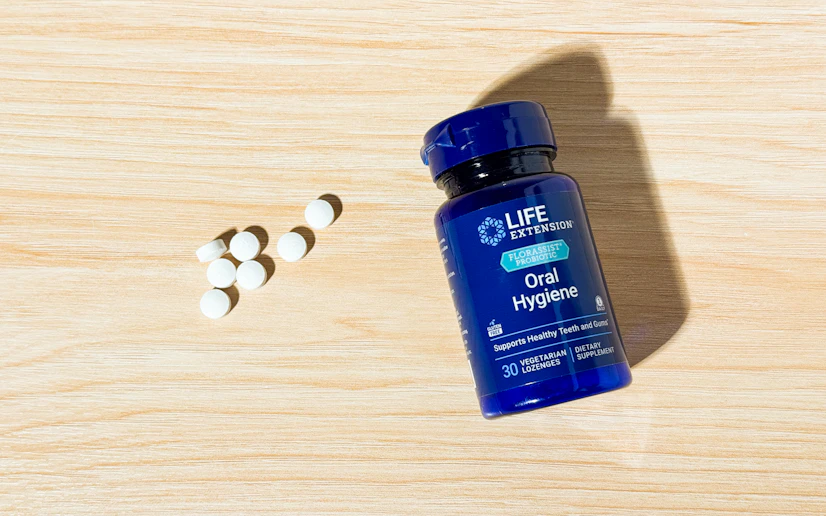
Photo by Innerbody Research
Pros
- Contains one of the most well-researched oral probiotic strains in S. salivarius M18
- Also uses a heat-killed postbiotic
- Sweetened with xylitol
- Functions as a synbiotic (with pre-, pro-, and postbiotics)
- Transparent about dosing at the time of manufacture
- Dosed to be clinically potent at expiration
- Extremely well-priced
- Tastes fine, if a bit bland
- Fast shipping
- 365-day money-back guarantee
Cons
- Would be even better with one or two more probiotic strains
- Texture is a little soft
- Inclusion of another sugar alcohol implies a lower xylitol dose
At this point, Life Extension’s FLORASSIST Oral Hygiene lozenges represent the best combination of ingredients on the market, even though its list is shorter than many others. That’s partly because it chooses its ingredients so well and partly because the longer lists from other companies typically involve proprietary blends and probiotic designations that stop at the species level, not indicating the strains used.
Life Extension’s ingredient transparency, along with the transparent and appropriate dosing to ensure viable clinical CFU even by the product’s expiration, makes FLORASSIST the most reliably effective oral probiotic product on the market.
Here’s a look at the ingredients:
- S. salivarius M18: 2.5 billion CFU (at manufacture)
- Heat-killed L. plantarum L-137: 50mg
Now, that’s a pretty short list, and there are some noteworthy imperfections beyond its brevity, particularly when you get down to the other ingredients. For example, FLORASSIST is sweetened with xylitol and mannitol rather than xylitol alone. That’s not the end of the world, but research indicates that fewer hydroxyl groups in a sugar alcohol correlate with superior dental health outcomes, making xylitol the best option if you want a fermentable sugar alcohol in your probiotic lozenge.25 Competitors like HealthAid and Bristle use xylitol exclusively, which could mean Life Extension’s xylitol dose is less than you see elsewhere.
Indeed, Life Extension’s taste is less sweet than that of many competitors we tried. Though it wasn’t particularly unpleasant, it was one of the more bland products we tested. The lozenges themselves are on the small side, making it more tempting to bite into them rather than let them dissolve as directed. And their softness means that, if you do bite down, you’ll pretty quickly break the whole thing apart. Slightly larger, harder lozenges from BioGaia and Burst held together better, even with the odd nibble.
Life Extension FLORASSIST pricing
Despite being our top-ranked product, Life Extension FLORASSIST also manages to be the least expensive high-quality oral probiotic in our guide. You can get it as a one-time purchase or on a subscription basis for an additional discount. Here’s how the pricing works out:
| Price | Cost per dose | |
|---|---|---|
| One-time | $18 | $0.60 |
| Subscription | $16 | $0.53 |
Life Extension shipped faster than any of the other products we ordered, arriving about three days after we purchased it. And the company’s 365-day money-back guarantee is the longest in our guide, by far.
BioGaia Prodentis
Best tasting

Photo by Innerbody Research
Pros
- The included probiotic duo is heavily studied, with many positive results
- Easily the best-tasting, according to our testers
- Available in mint and apple flavors
- Priced almost as well as Life Extension
- 30-day money-back guarantee
Cons
- Unclear whether the listed dose is from the time of manufacture
- Sweetened with isomalt before xylitol
If flavor is the absolute most important thing to you in an oral probiotic, then you could do a lot worse than BioGaia Prodentis. Our testers tried both the mint and apple flavors and thought both tasted better than any other oral probiotic we tried. One of the reasons for this is a bit of a double-edged sword, though.
BioGaia sweetens its lozenges with isomalt and xylitol. Isomalt likely contributes to the improved flavor here, but it gets in the way of what could have been a higher xylitol dose, potentially decreasing efficacy.
Then there’s the formula itself, which is a simple pair of well-researched oral probiotics that often appear in studies together:
L. reuteri DSM 17938 and L. reuteri ATCC PTA 5289: 200 million CFU
That dose aligns with nearly every study into this pair that we reviewed, many of which reported excellent results for colonization, but also mixed results for gingival health, plaque buildup, and other dental health parameters.
So, BioGaia tastes good, but it’s likely not the most effective option on the market. That’s especially true when you take a closer look at that dose. At 200 million CFU, it may align very well with studies, but there’s no indication from the company whether that’s the dose at manufacture or the guaranteed minimum by the product’s expiration. As we discuss throughout this guide, probiotics degrade quickly, so if BioGaia starts out at 200 million CFU, it could be nearly useless by the time it gets to you.
BioGaia pricing
BioGaia’s pricing is nearly as low as Life Extension’s on both one-time and subscription purchases:
| Price | Cost per dose | |
|---|---|---|
| One-time | $20 | $0.66 |
| Subscription | $17 | $0.57 |
BioGaia’s return policy also isn’t as generous as Life Extension’s, but few are. Compared to Life Extension’s 365 days, BioGaia only provides a more standard 30-day protection.
BOKA Probiotic n-Ha Toothpaste
Best probiotic toothpaste

Photo by Innerbody Research
Pros
- Uses nano-hydroxyapatite (n-HAP) instead of fluoride
- Excellent flavor
- Contains L. paracasei probiotics
- Relatively inexpensive
- Sweetened with xylitol
Cons
- Probiotic dose is neither specified nor strain-specific
- No money-back guarantee
Good probiotic toothpastes are not common. Most oral probiotic research uses lozenges and chews, with only a few studies looking at them seriously. In one paper, researchers compared the reduction in S. mutans from toothpaste or mouthwash, though the probiotic doses were different.32 The toothpaste used 200 million CFU of B. coagulans, while the mouthwash used 1.5 billion CFU of an unspecified probiotic blend. Still, the toothpaste outperformed the mouthwash.
By comparison, BOKA uses L. paracasei in its toothpaste, but it doesn’t specify a dose. We could only find research into toothpaste containing inactivated L. paracasei, though it was promising. In one study, researchers reported improvements in general oral health markers and a healthy shift in oral microbial composition.33 In another study using a model of plague-induced gingivitis, the treatment group saw reduced clinical indices of gingivitis, including bleeding and gingival and plaque index scores, compared with the control group.34
How those results translate to active L. paracasei probiotic toothpaste is unclear, but the longer a tube of BOKA sits on a shelf, the more its probiotics will become inactive, so maybe buying it and letting it sit around for a while is the way to go.
It’s also worth noting that BOKA uses n-HAP instead of fluoride, which research shows can work as well as fluoride in remineralizing early cavities and preventing future ones.35
As for taste, this was one of the best-tasting toothpastes in any category that our testers had tried. We opted for Citrus Mint, and the blend of flavors, which also includes nutmeg and eucalyptus, was outstanding. It was refreshing and intriguing all at once.
BOKA pricing
BOKA’s Probiotic n-Ha Toothpaste is reasonably priced at $14 for a one-time purchase and just under $12 for a subscription. However, shipping adds another $6 to the cost, so you might be better off finding it through an online retailer like Amazon. At the time of this writing, one-time purchases on Amazon cost the same $14, and subscriptions were a little costlier at $13, but Prime members could save on shipping.
Unlike the toothpaste itself, BOKA’s return policy isn’t likely to leave a good taste in your mouth. You have 30 days to initiate a return, but you can’t open the toothpaste first, or you’re stuck with it. At least most of the lozenges in this guide have some sort of money-back guarantee.
HealthAid OralProbio

Photo by Innerbody Research
Pros
- Combines K12 and M18, two of the best oral probiotics
- Tastes good, though not the best we tried
- Sweetened with xylitol only
Cons
- Clinical dose at manufacture will degrade below that quickly
- Priciest option in our guide
- No money-back guarantee
HealthAid makes a pretty simple oral probiotic lozenge, and if it had been dosed better, it might have competed for a spot in our summary of recommendations. We still give it its own section here because it earned the advantage in our Safety criterion toward the top of the page. That’s thanks to its simple formulation and cautious dosing.
As we’ve discussed, probiotic lozenges lose potency pretty quickly, with around 40% of the included probiotic bacteria dying out within a year from manufacture.10 Many companies pack much more than the common clinically studied doses into their products, so they can guarantee a minimum clinical dose by the time the expiration date hits. HealthAid prefers to start with that clinical dose at manufacture, which, in theory, could make it a safer product by not subjecting its customers to higher, unstudied doses of oral probiotic ingredients.
The downside is that, by the time it ships to you, it’s already begun to degrade below doses shown to be effective.
Here’s a quick look at OralProbio’s ingredients:
- S. salivarius K12: 1 billion CFU
- S. salivarius M18: 1 billion CFU
OralProbio is sweetened with xylitol and flavored with natural peppermint flavor. Using only xylitol implies there’s a better dose here than in something like BioGaia Prodentis, which lists xylitol after isomalt in its ingredients.
The simplicity comes through in the flavor as well. OralProbio is very similar in taste and texture to Life Extension, though our testers found it slightly more enjoyable.
So, ultimately, if you’re wary of those higher, untested doses, OralProbio might be the best place for you to start your oral probiotic journey.
HealthAid pricing
Despite containing fewer ingredients than many competitors, HealthAid OralProbio is one of the more expensive oral probiotic products out there. Here’s a quick breakdown:
| Price | Cost per dose | |
|---|---|---|
| One-time | $33 | $1.10 |
| Subscription | $30 | $1.00 |
HealthAid is also the only lozenge company featured in our guide to lack a money-back guarantee. You have 30 days to initiate a return, but you can’t try the product first.
Oral probiotics FAQ
Sources
Innerbody uses only high-quality sources, including peer-reviewed studies, to support the facts within our articles. Read our editorial process to learn more about how we fact-check and keep our content accurate, reliable, and trustworthy.
Deo, P. N., & Deshmukh, R. (2019). Oral microbiome: Unveiling the fundamentals. Journal of Oral and Maxillofacial Pathology : JOMFP, 23(1), 122–128.
Chen, T. (2024, Jun 27). Exploring the Mouth’s Microbial Wonders. Scientific expeditions into the oral cavity reveal how microbes shape health. National Institute of Dental and Craniofacial Research, National Institutes of Health, U.S. Department of Health and Human Services.
Kim, H. J., & Yoo, H. J. (2023). Inhibitory effects of Streptococcus salivarius K12 on formation of cariogenic biofilm. Journal of Dental Sciences, 18(1), 65–72.
He, L., Yang, H., Chen, Z., & Ouyang, X. (2020). The Effect of Streptococcus salivarius K12 on Halitosis: a Double-Blind, Randomized, Placebo-Controlled Trial. Probiotics and Antimicrobial Proteins, 12(4), 1321–1329.
Burton, J. P., Drummond, B. K., Chilcott, C. N., Tagg, J. R., Thomson, W. M., Hale, J. D. F., & Wescombe, P. A. (2013). Influence of the probiotic Streptococcus salivarius strain M18 on indices of dental health in children: a randomized double-blind, placebo-controlled trial. Journal of Medical Microbiology, 62(Pt 6), 875–884.
Benic, G. Z., Farella, M., Morgan, X. C., Viswam, J., Heng, N. C., Cannon, R. D., & Mei, L. (2019). Oral probiotics reduce halitosis in patients wearing orthodontic braces: a randomized, triple-blind, placebo-controlled trial. Journal of Breath Research, 13(3), 036010.
Babina, K., Salikhova, D., Doroshina, V., Makeeva, I., Zaytsev, A., Uvarichev, M., Polyakova, M., & Novozhilova, N. (2023). Antigingivitis and Antiplaque Effects of Oral Probiotic Containing the Streptococcus salivarius M18 Strain: A Randomized Clinical Trial. Nutrients, 15(18), 3882.
Bertuccioli, A., Gervasi, M., Annibalini, G., Binato, B., Perroni, F., Rocchi, M. B. L., Sisti, D., & Amatori, S. (2023). Use of Streptococcus salivarius K12 in supporting the mucosal immune function of active young subjects: A randomised double-blind study. Frontiers in Immunology, 14, 1129060.
Poorni, S., Nivedhitha, M. S., Srinivasan, M., & Balasubramaniam, A. (2022). Effect of Probiotic Streptococcus salivarius K12 and M18 Lozenges on the Cariogram Parameters of Patients With High Caries Risk: A Randomised Control Trial. Cureus, 14(3), e23282.
Witzler, J. J. P., Pinto, R. A., Font de Valdez, G., De Castro, A. D., & Cavallini, D. C. U. (2017). Development of a potential probiotic lozenge containing Enterococcus faecium CRL 183. LWT, 77, 193-199.
Yue, Z., Li, C., Yan, F., Guan, S., Fan, Y., & Chen, X. (2025). The oral microbiome in aging: a window into health and longevity. Journal of Oral Microbiology, 17(1).
Inchingolo, F., Inchingolo, A. M., Malcangi, G., Leonardis, N. D., Sardano, R., Pezzolla, C., Venere, D. D., Palermo, A., Inchingolo, A. D., Corriero, A., & Dipalma, G. (2023). The Benefits of Probiotics on Oral Health: Systematic Review of the Literature. Pharmaceuticals, 16(9), 1313.
Shi, J., Liu, Y., Chen, X., Hou, X., Chen, H., Chen, L., & Li, L. (2026). Effect of probiotic lozenges on improvement in tympanometric classification within 12 weeks in children aged 3–6 years with adenoid hypertrophy and otitis media with effusion undergoing non-surgical management: A randomized controlled trial. Frontiers in Cellular and Infection Microbiology, 15, 1736602.
Babina, K., Salikhova, D., Makeeva, I., Zaytsev, A., Sokhova, I., Musaeva, S., Polyakova, M., & Novozhilova, N. (2024). A Three-Month Probiotic (the Streptococcus salivarius M18 Strain) Supplementation Decreases Gingival Bleeding and Plaque Accumulation: A Randomized Clinical Trial. Dentistry Journal, 12(7), 222.
Poorni, S., Nivedhitha, M., Srinivasan, M., & Balasubramaniam, A. (2022). Effect of Probiotic Streptococcus salivarius K12 and M18 Lozenges on the Cariogram Parameters of Patients With High Caries Risk: A Randomised Control Trial. Cureus, 14(3), e23282.
Han, H. S., Yum, H., Cho, Y. D., & Kim, S. (2023). Improvement of halitosis by probiotic bacterium Weissella cibaria CMU: A randomized controlled trial. Frontiers in Microbiology, 14, 1108762.
Lee, S. K., Lim, K. O., Yang, K. I., You, S. J., Kang, M. S., & Lee, W. P. (2026). Oral probiotic Weissella cibaria improves halitosis and reduces periodontal pathogens: A randomized, double-blind, placebo-controlled trial. BMC Oral Health, 26, 649.
Kang, M. S., Lee, D. S., Kim, M., Lee, S. A., & Nam, S. H. (2021). A Randomized, Double-Blind, Placebo-Controlled Trial to Assess the Acidogenic Potential of Dental Biofilms through a Tablet Containing Weissella cibaria CMU. International Journal of Environmental Research and Public Health, 18(9).
Sudha, M. R., Neelamraju, J., Reddy, M. S., & Kumar, M. (2020). Evaluation of the Effect of Probiotic Bacillus coagulans Unique IS2 on Mutans Streptococci and Lactobacilli Levels in Saliva and Plaque: A Double-Blind, Randomized, Placebo-Controlled Study in Children. International Journal of Dentistry, 2020, 8891708.
Mazurel, D., Brandt, B., Boomsma, M., Crielaard, W., Lagerweij, M., Exterkate, R., & Deng, D. (2025). Streptococcus mutans and Caries: A Systematic Review and Meta-Analysis. Journal of Dental Research, 104(6), 594.
Vestman, N. R., Chen, T., Holgerson, P. L., Öhman, C., & Johansson, I. (2015). Oral Microbiota Shift after 12-Week Supplementation with Lactobacillus reuteri DSM 17938 and PTA 5289; A Randomized Control Trial. PLoS ONE, 10(5), e0125812.
Schlagenhauf, U., Jakob, L., Eigenthaler, M., Segerer, S., & Rehn, M. (2016). Regular consumption of Lactobacillus reuteri‐containing lozenges reduces pregnancy gingivitis: An RCT. Journal of Clinical Periodontology, 43(11), 948.
Iwasaki, K., Maeda, K., Hidaka, K., Nemoto, K., Hirose, Y., & Deguchi, S. (2016). Daily Intake of Heat-killed Lactobacillus plantarum L-137 Decreases the Probing Depth in Patients Undergoing Supportive Periodontal Therapy. Oral Health & Preventive Dentistry, 14(3), 207–214.
Nakai, H., Murosaki, S., Yamamoto, Y., Furutani, M., Matsuoka, R., & Hirose, Y. (2021). Safety and efficacy of using heat-killed Lactobacillus plantarum L-137: High-dose and long-term use effects on immune-related safety and intestinal bacterial flora. Journal of Immunotoxicology, 18(1), 127–135.
Mäkinen, K. K. (2010). Sugar Alcohols, Caries Incidence, and Remineralization of Caries Lesions: A Literature Review. International Journal of Dentistry, 2010, 981072.
Banas, J. A., & Popp, E. T. (2013). Recovery of Viable Bacteria from Probiotic Products that Target Oral Health. Probiotics and Antimicrobial Proteins, 5(3), 227.
Zamfir, M., Angelescu, I. R., & Grosu-Tudor, S. S. (2023). In Vitro Evaluation of Commercial Probiotic Products Containing Streptococcus salivarius K12 by Assessment of Probiotic Viability and Inhibitory Potency against Respiratory Pathogens. Processes, 11(2).
Kraft-Bodi, E., Jørgensen, M. R., Keller, M. K., Kragelund, C., & Twetman, S. (2015). Effect of Probiotic Bacteria on Oral Candida in Frail Elderly. Journal of Dental Research, 94(9 Suppl), 181S–6S.
Laleman, I., Pauwels, M., Quirynen, M., & Teughels, W. (2019). A dual‐strain Lactobacilli reuteri probiotic improves the treatment of residual pockets: A randomized controlled clinical trial. Journal of Clinical Periodontology, 47(1), 43.
Söderling, E., & Pienihäkkinen, K. (2021). Effects of xylitol chewing gum and candies on the accumulation of dental plaque: A systematic review. Clinical Oral Investigations, 26(1), 119.
Wang, Y., Dong, J., Wang, J., Chi, W., Zhou, W., Tian, Q., Hong, Y., Zhou, X., Ye, H., Tian, X., Hu, R., & Wong, A. (2022). Assessing the drug resistance profiles of oral probiotic lozenges. Journal of Oral Microbiology, 14(1), 2019992.
Patel, J., Sharma, P., & Patel, K. (2025). A Comparison of Efficacy of Probiotic Toothpaste and Probiotic Mouthwash to Reduce Streptococcus mutans in Plaque Around Orthodontic Brackets: An In Vivo Study. Journal of Applied Dentistry and Oral Sciences.
Lee, M. K., Chen, I. H., Hsu, I. L., Tsai, W. H., Lee, T. Y., Jhong, J. H., Liu, B. C., Huang, T. Y., Lin, F. K., Chang, W. W., & Wu, J. H. (2024). The impact of Lacticaseibacillus paracasei GMNL-143 toothpaste on gingivitis and oral microbiota in adults: A randomized, double-blind, crossover, placebo-controlled trial. BMC Oral Health, 24, 477.
Li, X., Zhao, Z., Guo, S., Yang, C., Gao, Y., Li, L., Ning, K., Zhang, Q., Zhou, N., Zhang, H., & Li, Y. (2024). Effects of toothpaste containing inactivated Lacticaseibacillus paracasei Probio-01 on plaque-induced gingivitis and dental plaque microbiota. Microbial Pathogenesis, 192, 106701.
Amaechi, B. T., AbdulAzees, P. A., Alshareif, D. O., Shehata, M. A., Lima, P. P., Abdollahi, A., Kalkhorani, P. S., & Evans, V. (2019). Comparative efficacy of a hydroxyapatite and a fluoride toothpaste for prevention and remineralization of dental caries in children. BDJ Open, 5(1), 18.

Copyright © Innerbody Research 1997 - 2025. All Rights Reserved.