Best Vitamin D3 and K2 Supplements
We test the five best vitamin D3 and K2 supplements for improving mood, bone health, cognition, postmenopausal health, and more.

Photo by Innerbody Research
You might have at least one thing in common with billions of other people around the world: you don’t get enough vitamin D or K. Globally, vitamin D deficiency affects approximately 1 billion people, and a K deficiency can be observed in 8–31% of otherwise healthy adults.1 31
D and K are among the 13 essential vitamins, so the body requires them to function properly. They play critical roles in immune, heart, and bone health, and they’re also complementary, having a synergistic relationship that enhances each other’s effects.2 3 Browse the supplement market for either vitamin and you’ll quickly find they’re often formulated in combination.
In this guide, we present the market’s current best vitamin D3 and K2 supplements — mostly for people with higher demands, but also some options for those who just need to hit their daily levels. Check out our summary of recommendations below if you're in a hurry. Then read further to explore all of the details.
Summary of recommendations
- Best dual-ingredient option: NOW Foods Vitamin D-3 & K-2
- Best complex for postmenopausal women: Codeage Calcium Pro+
- Best for correcting a severe deficiency: Metagenics Vitamin D3 5000 + K2
- Budget pick: NOW Foods Vitamin D-3 & K-2
- Best vegan option: Sports Research D3 + K2
Note: Cardiologist Dr. Matt Segar, a member of our Medical Advisory Board, rightly notes that the Recommended Daily Allowance (RDA) of vitamin D for adults is 15mcg (600IU) for people under 70 and 20mcg (800IU) for those over 70. Most of our recommendations provide D3 doses above those amounts and are aimed at people with D3 deficiencies (blood serum levels below 20ng/mL).
Jump to:
Why you should trust us
Over the past two decades, Innerbody Research has helped tens of millions of readers make more informed decisions about staying healthy and living healthier lifestyles.
Cumulatively, we’ve spent over 300 hours researching vitamins D3 and K2 and their synergistic effects. We’ve examined evidence about the benefits that each vitamin provides and the average micronutritional needs of adults within various demographics. After exploring the vast D3/K2 marketplace and ordering the most promising products ourselves, we can present you with a set of the very best options along with comprehensive perspectives that balance clinical findings with personal experiences.
Additionally, like all health-related content on this website, this guide was thoroughly vetted by one or more members of our Medical Review Board for accuracy and will continue to be monitored for updates by our editorial team.
How we evaluated the best vitamin D3 and K2 supplements
We rated the market’s best vitamin D3/K2 supplements based on:
- General effectiveness
- Safety
- Cost
- Ease of use
It’s these criteria that we feel are the most relevant to consumers seeking the benefits that D3 and K2 can provide.
Here’s how our recommendations measured up in each category.
General effectiveness
Advantage: NOW Foods Vitamin D-3 & K-2
Effectiveness is a complex question because optimal intakes of D3 and K2 depend on several factors, not least being one’s geographical environment.4 5 Our goal, then, was to identify the supplement that could accommodate the largest number of people. NOW Foods is that supplement. Here’s why:
- Most people with insufficient vitamin D have serum levels between 12 and 20ng/mL (30 and 50nmol/L).5 For this cohort, the recommended daily supplementation ranges from 800IU to 1,000IU (20–25mcg).1 Every one-capsule serving of NOW Foods Vitamin D-3 & K-2 provides the upper end of that range.
- NOW Foods’ 45mcg of vitamin K2 relative to its vitamin D3 is approximate to the ratio used in a 2011 German study.6 That’s important because having sufficient vitamin K can help prevent calcium buildup in the blood, a risk associated with vitamin D supplementation.
- Its D3-and-K2-only formula, combined with its ingredient quantities, makes it easy to titrate doses upward to accommodate different health needs without elevating the risk for toxicity from other ingredients.
Our other recommendations are effective, too, except they cater better to narrower user populations. Codeage is geared toward postmenopausal women; Metagenics, toward people with more serious vitamin D deficiencies; and Sports Research, toward vegans. We discuss each product’s considerable merits in its dedicated brand section later in this guide.
Safety
Advantage: NOW Foods Vitamin D-3 & K-2
The advantage here again goes to NOW Foods Vitamin D-3 & K-2. Because of its simple formula, it poses the least risk of ingredient toxicity in its intended user population: one can titrate upward within reasonable limits without worrying about overconsuming other ingredients. Moreover, its 25mcg (1,000IU) dose of D3, which sits well below the Tolerable Upper Intake Level (UL) for adults, is considered safe for the prevention or correction of deficiency, while its 45mcg K2 quantity represents around 38–50% of Adequate Intake (AI).7 52 8 In other words, for indicated users, there’s some wiggle room for error.
You’ll find less wiggle room with our other recommendations. With Sports Research and Metagenics, for instance, the D3 dosing is very high and intended only for specific, narrower cohorts. Codeage, meanwhile, contains ingredients like zinc, magnesium, and calcium, each of which has its own UL and side effects, so dosing becomes more complicated if you want to titrate upward.
Though this is a simplified view — you’ll see later in our safety section just how nuanced dosing can get with D3 and K2 — it lays out the main idea that NOW Foods’ dosages offer you the flexibility you need to meet your D3 and K2 needs while minimizing potential dangers.
Also, apart from dosing, NOW Foods is commendable on the testing front, too. It initially tests its products in-house but also submits them to third-party labs for independent verification. In addition, this particular product comes with several reassuring certifications:
- Intertek GMP Supplement Certification: Ensures uniformity in manufacturing and demonstrates “continuous improvements” in Good Manufacturing Practice standards
- Halal: Uses ingredients that are permissible for practicing Muslims to consume
- Triangle K Kosher: Uses ingredients permissible under strict Jewish dietary law
Cost
Advantage: NOW Foods Vitamin D-3 & K-2
One bottle of NOW Foods Vitamin D-3 & K-2 provides 120 servings and costs just $14.99, or approximately $0.12 per serving. In terms of base and per-serving prices, none of the other recommendations in this guide offer anywhere near such a bargain. Even if you take a double serving every day, you end up paying a fraction of a cent less than you would with a single serving of the runner-up, Codeage, which costs $10–$15 more per bottle.
But there’s a caveat for people who need higher doses to correct a deficiency, for whom a cost-per-IU analysis might be the superior guiding metric. If that sounds like you, then the alternative cost winner is actually our choice for the best deficiency-correcting supplement: Metagenics. Every IU of Metagenics costs around $0.00009, which is a few fractions of a cent lower than NOW ($0.00012).
Ease of use
Advantage: Metagenics Vitamin D3 5000 + K
Usually, when we discuss a supplement’s ease of use, it comes down to two questions:
- How big is its serving size?
- How difficult is it to swallow?
With our top vitamin D3/K2 supplements, the first question was mostly moot because almost all of our recommendations have a serving size of just one capsule/softgel, and it doesn’t get any lower than that.
As regards the second question, we could immediately determine that the running was between Metagenics and Sports Research. These two products are softgels, whereas NOW Foods and Codeage are hard capsules, and softgels are generally easier to swallow owing to their malleable structure and smooth surface.9 We’re also talking about very small softgels. Both Metagenics and Sports Research measure just 1cm long and roughly 0.5cm wide, so they presented no difficulty in our testing when washed down with a gulp of water.
So, since Metagenics and Sports Research are equally easy to swallow, what advantage does one have over the other? It’s the packaging, believe it or not. Both products come well-sealed under a tabbed adhesive liner, but Sports Research’s seal was noticeably more difficult to pry off. It required so much force that the tab itself appeared at risk of tearing off from the seal. Only NOW Foods’ seal, whose tab actually did come off, was more difficult to undo.
How the best D3/K2 supplements compare
Before we get into the science behind D3 and K2, check out this quick-reference chart comparing our top recommendations based on key deciding factors. The prices listed are for direct purchases. They exclude any shipping costs and are rounded to the nearest cent or dollar.
| NOW Foods | Codeage | Metagenics | Sports Nutrition | |
|---|---|---|---|---|
| One-time $ | $15 | $30 | $28 | $24 |
| Subscribe $ | N/A | $25 | $27 | $20 |
| Servings | 120 | 120 | 60 | 60 |
| Serving $ | $0.13 | $0.21 – $0.25 | $0.45 – $0.47 | $0.33 – $0.40 |
| D3 | 25mcg | 12.5mcg | 125mcg | 62.5 – 250mcg |
| K2 | 45mcg | 50mcg | 20mcg | 100mcg |
| Other active ingredients? | Yes | |||
| Form | Capsule | Capsule | Softgel | Softgel |
| Delivery interval(s) | N/A | 1 – 4 mos. | 2 mos. | 1 – 3 mos. |
| Return window | 30 days | 30 days | 60 days | 45 days |
| Vegan? |
What is vitamin D3?
Vitamin D, in general, is an essential fat-soluble vitamin that can be produced from within the body (endogenously) and obtained from outside of the body (exogenously). Endogenous vitamin D is produced by exposure to sunlight, which converts a compound called 7-dehydrocholesterol into D3, whereas exogenous vitamin D comes from food or supplements.7
Vitamin D3 is one of the main forms in which vitamin D occurs. Taking a vitamin D3 supplement, you could potentially improve bone health, cognitive health, muscle strength, cancer risk, and mood disorders.21 22
The other major form of vitamin D is D2. As supplements, vitamins D2 and D3 differ in their:7
- Production: D2 is plant-based, whereas D3 normally derives from sheep wool. There are exceptions, like Sports Research’s Vegadelight D3 derived from lichen.
- Effect on blood serum levels: D3 raises blood serum levels more significantly and maintains them longer.
How much vitamin D do you need?
For most adult cohorts, the Recommended Daily Allowance (RDA) of exogenous vitamin D is 15mcg, or 600 International Units (IU), while the Tolerable Upper Intake Level (UL) is 100mcg, or 4,000IU. In other words, people should generally aim to get at least 15mcg of vitamin D per day, but no more than 100mcg.7
Insider Tip: RDA and UL are two initialisms you’ll often encounter in discussions about nutrients. RDA refers to the average nutrient intake considered to be sufficient for meeting most healthy people’s needs, while UL is the maximum intake you can have in a day before you’re likely to experience adverse effects.
The RDA, however, doesn’t always account for populations that need larger doses. Specifically, most people with a vitamin D deficiency (i.e., serum levels below 20ng/mL) would be better off with a daily dose between 20 and 25mcg (800 and 1,000IU), and those with levels below 12ng/mL may need to start with stronger supplementation — 125mcg (5,000IU) to 150mcg (6,000IU) per day — to reach a healthy range.10 Once serum levels reach a normal range (above 30ng/mL), one can drop their daily intake to the RDA value.1
For the sub-12ng/mL cohort, an alternative supplementation method is to take an even higher dose — 625mcg (25,000IU) to 1,250mcg (50,000IU) — just once per week.1 11
Of course, you should speak with a medical professional before embarking on a vitamin D regimen, whether it’s low-dose or high-dose.
Causes and symptoms of vitamin D deficiency
Vitamin D deficiency often results from lifestyle factors, such as insufficient sunlight exposure and inadequate intake of vitamin D–rich foods (fish, yogurt, certain mushrooms).12 That being said, an individual’s vitamin D deficiency may also stem from factors outside of their control, such as:13
Darker skin pigmentation
Melanin can block the solar radiation needed to synthesize the vitamin endogenously.14
Kidney or liver failure
Both organs are responsible for converting stored vitamin D into the active form that the body can use.15
Medications
Certain medications can cause the liver to break down the body’s stores of vitamin D (e.g., blood pressure meds, seizure meds, estrogen blockers, antibiotics, antiretrovirals). Others (laxatives, lipase inhibitors, and cholesterol meds) may reduce the body’s ability to absorb the vitamin.16
Cancer
Multiple myeloma, breast cancer, prostate cancer, and colorectal cancer are associated with vitamin D deficiency.17
Other health conditions
Inflammatory bowel disease, celiac disease, and exocrine pancreatic insufficiency can make it difficult for the body to absorb enough vitamin D.
Gastrointestinal surgery
Bariatric surgery and small bowel resection may also affect the body’s absorption of vitamin D.
Genetic predisposition
Gene variations related to cholesterol synthesis, hydroxylation, and vitamin D transport may elevate a person’s risk for vitamin D deficiency.18
If you have a vitamin D deficiency, you may experience any or all of the following symptoms:19 13
- Muscle and/or bone pain
- Muscle weakness, especially in the upper arms or thighs
- Muscle spasms, twitches, tremors, or cramps
- Tingling in the hands or feet
- An increased tendency for broken bones
- Mood changes, including depression
- Gait changes, such as waddling
- Bowed legs (a classic symptom of rickets, which is usually due to prolonged vitamin D deficiency in childhood)20
The only surefire way to tell if you’re vitamin D-deficient is to have your vitamin D levels tested. You can order self-administered tests for home use, or ask your doctor to order a 25-hydroxy vitamin D test performed in a clinical setting.
What is vitamin K2?
Vitamins K and D are similar in that they’re both fat-soluble, capable of being produced endogenously, and obtainable through exogenous means. Both are also important for bone health, and vitamin K is especially critical for proper blood clotting.33
K2 specifically encompasses multiple isoprenyl side chains called menaquinones (MK), namely MK-4 through MK-14. The other vitamin K is K1, also known as phylloquinone.8 Between K1 and K2, there are three main differences:
- Dietary sources: K1 derives primarily from leafy green vegetables like broccoli and spinach, whereas menaquinones are synthesized by bacteria, including those in the human gut, and are also found in animal products and fermented foods.8 23
- Absorption: The body absorbs K2 more slowly than it does K1. Therefore, K2 remains in the body longer and has more time to deliver health benefits.24
- Health benefits: Both forms of vitamin K are important for blood clotting, bone health, and heart health, but K2 may be more effective for the latter two. Additionally, some observational studies suggest a potential correlation between K2 intake and the clearance of calcifications that contribute to coronary heart disease.24 25 26
How much vitamin K do you need?
Vitamin K doesn’t have an RDA or UL attached to it; rather, it has an Adequate Intake (AI) value. AI takes the place of RDA when there isn’t enough research to establish an RDA.
Among adults, the AI value for combined vitamin K1 and K2 differs between men and women:8
- Men: 120mcg
- Women (including pregnant and lactating): 90mcg
As far as dietary sources go, 1–2 servings of green vegetables should get you over the threshold for K1. For K2, however, you’ll want to incorporate foods such as:27
- Fermented foods (sauerkraut, kefir, natto)
- Chicken breast and/or chicken liver
- Ground beef
- Salami
- Egg yolks
- Certain cheeses (e.g., Gouda, blue cheese)
But use discretion. Some of these foods may pose health risks (e.g., cardiovascular risks with cheese and processed meats, as well as cancer risks with the latter).28 29 30 You can circumvent such risks by taking a K2-inclusive supplement.
Causes and symptoms of vitamin K deficiency
Vitamin K deficiency, observed in around 8–31% of otherwise healthy people, may arise in adults who:31
- Don’t eat enough K-rich foods: Vitamin K primarily comes from dietary sources, so it makes sense that overall K deficiency stems from a K-starved diet.
- Have certain gastrointestinal medical conditions: Diseases like celiac disease and inflammatory bowel disease can reduce the body’s ability to absorb fat. Because vitamin K is fat-soluble, such diseases consequently hinder K absorption.
- Take certain medications: Antibiotics can kill off the gut bacteria that synthesize vitamin K, and blood thinners can disrupt K metabolism.
Deficiency can also result from conditions during gestation or infancy. For example, exposure to maternal medications in the uterus can cause a baby to be born with a congenital deficiency, as can insufficient exposure to vitamin K during fetal development.32
Because vitamin K plays an integral role in blood clotting, the main symptom of K deficiency is excessive bleeding. Other symptoms may include:32
- Petechiae (visible pinpoint-sized spots of bleeding under the skin)
- Bruising, often on the head
- Jaundiced or pale skin
- Vomiting
- Sleepiness
- Seizures
- Dark, sticky, and/or bloody stools
As with vitamin D, a K deficiency is diagnosed through testing. If you’re experiencing the above symptoms or have another reason to suspect that you’re deficient, please consult a medical provider.
Why should you take D3 and K2 together?
Vitamins D3 and K2 are pleiotropic nutrients with synergistic effects:
- Capable of producing more than one effect (pleiotropic)
- Capable of working together to increase the effect of any one component (synergistic)
In other words, D3 and K2 both impart numerous benefits in the body, and when taken together, they enhance each other’s benefits. To quote the authors of a 2017 review in the International Journal of Endocrinology: “Current evidence supports the notion that joint supplementation of vitamins D and K might be more effective than the consumption of either alone for bone and cardiovascular health.”34
Here’s an analogy to help illustrate. Say that a person wants to lose weight. In addition to restricting their calorie intake, they incorporate cardiovascular exercise and weight training. The cardio burns calories, and the weight training improves the body’s ability to use its calories more effectively toward weight loss. So, think of vitamin D3 as cardio and K2 as weight training, or vice versa. Combining them is a double-whammy that can maximize outcomes.
There’s also research suggesting that coadministration can help mitigate the adverse effects associated with high vitamin D doses, making the combination not only more effective but also potentially safer.46
Who should take a vitamin D3/K2 supplement?
Vitamin D3 and K2 supplements may be appropriate for people who want to support bone, cardiovascular, and/or musculoskeletal health. Thus, the best-suited user populations include:
- Postmenopausal women: Women are often at a higher risk for osteoporosis after menopause because of the attendant estrogen deficiency.35 Combined administration of D3 and K2 may help prevent the onset of osteoporosis by increasing bone mineral density.36
- Men with low testosterone: There appears to be a correlation between low vitamin D and low testosterone. Increasing your intake of the former may therefore help elevate the latter, helping to correct symptoms of testosterone deficiency such as low mood, low libido, and erectile dysfunction.50 51 That’s why vitamin D3 is central to most high-quality testosterone boosters.
- The aging and the elderly: Vitamin D deficiency is associated with both aging and loss of muscle strength, and muscle loss is associated with aging, so preventing a D deficiency may help slow age-related muscular decline.37 38 39
- People who weight-train: For the same reason that vitamin D supplementation can attenuate age-related muscular decline, it can also benefit people of any age who wish to grow or maintain their muscle mass.
A smaller body of research suggests a correlation between vitamin D and cognitive decline. A 2015 narrative review, for example, noted that in vitro studies have shown vitamin D can “stimulate the clearance of amyloid plaques” associated with Alzheimer’s disease.40 Please note, however, that we’re speaking here of correlation, not causation. As far as it’s known at this time, vitamin supplementation is not a proven preventive for cognitive dysfunction.
Who should not take a vitamin D3/K2 supplement?
Not all D3/K2 supplements are appropriate for everyone. Most healthy adults can do with around 15mcg (600IU) per day, whereas almost all the recommendations in this guide provide higher doses and may not be broadly suitable for daily supplementation.
There are also several populations for whom D3/K2 supplementation may not be appropriate at all, or who should at least exercise caution. They include but aren’t limited to:41
- People with already high levels of vitamin D (preferably verified by a vitamin D test)
- People with high levels of calcium, as vitamins D and K can increase calcium absorption
- People with a malabsorption disorder
- People who are pregnant, as the supplement may affect the developing fetus
- People with a granulomatous disease, such as sarcoidosis, in which the body overproduces vitamin D54
- People with primary hyperthyroidism, which is characterized by hypercalcemia, which is itself associated with vitamin D excess55
- People with primary hyperaldosteronism, which may lead to primary hyperthyroidism and its attendant risks associated with vitamin D55
- People on certain medications, such as antibiotics, warfarin, orlistat, and prescriptions for lowering cholesterol33
Vitamin D, warfarin, kidney disease, and other concerns
We want to give special attention to the last point, especially regarding warfarin. Warfarin is an anticoagulant, a blood thinner, whereas vitamin K promotes blood clotting. Their functions are at odds with each other, such that the former can inhibit absorption of the latter, which is why a patient’s K intake must be delicately balanced with their warfarin dosage.53
This need for balance can have critical effects on warfarin, as well. Indeed, as noted by Dr. Matt Segar of our Medical Advisory Board: “Even tiny doses of vitamin K can change warfarin efficacy.”
It’s likewise important even among people for whom supplementation is indicated. People with kidney disease, for example, will need highly specific doses and protocols to counter their severe D deficiency.45
You can see, then, how important it is to consult a medical provider about your suitability for supplementation.
Of final note, to anyone looking to take a D3/K2 supplement, we urge you to temper expectations about health outcomes. Despite all of D3’s potential benefits, it isn’t going to harden brittle bones or beef up your body overnight. Rather, you should regard it as a small part of a larger health ecosystem that includes healthy eating, exercise, and regular medical care.
How safe are vitamin D3/K2 supplements?
Vitamin D3/K2 supplements are generally safe for most people who aren’t in danger of oversupplementation.
But people who already get sufficient exogenous vitamin D, such as by taking another D-inclusive supplement, may be at risk for oversupplementation, leading to an overabundance of the vitamin in the body. In addition to symptoms like weakness, nervousness, high blood pressure, and a loss of appetite, this can cause serious health conditions such as:42
Hypercalcemia
Hypercalcemia is an overabundance of calcium in the blood. Vitamin D’s connection to hypercalcemia lies in the vitamin’s ability to increase calcium absorption. People with hypercalcemia may have symptoms such as nausea, vomiting, muscle weakness, cognitive and neuropathic difficulties (including depression), and dehydration.7
Hypercalciuria
Hypercalcemia can, in turn, lead to hypercalciuria, or excess calcium in the urine. The calcium there can then form crystals that bind together to produce kidney stones.7
Vitamin D toxicity, however, is considered to be rare. It’s not enough to take a large dose of a D3/K2 supplement and then, bam, you have toxicity. Rather, it depends on how elevated your vitamin D blood levels have become. To increase your blood levels high enough that it becomes toxic, you may need to consume several tens of thousands of IU every day for several months.43 That’s why some people are able to take something like 1,250mcg (50,000IU) once a week and maintain safe vitamin D blood levels.11
So, is a high daily or weekly dose right for you? That’s a question that should be answered by a medical professional after they’ve administered a blood test.
Also, one last note on safety concerning complex formulas that contain D3/K2. With those, you should keep an eye on the quantities of other ingredients used in the formulation. The D3 dosages may be safe, but those of things like calcium, zinc, and magnesium may not.
NOW Foods Vitamin D-3 and K-2
Best for most people and best budget pick
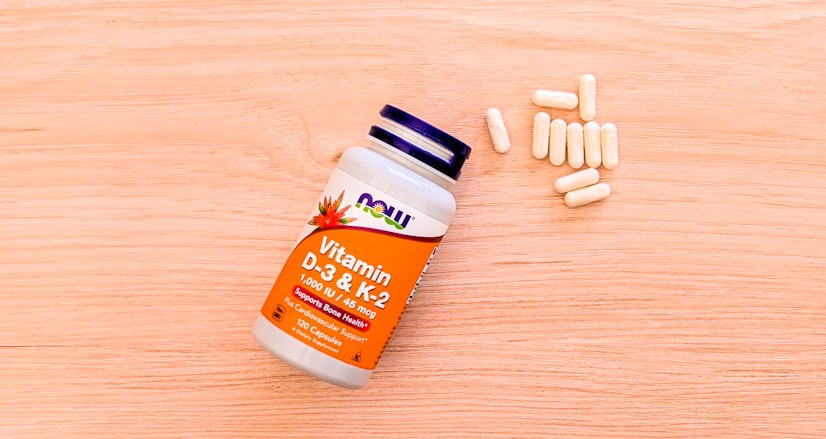
Photo by Innerbody Research
Pros
- Provides 25mcg of vitamin D3 per serving
- Contains only D3 and K2 as active ingredients (easier to titrate upward)
- Lowest base price and per-serving cost on our list
- 120 servings per container
- Free shipping on orders of at least $50 to the contiguous U.S.
- Free of dairy, eggs, gluten, and soy
- Certified halal, kosher, and non-GMO
- Intertek GMP Supplement certified
Cons
- No subscription option for direct purchases
- Refund policy not applicable to used products (i.e., no money-back guarantee)
Per serving, NOW Foods Vitamin D-3 & K-2 has 25mcg of D3 and 45mcg of K2. While there appears to be no consensus about the ideal D3-to-K2 ratio, NOW Foods’ vitamin D content is important. For most people with insufficient vitamin D, a daily D3 dose of 20–25mcg (800–1,000IU) is recommended until blood levels reach a healthy range (above 30ng/mL).1 Every serving of NOW Foods provides the upper end of that range.
Moreover, NOW’s D-3 & K-2 supplement has undergone the company’s comprehensive in-house product testing and received Intertek GMP Supplement certification, validating its potency, purity, and compliance with Good Manufacturing Practice standards.44 Also, in addition to in-house testing, NOW verifies its test results with independent third-party labs, providing an extra layer of safety assurance.
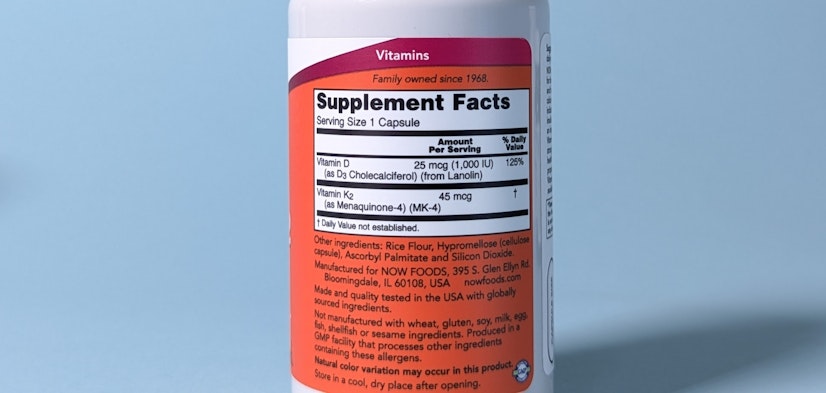
Photo by Innerbody Research
Pricing, subscriptions, and shipping
NOW Foods Vitamin D-3 & K-2 comes in a 120-capsule bottle for $14.99 (around $0.12 per label-recommended serving). There’s no subscribe-and-save program through NOW Foods directly, so if that’s a dealbreaker, you may want to look into a third-party retailer or marketplace that does autoshipped subscriptions. iHerb lets you save slightly more than Amazon, thanks to 20% off your first purchase and 10% off subsequent purchases when you set it to autoship.
If you purchase directly from NOW, shipping is free on orders of at least $50 to the contiguous United States. Otherwise, standard shipping costs $6.95, which is the same as Codeage and not at all bad.
Refund policy
NOW Foods’ refund policy applies only to products that:
- Were purchased directly from its website
- Are new and unopened
The only exceptions to these requirements are items that were wrongly shipped or damaged in transit.
In any case, you have 30 days from the purchase date to return your item for a full refund. The return window is the same as Codeage’s. In comparison, Sports Research has a 45-day return period, while Metagenics has a 60-day period.
You, the customer, are responsible for the return shipping cost.
Codeage Calcium Pro+
Best complex for postmenopausal women
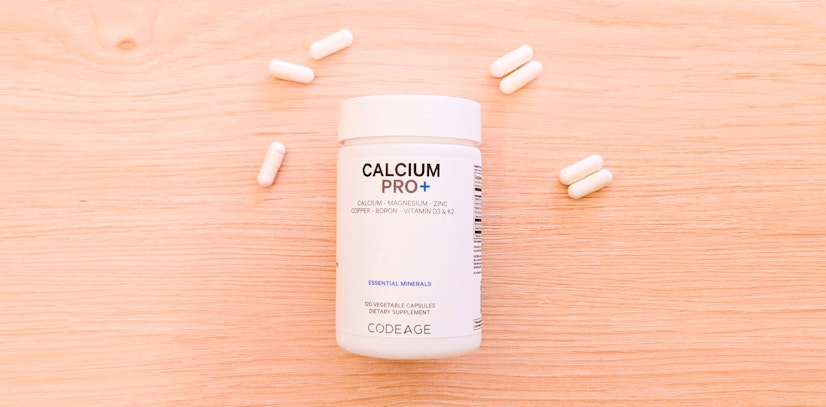
Photo by Innerbody Research
Pros
- Provides reasonable doses of D3, calcium, and boron relative to average intakes among women of postmenopausal age
- 120 servings per bottle
- Second-lowest per-serving costs on our list
- Free U.S. shipping on subscriptions and orders over $50
- Widest range of auto-shipment delivery intervals on our list
- Third-party tested
- Suitable for vegetarians
Cons
- Users may need a double serving size to meet their personal nutrient requirements
- Money-back guarantee applies to only one order per customer and household
Epidemiological studies show that around 50% of postmenopausal women over the age of 50 have osteoporosis.57 That’s because menopause causes a decrease in estrogen, which in turn leads to a weakening of the bones.58
Codeage Calcium Pro+ is our D3/K2 recommendation for postmenopausal women because it provides sensible dosages of the nutrients needed to counter estrogen-related osteoporosis, namely:
Vitamin D3 (12.5mcg)
The USDA has found that the average woman of postmenopausal age consumes approximately 5.5-6.5mcg of vitamin D from dietary sources.59 So, alongside day-to-day exogenous vitamin D consumption, a serving size of Codeage will get you a little above the 15mcg RDA.
Calcium (250mg)
The RDA of calcium for women of postmenopausal age is 1,000–1,200mg, while the UL is 2,000–2,500mg.60 At the same time, the USDA-estimated average intake within the same age group is around 950–1,100mg.59 That being the case, the 250mg of calcium found in Codeage Calcium Pro+ ought to provide enough for most users to meet their individual minimum thresholds.
Boron (1.5mg)
Per a 2020 review, people in general should consume around 3mg of boron per day.61 The trace element is present in significant amounts in numerous common foods, so the 1.5mg in Codeage ought to be sufficient for supplementing dietary sources. Also, since the UL for boron is 20mg, Codeage poses almost no risk for oversupplementation.62
Zinc (7.5mg) and copper (1mg)
In a 2011 study, zinc supplementation at 8mg per day was found to increase whole-body bone density in healthy postmenopausal women.63 The single-serving dosage in Codeage sure is close to the clinically relevant amount there.
Like Innerbody Labs, Codeage mindfully includes copper in its formulation to offset the copper depletion that may attend your supplementation with zinc.56
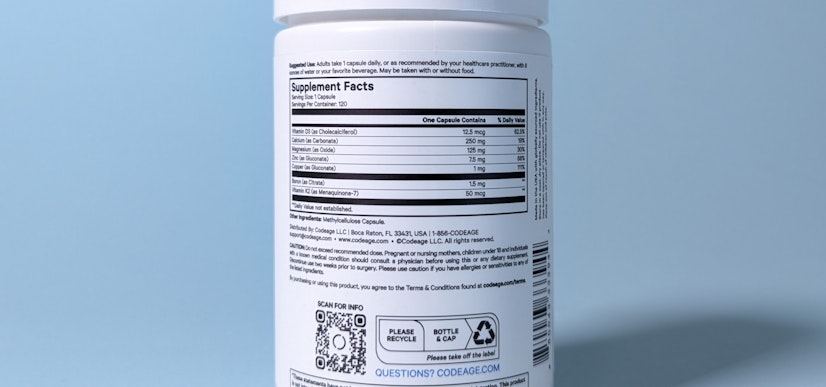
Photo by Innerbody Research
Pricing, subscriptions, and shipping
Codeage Calcium Pro+ costs $29.99 as a one-time purchase and $25.49 as a subscription. Each bottle has 120 servings. If you go with the label-recommended serving size of one capsule, the per-serving cost equals around $0.25 and $0.21, respectively. Only NOW Foods, our budget pick and overall winner, has a lower per-serving cost. However, if you need a double dose, you’ll need to multiply those values by two, bringing the per-serving costs roughly in line with Metagenics.
Subscribers have a relatively wide range of delivery intervals: 1–4 months.
Codeage offers free U.S. shipping on subscriptions and orders over $50. Non-subscriptions and orders below the threshold get $6.95 tacked on for shipping. So, Codeage’s shipping policy is almost identical to NOW Foods’. Apart from Codeage having a direct subscription program, the one very subtle difference is that NOW Foods’ free-shipping threshold is $50, whereas Codeage’s threshold is over $50.
Refund policy
Codeage has a 30-day money-back guarantee with an important caveat: it applies to only one item per customer and household. So:
- If a single order contains multiple items, only one item is eligible for a refund.
- For multiple orders shipped to the same address (e.g., you and your partner make separate orders), only one item in one of the orders is eligible for a refund.
- Customers who previously received a refund from Codeage are no longer eligible to take advantage of the money-back guarantee.
What about bulk packs and bundles? For them, there’s a refund policy but no money-back guarantee. As long as you haven’t opened any of the items in the pack/bundle, you have 30 days to return the whole thing for a full refund. If you have opened one or more items in the pack/bundle, you can return only the unopened items for a partial refund.
Metagenics Vitamin D3 5000 + K2
Best D3/K2 supplement for correcting a severe deficiency
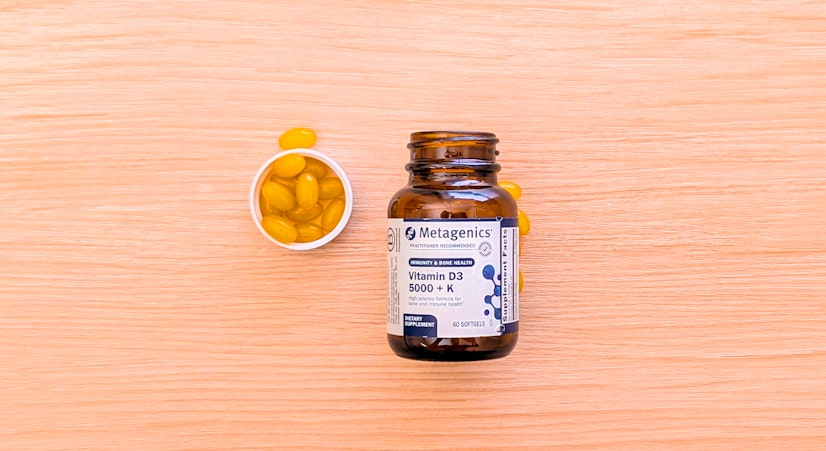
Photo by Innerbody Research
Pros
- 125mcg dosage of D3 is within the clinical range for correcting a severe deficiency
- 90mcg dosage of K2 may be beneficial for cardiovascular health
- Free shipping on subscriptions
- Very small softgel size
- Provides certificates of analysis by lot number
- Non-GMO and gluten-free
Cons
- Highest shipping cost on our list — $10.00 for standard
- Manufactured in a facility that handles wheat, soy, milk, egg, tree nuts, fish, and shellfish
- Not suitable for vegetarians
If you have a severe vitamin D deficiency (a blood level below 12ng/mL), you’re going to need more than 25mcg to get up to an adequate measure. So said the researchers behind a 2014 study published in the Journal of the American Board of Family Physicians. What they recommended instead was a higher dose of 125mcg (5,000IU) until your levels normalize.10 That’s how much you’ll find in every one-softgel dose of Metagenics Vitamin D3 5000 + K. You also get 90mcg of K2, which is a clinically relevant dosage for cardiovascular outcomes.34
To be fair, Metagenics isn’t the only D3/K2 supplement that provides the 5,000IU needed to correct a severe deficiency, but it’s the best we’ve found that balances effectiveness with safety and cost. Compare it, for instance, with a similarly formulated D3/K2 supplement by Nature Made, a ubiquitous presence in grocery store supplement aisles across the United States. The Nature Made product has the same 125mcg of D3, plus 100mcg of K2, and it costs just $16.79 — so it’s clearly better, right? Not so fast, because Nature Made doesn’t subject its D3/K2 supplement to third-party testing (Metagenics does), and because it’s just 30 servings per bottle, the per-serving cost is actually higher than Metagenics.
We could also compare Metagenics to Sports Research D3 + K2 (one of our top recommendations) since the latter is also available in a 125mcg version. The reason we aren’t fully on board with Sports Research as the best corrector of a severe D3 deficiency is that it’s made with vegan D3, and the current research on the topic is relatively sparse.
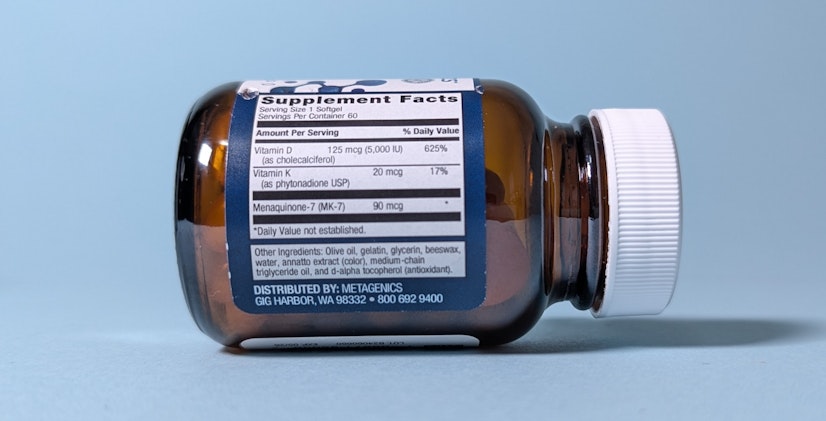
Photo by Innerbody Research
Though it isn’t all that important, at least one of our testers wanted to note: Metagenics smells really good. Opening the bottle, we were treated to scents of grapefruit and tangerine. No other brand in our guide has a remarkable fragrance.
Pricing, subscriptions, and shipping
A one-time purchase of Metagenics D3 5000 + K2 costs $28.25. A subscription is $26.84. Each container has 60 servings, so the per-serving costs are $0.47 and $0.45, respectively — not bad at all.
For subscribers, the default delivery interval is two months, which aligns with the bottle’s quantity. You can pause a delivery at any time you want through your account settings.
Subscriptions ship for free, but otherwise, the standard shipping cost is $10. That’s the highest on our list.
Refund policy
Metagenics has the best refund policy among our recommendations: a 60-day satisfaction guarantee. Also, it applies to both direct purchases and purchases made through authorized resellers.
Unlike Codeage, Metagenics is pretty easygoing about its policy caveats. At most, the company will want to verify your information and proof of purchase before it moves forward with issuing a refund.
Sports Research D3 + K2
Best vegan D3/K2 supplement
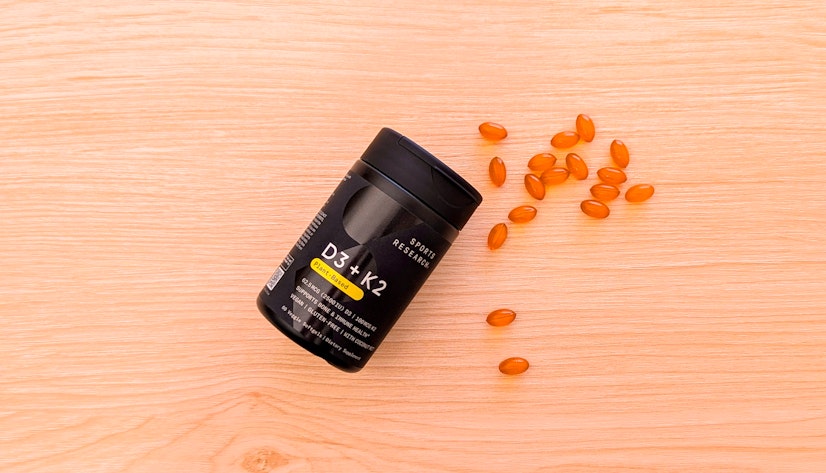
Photo by Innerbody Research
Pros
- Vegan certified (i.e., uses vegan D3)
- Available in two dosages and three bottle sizes
- Among the lowest base prices on our list
- Free U.S. shipping on subscriptions and orders over $50
- Third-party tested
- Very small softgel size
- Non-GMO verified
Cons
- Limited scientific support (so far) on the relative efficacy of vegan D3 versus its animal-derived counterpart
- No international shipping
Supplemental D3 usually comes from sheep’s wool, which isn’t suitable for a strict vegan lifestyle. Fortunately for vegans, recent years have seen the advent of D3 derived from plant-based sources such as lichen, which is the source of the cholecalciferol used in Sports Research D3 + K2.
Sports Research’s product is available in three strengths: one with 62.5mcg of D3 per serving, another with 125mcg, and the last with 250mcg. All three varieties have 100mcg of K2 as well.
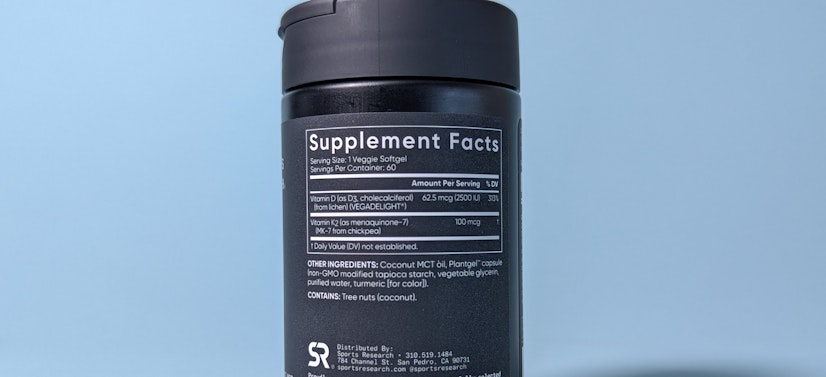
Photo by Innerbody Research
You’ll notice that one of the dosage options is similar to Metagenics D3 5000 + K, our recommendation for correcting a vitamin D deficiency. But as we’ve said, the current research on vegan D3 isn’t robust enough for us to conclude that it’s as effective as the stuff you get from sheep’s wool.
There’s some research — enough that we can recommend Sports Research to people committed to a strict vegan lifestyle — though it’s not as compelling as we’d like.
A case in point is a 2023 study published in the International Journal of Biomedical Investigation, which was severely limited by a small sample size of only ten people. The researchers there claimed that lichen-based vitamin D may be “absorbed at a higher rate than regular vitamin D,”47 but as Dr. Segar rightly notes, the study is “really low power.” Not only that, but the paper was written by a researcher who appears to be affiliated with the brand that manufactured the vitamin D used in the study, so there’s a possibility of bias.
Considering such limitations, though, we feel that Sports Research is the strongest bet for vegans looking for a boost to their vitamin D3. At this time, at least.
Pricing, subscriptions, and shipping
Sports Research D3 + K2 varies in price depending on the bottle size, as well as the purchase option. Here’s the breakdown (per-serving costs rounded up to the nearest cent)
| One-time | Subscription | |
|---|---|---|
| 30 capsules | $16.95 ($0.57 per serving) | $14.41 ($0.48 per serving) |
| 60 capsules (62.5mcg and 125mcg) | $23.95 ($0.40 per serving) | $20.36 ($0.34 per serving) |
| 60 capsules (250mcg) | $25.97 ($0.43 per serving) | $22.07 ($0.37 per serving) |
| 120 capsules | $43.95 ($0.37 per serving) | $37.36 ($0.31 per serving) |
Aside from the 30-capsule bottle, Sports Research beats out Metagenics in per-serving costs, making it the third-most affordable option on our list — behind NOW Foods and Codeage.
Subscriptions ship out every 30, 60, or 90 days. They also ship for free, as do orders over $50. Non-subscription orders below the threshold get a flat-rate $7.50 tacked on for standard shipping.
No international shipping is available at this time.
Refund policy
Sports Research has a 45-day satisfaction guarantee for its supplements. The guarantee is valid only once per product, but that’s better than Codeage’s once-per-customer-and-household policy. Also, it does not apply to Sports Research products purchased through third parties, and you’re the one responsible for return shipping costs.
Vitamin D3/K2 FAQ
Sources
Innerbody uses only high-quality sources, including peer-reviewed studies, to support the facts within our articles. Read our editorial process to learn more about how we fact-check and keep our content accurate, reliable, and trustworthy.
- Kaur, J., Khare, S., & Givler, A. (2025). Vitamin D deficiency. StatPearls [Internet].
- Columbia University Irving Medical Center. (2022). What's the deal with vitamin D? Columbia University.
- The Nutrition Source. (2023). Vitamin K. Harvard T. H. Chan School of Public Health.
- Shetty, M. (2024). Vitamin D: Benefits, sources, deficiency. Stanford Lifestyle Medicine.
- Cui, A., et al. (2023). Global and regional prevalence of vitamin D deficiency in population-based studies from 2000 to 2022: A pooled analysis of 7.9 million participants. Frontiers in Nutrition, 10, 1070808.
- Goddek, S. (2020). Vitamin D3 and K2 and their potential contribution to reducing the COVID-19 mortality rate. International Journal of Infectious Diseases, 99, 286-290.
- Office of Dietary Supplements. (2024). Vitamin D: Fact sheet for health professionals. ODS.
- Office of Dietary Supplements. (2021). Vitamin K: Fact sheet for health professionals. ODS.
- Jones, W. J., & Francis, J. J. (2000). Softgels: Consumer perceptions and market impact relative to other oral dosage forms. Advances in Therapy, 17(5), 213-221.
- Singh, G., & Bonham, A. J. (2014). A predictive equation to guide Vitamin D replacement dose in patients. The Journal of the American Board of Family Medicine, 27(4) 495-509.
- Ulrich, A., & Gragnolati, A. B. (2023). Vitamin D Dosages: Your GoodRx guide. GoodRx.
- Dietary Guidelines for Americans. (n.d.). Food sources of vitamin D. DGA.
- Yale Medicine. (n.d.). Vitamin D deficiency. Yale Medicine.
- Ames, B. N., Grant, W. B., & Willett, W. C. (2021). Does the high prevalence of vitamin D deficiency in African Americans contribute to health disparities? Nutrients, 13(2), 499.
- Moriarty, C. (2018). Vitamin D myths 'D'-bunked. Yale Medicine.
- McCarthy, S., & Golden, K. E. (2022). Low on vitamin D? Your medications could be to blame. GoodRx.
- Gupta, D., et al. (2011). Prevalence of serum vitamin D deficiency and insufficiency in cancer: Review of the epidemiological literature. Experimental and Therapeutic Medicine, 2(2), 181.
- Wang, T. J., et al. (2010). Common genetic determinants of vitamin D insufficiency: A genome-wide association study. Lancet, 376(9736), 180-188.
- Cleveland Clinic. (2022). Vitamin D deficiency. Cleveland Clinic.
- Mayo Clinic. (2021). Rickets. Mayo Clinic.
- Mayo Clinic Staff. (2022). Vitamin D. Mayo Clinic.
- Akpınar, Ş., & Karadağ, M. G. (2022). Is vitamin D important in anxiety or depression? What is the truth? Current Nutrition Reports, 11(4), 675-681.
- The National Health Service. (2020). Vitamin K. NHS.
- Cleveland Clinic. (2023). What to know about vitamin K2 and its health benefits. Cleveland Clinic.
- Geleijnse, J. M., et al. (2004). Dietary intake of menaquinone is associated with a reduced risk of coronary heart disease: The Rotterdam Study. The Journal of Nutrition, 134(11), 3100-3105.
- Gast, G. C. M., et al. (2009). A high menaquinone intake reduces the incidence of coronary heart disease. Nutrition, Metabolism, and Cardiovascular Diseases, 19(7), 504-510.
- Cleveland Clinic. (2023). These 11 foods are high in vitamin k2 — but that doesn’t mean they’re all healthy. Cleveland Clinic.
- Hu, J., et al. (2022). Effect of cheese intake on cardiovascular diseases and cardiovascular biomarkers. Nutrients, 14(14), 2936.
- UCLA Health. (2021). The effects of processed meats on your heart health. UCLA Health.
- Patrick, K., & Johnson, B. (2024). Bacon, sandwich ham and salami: How does processed and red meat cause cancer and how much matters? Cancer Research U.K.
- Eden, E. R., Daley, S. F., & Coviello, J. M. (2023). Vitamin K deficiency. StatPearls [Internet].
- Cleveland Clinic. (2023). Vitamin K deficiency. Cleveland Clinic.
- MedlinePlus. (2025). Vitamin K. National Library of Medicine.
- Pilz, S., Tomaschitz, A., Grübler, M. R., & Verheyen, N. (2017). The synergistic interplay between vitamins D and K for bone and cardiovascular health: A narrative review. International Journal of Endocrinology, 2017, 7454376.
- Walker, M. D., & Shane, E. (2023). Postmenopausal osteoporosis. The New England Journal of Medicine, 389(21), 1979-1991.
- Iwamoto, J., Takeda, T., & Ichimura, S. (2000). Effect of combined administration of vitamin D3 and vitamin K2 on bone mineral density of the lumbar spine in postmenopausal women with osteoporosis. Journal of Orthopaedic Science, 5(6), 546-551.
- Gallagher, J. C. (2013). Vitamin D and aging. Endocrinology and Metabolism Clinics of North America, 42(2), 319.
- Salamon, M. (2023). Vitamin D deficiency linked to loss of muscle strength. Harvard Health Publishing.
- Volpi, E., Nazemi, R., & Fujita, S. (2004). Muscle tissue changes with aging. Current Opinion in Clinical Nutrition and Metabolic Care, 7(4), 405-410.
- Banerjee, A., et al. (2015). Vitamin D and Alzheimer's disease: Neurocognition to therapeutics. International Journal of Alzheimer's Disease, 2015, 192747.
- Drugs.com. (2024). Vitamin D3. Drugs.com.
- Johnson, L. E. (2024). Vitamin D excess. Merck Manual.
- Zeratsky, K. (2022). What is vitamin D toxicity? Should I be worried about taking supplements? Mayo Clinic.
- Intertek. (n.d.). Good Manufacturing Practices (GMP) auditing solutions. Intertek.
- Williams, S., Malatesta, K., & Norris, K. (2010). Vitamin D and chronic kidney disease. Ethnicity & Disease, 19(4, Suppl. 5), S5-8-11.
- Masterjohn, C. (2007). Vitamin D toxicity redefined: Vitamin K and the molecular mechanism. Medical Hypotheses, 68(5), 1026-1034.
- Gangwar, G. (2023). Formulation of lichen-based pill a natural source of vitamin D3 with a high absorption rate by Ambrosiya Neo-Medicine Pvt. Ltd. International Journal of Biomedical Investigation, 6(2), 1-10.
- Cleveland Clinic. (2023). Fat-soluble vitamins: What they are and how to get the most out of them. Cleveland Clinic.
- Niet, S. D., et al. (2018). A randomized study to compare a monthly to a daily administration of vitamin D3 supplementation. Nutrients, 10(6), 659.
- Pilz, S., et al. (2011). Effect of vitamin D supplementation on testosterone levels in men. Hormone and Metabolic Research, 43(3), 223-225.
- Cleveland Clinic. (2022). Low testosterone (Male hypogonadism). Cleveland Clinic.
- Rizzoli, R. (2020). Vitamin D supplementation: Upper limit for safety revisited? Aging Clinical and Experimental Research, 33(1), 19-24.
- Han. H. (2014). The importance of vitamin K monitoring with warfarin (Coumadin) use in chronic kidney disease patients. Journal of Renal Nutrition, 25, e7-e8.
- Fuss, M., et al. (1992). Calcium and vitamin D metabolism in granulomatous diseases. Clinical Rheumatology, 11(1), 28-36.
- Stanic, B. M., et al. (2022). The importance of correlation between aldosterone and parathyroid hormone in patients with primary hyperparathyroidism. International Journal of Endocrinology, 2022, 3804899.
- Duncan, A., Yacoubian, C., Watson, N., & Morrison, I. (2015). The risk of copper deficiency in patients prescribed zinc supplements. Journal of Clinical Pathology, 68, 723-725.
- Qu, L., et al. (2023). Association of inflammatory markers with all-cause mortality and cardiovascular mortality in postmenopausal women with osteoporosis or osteopenia. BMC Women's Health, 23.
- Endocrine Society. (2022). Menopause and bone loss. Endocrine Society.
- U.S. Department of Agriculture. (2019). Usual nutrient intake from food and beverages, by gender and age. USDA.
- Office of Dietary Supplements. (2024). Calcium: Fact sheet for health professionals. ODS.
- Rondanelli, M., et al. (2020). Pivotal role of boron supplementation on bone health: A narrative review. Journal of Trace Elements in Medicine and Biology, 62, 126577.
- Office of Dietary Supplements. (2022). Boron: Fact sheet for health professionals. ODS.
- Nielsen, F. H., Lukaski, H. C., Johnson, L. K., & Roughead, Z. K. (2011). Reported zinc, but not copper, intakes influence whole-body bone density, mineral content and T score responses to zinc and copper supplementation in healthy postmenopausal women. The British Journal of Nutrition, 106(12), 1872-1879.

Copyright © Innerbody Research 1997 - 2025. All Rights Reserved.