Best DAO Supplement for Histamine Intolerance
DAO supplements may help reduce symptoms of histamine intolerance. But which ones actually work? We break down the science and compare top picks.

Photo by Innerbody Research
If you’ve ever felt off after certain meals — headaches, flushing, digestive discomfort, or congestion — histamine intolerance could be part of the picture. It’s often underdiagnosed, but researchers estimate that around 1% of the population may be affected.1
DAO (diamine oxidase) supplements have become a popular option for managing these symptoms. They’re designed to help your body break down histamine from food — something that doesn’t happen efficiently when DAO levels are low — and when taken before meals, they may help reduce the likelihood of reactions.
But DAO supplements vary widely in quality and formulation, making it difficult to know which ones are actually worth trying. This guide breaks down what DAO supplements can and can’t do, who’s most likely to benefit, and which options stand out for effectiveness, safety, and real-world value.
If you’re short on time, here’s a quick look at our findings:
Summary of recommendations
- Best overall: Pure Encapsulations DAO Enzyme
- Best vegan option: Life Extension Food Sensitivity Relief with DAO
- Best high-dose: OmneDiem Histamine Digest PureMAX
- Best budget choice: Life Extension Food Sensitivity Relief with DAO

If you’re looking for a DAO supplement that closely mirrors clinical research, Pure Encapsulations stands out.
Each capsule delivers 4.2mg of porcine-derived DAO — the same unit dose used in human studies — in a delayed-release format designed to reach the small intestine, where DAO does its job. Pure Encapsulations emphasizes quality through rigorous manufacturing standards and third-party testing, supporting consistency and purity. It’s a dependable choice for mealtime histamine support with a formula that reflects how DAO has been evaluated in research. Buying direct is the surest way to find this product; Pure Formulations doesn’t currently offer it on Amazon, iHerb, or other major marketplaces.
Jump to:
Why you should trust us
Over the past two decades, Innerbody Research has helped tens of millions of readers make more informed decisions about staying healthy and living healthier lives.
Our investigation into DAO supplements began with the underlying biology of histamine intolerance and the role that DAO plays in breaking down dietary histamine. We reviewed clinical research, mechanistic studies, and expert analyses to understand where DAO supplementation may be helpful, as well as where its limits are.
From there, we evaluated the supplement landscape to identify products that align with how DAO is actually used in practice. We focused on factors like enzyme activity, sourcing, formulation, and transparency, along with safety considerations such as allergen disclosures and third-party testing. We also assessed cost, convenience, and overall user experience to determine which products offer real-world value.
As with all health-related content on this website, this guide was thoroughly vetted by one or more members of our Medical Review Board for accuracy and will continue to be monitored for updates by our editorial team.
How we evaluated DAO supplements
Identifying the best DAO supplements meant evaluating each product on the same factors most people consider before adding one to their routine:
- Effectiveness
- Safety
- Cost
- Convenience
These four pillars guided our evaluation process.
In the sections ahead, we explain how our top picks performed in each area and where certain products stand out. All of our selections meet a high overall standard; when we highlight an advantage, we simply mean that a product showed a particular strength in that category, not that others fell short.
Effectiveness
Advantage: Pure Encapsulations DAO Enzyme
The research on DAO supplements is still fairly limited, but the best human study gives us a helpful picture of what effective use looks like.
In that randomized, placebo-controlled trial, people with histamine intolerance took two capsules before meals, for a total of 8.4mg of porcine (pig-derived) DAO extract and 20,000 HDU (histamine-degrading units) per dose.2 They saw meaningful improvements in symptoms like headaches, digestive discomfort, and skin reactions.
A few smaller studies and observational papers point in the same direction, suggesting that DAO can help when it’s taken shortly before meals and when food-based histamine is part of the problem.3 4
With that in mind, the most effective DAO supplements should offer:
- A meaningful amount of DAO activity — roughly 10,000–20,000 HDU per serving
- A format you can use right before meals
- Protection from stomach acid — so the enzyme can stay active long enough to do its job19
- A source that matches the research — in this case, pig-derived DAO
Pure Encapsulations comes very close to that model. Each capsule provides 4.2mg of porcine kidney extract and 26,676 HDU of DAO activity, and its delayed-release capsule helps protect the enzyme from stomach acid. In other words, it lines up well with the dose, source, and delivery method used in the strongest study we have.
That helps explain why we gave it the edge over plant-based alternatives. Products made with pea sprout DAO — including options like Life Extension’s DAO — may still help some people, but they don’t match the pig-derived DAO used in the best available human research.2
In a category where the evidence base is still small, staying close to the strongest study matters. That’s what makes Pure Encapsulations our top pick for effectiveness.
Safety
Advantage: Pure Encapsulations DAO Enzyme
DAO supplements appear to be well tolerated, though human safety data is still relatively limited. That said, the studies we do have are reassuring. In a 2025 randomized clinical trial, even single doses far higher than those used in typical DAO supplements were well tolerated, with no serious adverse events or clinically meaningful changes in vital signs, heart rhythm (ECG), or standard bloodwork markers.5 A separate study in people with migraine also reported no adverse effects during DAO use.2
Once you get past DAO itself, safety becomes more about how a product is made. For this category, we paid the closest attention to third-party testing, GMP standards, allergen profile, and source transparency. One important caveat is that the human research on DAO supplements has largely used porcine (pig-derived) DAO, while plant-based DAO is newer and less studied in people.6 7
| Pure Encapsulations | Life Extension | OmneDiem | |
|---|---|---|---|
| Third-party tested? | |||
| GMP-compliant / registered? | |||
| Free from common allergens? | |||
| DAO source | Porcine kidney | Pea sprout | Porcine kidney |
Pure Encapsulations earns the edge because it combines a formula that closely matches the best study on DAO and histamine intolerance with strong quality safeguards. The company conducts extensive raw-material and finished-product testing, including checks for potency, microbes, heavy metals, solvent residues, and allergens, and builds many of its formulas around a hypoallergenic “free-from” approach.
Life Extension is also a strong choice from a quality standpoint, especially for people who want a vegetarian option or prefer to avoid pork-derived ingredients.
While OmneDiem also has strong quality controls, its HDU level is higher than what was used in the best histamine intolerance study.2 That said, it remains within the range evaluated in a safety study on DAO — though that study used plant-derived DAO rather than porcine.5
Cost
Advantage: Life Extension Food Sensitivity Relief with DAO
To compare prices, we looked at the cost per serving (including shipping) for both one-time purchases and subscription options. DAO supplements are fairly standardized — most come with 60 capsules and are taken before meals — so this gives a clear apples-to-apples comparison.
On a per-serving basis, Life Extension comes in noticeably lower than the others. A one-time purchase costs $28.50 for 60 capsules, and even after adding shipping, it still undercuts the competition. With a subscription, the price drops further to $26.00 with free shipping, making it the most affordable option for ongoing use.
| Life Extension | Pure Encapsulations | OmneDiem PureMAX | |
|---|---|---|---|
| Price (one-time) | $28.50 | $49.00 | $54.95 |
| Subscription discount | $26.00 | $44.10 | $52.20 |
| Shipping | $5.50 (free over $50) | Free | Free |
| Servings | 60 | 60 | 60 |
| Cost per serving (one-time, with shipping) | $0.57 | $0.82 | $0.92 |
| Cost per serving (subscription) | $0.43 | $0.74 | $0.87 |
Pure Encapsulations and OmneDiem are both quite a bit more expensive on a per-serving basis. Pure Encapsulations includes free shipping, but the base price is still significantly higher. OmneDiem is the most expensive overall, and its subscription discount doesn’t close the gap much.
For most people, DAO supplements aren’t something you take once in a while; they’re something you use before meals, often every day. Costs add up faster than you might expect. In that context, Life Extension offers the most practical long-term value.
Convenience
Advantage: Life Extension Food Sensitivity Relief with DAO
DAO supplements don’t work the same for everyone. Since they’re meant to help with meal-related histamine, some people notice clear improvements, while others don’t. That’s what makes return policies especially important when it comes to convenience.
Life Extension stands out for two practical reasons:
- 365-day satisfaction guarantee: Life Extension allows returns even on opened bottles within a full year. By comparison, Pure Encapsulations only accepts returns on unopened products and may charge a restocking fee, while OmneDiem limits refunds to one bottle per household within 30 days.
- Flexible subscriptions: You can choose delivery intervals of 1–12 months, and pause or cancel anytime, making it easier to stay consistent without over-ordering or running out.
Taken together, that combination of low-risk trial and flexible reordering makes Life Extension the most convenient option overall.
How our top DAO supplement picks compare
The chart below provides a quick reference for how our top picks stack up across key areas, including enzyme activity, sourcing, cost, and refund policies.
| Pure Encapsulations | Life Extension | OmneDiem | |
|---|---|---|---|
| DAO activity (HDU per serving) | 26,676 | 20,000 | 40,000 |
| Price (per bottle) | $49.00 | $28.50 | $54.95 |
| Servings per unit | 60 | 60 | 60 |
| Cost per serving (one-time) | $0.82 | $0.48 | $0.92 |
| DAO source | Porcine (pig kidney) | Pea sprout (plant-based) | Porcine (pig kidney) |
| Delayed-release capsule? | |||
| Third-party tested? | |||
| Money-back guarantee? | 30 days (unopened; restocking fee may apply) | 365 days | 30 days |
What is histamine intolerance?
Histamine intolerance happens when your body has trouble breaking down histamine, a naturally occurring compound involved in immune responses, digestion, and communication between cells. While histamine plays important roles, too much of it can lead to symptoms that feel a lot like allergies.
Under normal conditions, your body keeps histamine levels in check using enzymes, primarily diamine oxidase (DAO) in the gut. DAO helps break down histamine in the digestive tract.1 When DAO activity is low — whether due to genetics, gut health, medications, or other factors — histamine can build up in the body and trigger symptoms.6
These symptoms can vary widely and often overlap with other conditions, which is one reason histamine intolerance can be difficult to identify. Some clinicians also debate whether it should be considered a distinct diagnosis, since there’s no universally accepted test or criteria, and commonly used tools like DAO blood testing don’t always align with symptoms in practice.3 9 13 Still, the underlying idea — that impaired histamine breakdown can contribute to symptoms — is supported by a growing body of research.11
Common symptoms of histamine intolerance include:
- Headaches or migraines
- Flushing or skin irritation
- Nasal congestion or runny nose
- Digestive issues like bloating, diarrhea, or abdominal pain
- Fatigue or dizziness
One of the biggest challenges with histamine intolerance is that it’s often tied to dietary triggers. Foods like aged cheeses, fermented products, alcohol, and certain processed meats tend to be higher in histamine. But individual tolerance varies, and symptoms don’t always appear immediately, which can make patterns harder to spot.6 10 14
Unlike a true food allergy, histamine intolerance doesn’t involve the immune system reacting to a specific substance. Instead, it’s more of a capacity issue — your body isn’t clearing histamine efficiently enough, so levels rise over time.
Because its symptoms overlap with conditions like irritable bowel syndrome (IBS), food sensitivities, and seasonal allergies, histamine intolerance is often underdiagnosed or misattributed.15 Understanding how histamine is processed — and where that process can break down — is the first step in identifying whether histamine intolerance may be playing a role.
How do DAO supplements work?
DAO supplements are designed to support your body’s ability to break down histamine from food at the point of digestion. When taken shortly before meals, they provide additional DAO enzyme in the gut, where food-derived histamine is first encountered.7
Their role is straightforward: DAO breaks down histamine before it can be absorbed. This helps limit how much histamine enters circulation — where it would otherwise bind to receptors throughout the body and trigger symptoms like headaches, flushing, or digestive discomfort.1 12
Because of this localized action, DAO supplements tend to work best when symptoms are clearly tied to food. Histamine-rich meals — such as those containing aged cheeses, fermented products, alcohol, or processed meats — can be more difficult to tolerate when DAO activity is low. Supporting histamine breakdown during digestion may improve tolerance to these foods in some people.1
Timing is critical. DAO doesn’t circulate throughout the body; it works in the digestive tract during a relatively short window. In practice, this means taking it shortly before eating so the enzyme is present when histamine arrives.12
How much DAO should I take?
There’s no official dosing standard for DAO supplements, but the clinical research gives us a useful benchmark.
In the strongest human study, participants with histamine intolerance took two capsules before meals, totaling 8.4mg of porcine (pig-derived) DAO extract and about 20,000 HDU (histamine-degrading units) per dose, and saw meaningful symptom improvement.2
That points to a simple approach:
- About 20,000 HDU per serving
- Taken shortly before meals
- Delivered in an acid-resistant or delayed-release capsule to help preserve enzyme activity19
On labels, HDU is the most important number to look for. It reflects how much histamine the enzyme can break down, which is more meaningful than ingredient weight alone.
Again, timing matters. DAO works in the digestive tract, so it needs to be present when histamine from food arrives. In studies, it’s typically taken right before or about 15–20 minutes before meals.16
A practical way to use DAO is to take it:
- Before meals that are higher in histamine (such as those with aged cheese, cured meats, or alcohol)
- Consistently with those meals, rather than randomly throughout the day
Because research is still limited, the most reliable strategy is to stay close to the dosing and timing used in clinical studies, while also paying attention to how your body responds.
Insider Tip: For best results, some people start with a brief low-histamine diet to reduce their baseline load (around 2–4 weeks). This can make it easier to see where DAO has the most impact. From there, try using one capsule before a higher-histamine meal and adjust based on how you feel.
Are DAO supplements safe?
According to available research, DAO supplements are well tolerated in healthy adults, though the overall evidence base remains relatively small.
The most detailed safety data comes from a 2025 randomized clinical trial evaluating a plant-derived DAO enzyme. In that study, participants were given very high single doses corresponding to approximately 600,000–3,000,000 HDU per dose. Even at these levels — far above what’s typically used in supplements — researchers observed no serious adverse events and no clinically meaningful changes in vital signs, heart rhythm (ECG), or standard bloodwork markers.5
For context, most DAO supplements — as well as the strongest effectiveness study — use doses closer to 20,000 HDU per serving, taken before meals.2 12 This suggests that DAO has a relatively wide safety margin, at least in short-term use.
Across clinical and observational studies, reported side effects have been rare and generally mild when they occur. These may include:
- Mild digestive discomfort
- Headache
- Nausea
One important nuance is that the high-dose safety study used plant-derived (pea-based) DAO, while most effectiveness research has used porcine (pig-derived) DAO.5 6 Both forms appear to be well tolerated, but they haven’t been studied under identical conditions, and we don’t yet have long-term data comparing them directly.
DAO’s mechanism may also contribute to its safety profile. Because it works locally in the digestive tract — breaking down histamine before it’s absorbed — it doesn’t circulate widely in the body, which likely reduces the risk of systemic side effects.1
Overall, current evidence suggests that DAO supplements are low-risk when used as directed, even at doses higher than those typically recommended.
Who are DAO supplements for?
DAO supplements are best suited for people who experience histamine-related symptoms after eating, especially when those symptoms seem tied to specific foods. If you’ve ever felt like certain meals just don’t sit right — causing headaches, flushing, or digestive discomfort — DAO may be worth considering.
Their benefit comes from helping break down histamine in the gut before it’s absorbed, a targeted mechanism that makes them most useful in certain situations, rather than broadly helpful for everyone.1 12
More specifically, the following groups are most likely to benefit:
People with suspected histamine intolerance
People sensitive to high-histamine foods
Some people find that certain foods — like aged cheese, fermented products, alcohol, or processed meats — reliably trigger symptoms. If that sounds familiar, DAO may help improve your tolerance when taken before those meals by reducing how much histamine is absorbed.1
People with meal-triggered migraines or headaches
People with certain gut-related conditions
DAO is produced in the intestinal lining, and lower DAO activity has been observed in some digestive conditions, including IBS, inflammatory bowel disease (IBD), and other conditions that affect the gut lining.8 While DAO supplements aren’t a treatment for these conditions, they may help ease histamine-related symptoms that occur alongside them.
Who are they not for?
DAO supplements can be helpful in specific situations, but they’re not a universal solution for histamine-related symptoms. They tend to work best when symptoms are clearly tied to food, and less so when other factors are involved.
It’s also worth noting that not everyone responds to DAO supplementation. Even in clinical studies, results are mixed: some people see clear improvement, while others notice little difference despite proper use.2 13
The following groups, in particular, may want to adjust expectations or proceed with a bit more caution:
People whose symptoms aren’t clearly tied to food
DAO works in the gut to break down dietary histamine, so it’s most helpful when symptoms follow histamine-rich meals. If symptoms are constant or unpredictable, or they don’t seem related to what you eat, DAO may not make a meaningful difference. Reviews generally describe DAO as a supportive tool, while dietary changes remain the main way to assess whether histamine is part of the issue.6 7
People expecting DAO to help with allergies or mast cell conditions
DAO doesn’t block histamine receptors or prevent histamine release. Its role is limited to breaking down histamine in the digestive tract, and it’s not absorbed systemically.23 If symptoms are driven mainly by internally released histamine — such as in allergies or mast cell conditions — DAO may offer limited benefit.24
People who regularly consume alcohol
Alcohol can interfere with how your body processes histamine. It may inhibit DAO activity while also contributing additional histamine, which can worsen symptoms.1 In these situations, supplementation may be less effective, especially if alcohol intake is frequent.
People taking medications that affect DAO activity
Some medications — including cimetidine and verapamil — have been identified as potential DAO inhibitors.6 These drugs can affect enzyme activity or histamine signaling pathways, which may reduce your body’s ability to break down histamine efficiently. As a result, symptoms may be influenced as much by these factors as by DAO levels themselves, making responses to supplementation less predictable.
Pregnant or breastfeeding individuals
There’s limited direct evidence on DAO supplementation during pregnancy or breastfeeding. Histamine metabolism also changes during pregnancy, with internal DAO activity typically increasing as part of normal physiology.17 18 This may help explain why symptoms of histamine intolerance sometimes improve during pregnancy, but it also means the role of supplementation isn’t fully clear. Checking with a healthcare provider is the safest approach.
People with severe or unexplained symptoms
Histamine intolerance is still a debated diagnosis, and its symptoms overlap with many other conditions. Controlled challenge studies show that suspected histamine intolerance doesn’t always hold up under testing.15 If symptoms are severe, worsening, or difficult to explain, it’s best to seek a medical evaluation rather than relying solely on supplements.
Overall, DAO supplements are best thought of as a targeted option for food-related histamine issues — not a solution for every histamine-like symptom.
Pure Encapsulations DAO Enzyme
Best overall
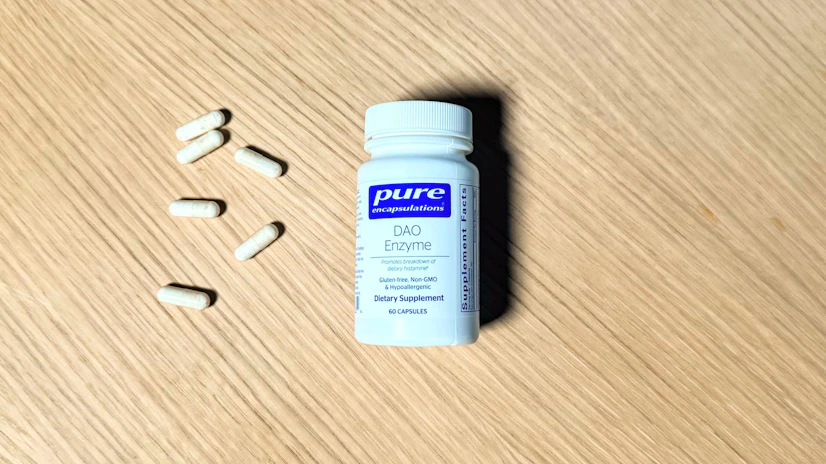
Photo by Innerbody Research
Pros
- Delivers 26,676 HDU per capsule, closely aligned with clinical research
- Delayed-release capsule helps protect the enzyme from stomach acid
- Minimalist, hypoallergenic formula with no unnecessary additives
- Manufactured in NSF-GMP–registered facilities and tested for purity and contaminants
- Free shipping and 10% subscription discount available
Cons
- Higher cost per serving than competitors
- Not suitable for vegetarians, vegans, or those avoiding pork-derived ingredients
- Returns are limited to unopened products within 30 days and may include a restocking fee
Founded in 1991, Pure Encapsulations is known for keeping its formulas simple and avoiding common allergens. Its products are made in NSF-GMP–registered facilities in the U.S. and tested for identity, potency, and contaminants like heavy metals, solvents, and microbes — helping ensure consistency from batch to batch.
Each capsule of Pure Encapsulations DAO provides 4.2mg of porcine kidney extract and 26,676 HDU of enzyme activity, putting it very close to the dosing used in the strongest clinical research. In a randomized trial, participants took a total of 20,000 HDU per dose (divided into two capsules) before meals and saw improvements in symptoms like headaches and digestive discomfort.2
Another key advantage is the delayed-release capsule, which helps protect DAO from stomach acid so more of the enzyme reaches the small intestine intact, where food-derived histamine is actually broken down. Because DAO is a protein enzyme, it can quickly lose activity in acidic gastric conditions, making acid-resistant delivery an important design feature.19
Compared with plant-based options, this formula also uses a porcine (pig-derived) DAO source, which is the same type used in most of the human research we have.6 Plant-derived DAO appears safe and may still be helpful, but it hasn’t been studied as extensively under the same conditions, so this is a closer match to what’s been tested.5
Taken together — research-aligned dosing, appropriate enzyme activity, acid-resistant delivery, and strong manufacturing standards — Pure Encapsulations DAO stands out as the most reliable option for effectiveness.
Pricing, subscriptions, and shipping
Here’s how Pure Encapsulations DAO breaks down on cost for a 60-capsule bottle:
| Bottle Price | Cost per serving | Free shipping? | |
|---|---|---|---|
| One time | $49.00 | $0.82 | |
| Subscription (10% off) | $44.10 | $0.74 |
Pure Encapsulations offers subscription deliveries every 1–3 months with a 10% discount, and shipping is free when you create an account. While it’s more expensive than options like Life Extension, it may be worth it for people who want a product that closely mirrors how DAO has been used in clinical research and is backed by strong quality controls.
Refunds and guarantees
Pure Encapsulations’ return policy is more restrictive than most competitors in this guide:
- Only unopened, unused products are eligible for return.
- Returns must be requested within 30 days of purchase.
- A 15% restocking fee may apply.
- Shipping costs are nonrefundable unless the return is due to an error.
There’s no general money-back guarantee, which means customers assume more risk compared with the other brands featured here, as both Life Extension and OmneDiem allow returns on opened products. Since DAO supplements don’t work for everyone, that’s something to keep in mind when choosing between options.
Life Extension Food Sensitivity Relief with DAO
Best vegan option and best budget choice
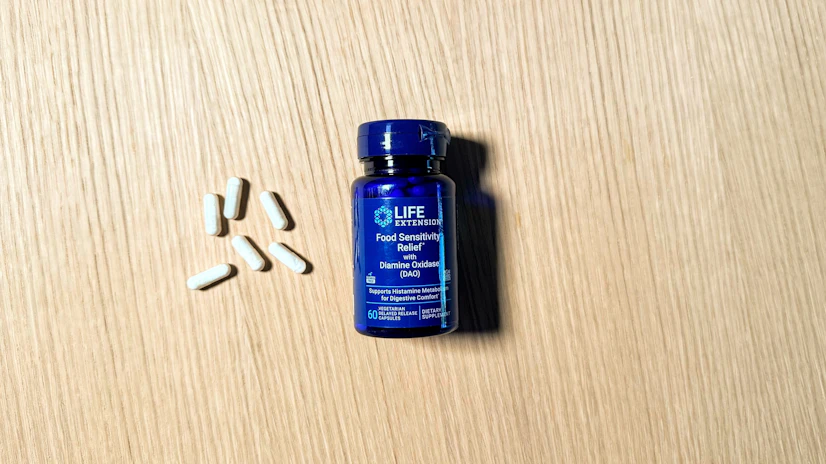
Photo by Innerbody Research
Pros
- 20,000 HDU per capsule, aligned with clinical dosing benchmarks
- Lower cost per serving than competitors, especially with subscription discounts
- Vegan-friendly (pea-derived DAO)
- Delayed-release capsule to help protect enzyme activity
- Manufactured in NSF-registered, GMP-compliant facilities with third-party testing
- 365-day satisfaction guarantee, even on opened bottles
Cons
- Uses plant-derived DAO, which hasn’t been studied as extensively as porcine DAO
- Slightly lower HDU per capsule than some alternatives
- Shipping fee on one-time orders below $50
Life Extension is one of the more established supplement companies and tends to balance quality, accessibility, and price. Its products are made in NSF-registered, GMP-compliant facilities and tested for purity and potency.
Each capsule of Food Sensitivity Relief provides 4.3mg of pea sprout extract standardized to 20,000 HDU of DAO activity, placing it right in line with the dosing used in the strongest clinical research.2 Like Pure Encapsulations, it also uses a delayed-release capsule, which helps protect the enzyme from stomach acid so it can reach the small intestine intact, where food-derived histamine is broken down.19
The main difference here is the enzyme source. Life Extension uses a plant-derived (pea-based) DAO, while most effectiveness studies have used porcine (pig-derived) DAO.6 That doesn’t mean plant-based DAO can’t work — but it hasn’t been studied as extensively under the same conditions.
That said, plant-derived DAO does have reassuring safety data. In a randomized clinical trial, very high single doses of pea-derived DAO — far above what’s typically used in supplements — were well tolerated, with no serious adverse effects reported.5 So while the evidence is more limited on the effectiveness side, safety does not appear to be a concern.
Taken together, Life Extension offers a practical middle ground: a research-aligned dose, solid quality standards, and a significantly lower cost — all in a vegan-friendly format.
Pricing, subscriptions, and shipping
Here’s how Life Extension Food Sensitivity Relief breaks down on cost for a 60-capsule bottle:
| Bottle Price | Cost per serving | Shipping | |
|---|---|---|---|
| One time | $28.50 | $0.57 | $5.50 |
| Subscription (10% off) | $26.00 | $0.43 | Free |
Life Extension is the most affordable option in this guide, especially with its subscription pricing — coming in at roughly 40% less per serving than Pure Encapsulations. Shipping is $5.50 on smaller orders but free on purchases over $50 (and on subscriptions).
Since DAO supplements are often taken regularly before meals, that lower cost can add up to meaningful savings over time.
Refunds and guarantees
Life Extension offers one of the most generous return policies in the supplement space: a 365-day money-back guarantee that applies even to opened bottles. No other product in this guide comes close (OmneDiem, for comparison, offers 30 days).
That’s especially valuable with DAO supplements, where results can vary from person to person. It gives you the flexibility to try the product under real-world conditions and decide whether it’s actually helping, without feeling locked in if it doesn’t.
OmneDiem Histamine Digest PureMAX
Best high-dose

Photo by Innerbody Research
Pros
- 40,000 HDU per capsule, the highest DAO activity in this guide
- Uses porcine (pig-derived) DAO, aligned with most clinical research
- Delayed-release capsule helps protect enzyme activity
- Contains DAOgest, a branded DAO extract with supporting research
- Manufactured in GMP-registered facilities with third-party testing
- Free shipping
Cons
- Highest cost per serving in this guide
- Limited clinical evidence comparing higher versus standard DAO doses
- Not suitable for vegetarians, vegans, or those avoiding pork-derived ingredients
Launched in 2016, OmneDiem focuses specifically on DAO and histamine intolerance, and its PureMAX formula reflects that specialization. Each capsule provides 4.8mg of porcine DAO extract and 40,000 HDU of activity, roughly double the amount used in the strongest clinical study on DAO supplementation.2
While we don’t have head-to-head trials showing that higher doses work better, the mechanism is fairly straightforward. DAO works locally in the gut to break down histamine from food, and in vitro research suggests that degrading histamine amounts similar to those found in typical meals may require substantial enzyme activity — potentially more than what standard supplement doses provide.20 21
There’s also some ingredient-specific support behind DAOgest, the branded DAO extract used in OmneDiem’s formula. In an observational study, patients taking 4.2mg of DAOgest before their main daily meal reported improvements across multiple symptom categories, including gastrointestinal, skin, and respiratory symptoms, with no adverse events recorded.22 Separately, in vitro research shows that DAOgest can degrade histamine and is not absorbed across the intestinal wall, supporting its role as a local, meal-time enzyme.23
Like the other products in this guide, OmneDiem uses a delayed-release capsule, which helps protect DAO from stomach acid — an important consideration, since enzyme activity can decline quickly in acidic conditions before reaching the small intestine.19
With these factors taken together, PureMAX stands out as the most compelling option for people in search of a higher-HDU approach, whether it’s due to having more reactive symptoms or simply wanting a stronger dose.
Pricing, subscriptions, and shipping
Here’s how OmneDiem Histamine Digest PureMAX breaks down on cost for a 60-capsule bottle:
| Bottle price | Cost per serving | Shipping | |
|---|---|---|---|
| One-time | $54.95 | $0.92 | Free |
| Subscription (5% off) | $52.20 | $0.87 | Free |
OmneDiem is the most expensive option in this guide — roughly twice the cost of Life Extension on a subscription basis. For readers specifically seeking a higher-dose approach, that trade-off may be worth it.
Refunds and guarantees
OmneDiem offers a 30-day refund policy, including opened products, but limits refunds to one bottle per household. That’s more flexible than Pure Encapsulations, which only accepts returns on unopened products and may charge a restocking fee, but still more restrictive than Life Extension’s 365-day guarantee.
Alternatives to DAO supplements
DAO supplements work by breaking down histamine in the gut, but they aren’t the only approach. Several alternatives aim to reduce histamine exposure, limit its release, or improve the body’s ability to tolerate it.
Each option works differently, so the best choice depends on what’s driving your symptoms.
Low-histamine diet
A low-histamine diet is often the first-line approach for managing suspected histamine intolerance.
Histamine levels in food tend to rise with aging, fermentation, and storage, which is why foods like aged cheeses, cured meats, alcohol, and leftovers are common triggers.1 By reducing your intake of these foods, you can lower the total histamine burden your body has to process.
Clinical guidance and observational research suggest that low-histamine diets can improve symptoms like headaches, gastrointestinal discomfort, and skin reactions in people with histamine sensitivity.24
That said, this approach can be restrictive and difficult to sustain in the long term. It’s often most useful as a short-term diagnostic tool, followed by gradual reintroduction to identify specific triggers.
Quercetin
Quercetin is a plant-derived flavonoid that acts as a mast cell stabilizer, meaning it may help prevent the release of histamine rather than breaking it down.
In cell and animal studies, quercetin has been shown to inhibit histamine release and reduce inflammatory signaling pathways involved in allergic responses.25 Early human research also suggests it may help reduce symptoms of allergic rhinitis and other histamine-related conditions.26
Because of this mechanism, quercetin is often positioned as a complementary approach to DAO: one reduces histamine production, while the other helps degrade it.
For a deeper look at how quercetin works — including the underlying science, dosing considerations, and our top product recommendations — see our dedicated guide to quercetin supplements.
Bromelain
Bromelain, an enzyme extracted from pineapple, is sometimes included in histamine-support formulas due to its anti-inflammatory and immune-modulating effects.
Research suggests bromelain may reduce levels of pro-inflammatory compounds and influence immune cell activity involved in allergic responses.27 Some studies also indicate it may help improve symptoms in conditions such as sinusitis and allergic inflammation.28
While bromelain doesn’t directly degrade histamine as DAO does, it may help reduce the downstream inflammatory response that histamine triggers.
It’s often paired with quercetin, as the two may have complementary effects on inflammation and mast cell activity.29
Vitamin C
Vitamin C plays a role in histamine metabolism and may help lower circulating histamine levels.
Older clinical studies found that vitamin C supplementation reduced blood histamine concentrations in both healthy individuals and those with allergic conditions.30 More recent research supports its role in immune regulation and oxidative stress, both of which influence histamine activity.31
Because it’s inexpensive and widely available, vitamin C is often used as a low-risk adjunct strategy alongside dietary changes or other supplements.
Gut health support (probiotics)
Histamine intolerance is closely tied to gut health, since certain gut bacteria can either produce or degrade histamine.
Some probiotic strains — particularly certain Lactobacillus and Bifidobacterium species — may help reduce histamine levels or improve gut barrier function.32 33 Others, however, can produce histamine, which makes strain selection important.
Emerging research suggests that improving gut health may help restore balance in histamine metabolism, though this area is still developing and not yet standardized in clinical practice.8 14
How these alternatives compare
DAO supplements are unique in that they directly break down histamine in the digestive tract, especially when taken before meals.
Most alternatives work indirectly:
- Diet: reduces histamine intake
- Quercetin: limits histamine release
- Bromelain: reduces inflammation
- Vitamin C: supports histamine breakdown
- Probiotics: influence long-term gut balance
In practice, many people use a combination approach — for example, pairing a low-histamine diet with DAO for meals and adding quercetin or vitamin C for broader support.
DAO Supplement FAQ
Sources
Innerbody uses only high-quality sources, including peer-reviewed studies, to support the facts within our articles. Read our editorial process to learn more about how we fact-check and keep our content accurate, reliable, and trustworthy.
Maintz, L., & Novak, N. (2007). Histamine and histamine intolerance. The American Journal of Clinical Nutrition, 85(5), 1185–1196.
Izquierdo-Casas, J., Comas-Basté, O., Latorre-Moratalla, M. L., Lorente-Gascón, M., Duelo, A., Soler-Singla, L., & Vidal-Carou, M. C. (2019). Diamine oxidase (DAO) supplement reduces headache in episodic migraine patients with DAO deficiency: A randomized double-blind trial. Clinical Nutrition, 38(1), 152–158.
Manzotti, G., Breda, D., Di Gioacchino, M., & Burastero, S. E. (2016). Serum diamine oxidase activity in patients with histamine intolerance. International Journal of Immunopathology and Pharmacology, 29(1), 105–111.
Izquierdo-Casas, J., Comas-Basté, O., Latorre-Moratalla, M. L., Lorente-Gascón, M., Duelo, A., Vidal-Carou, M. C., & Soler-Singla, L. (2018). Low serum diamine oxidase (DAO) activity levels in patients with migraine. Journal of Physiology and Biochemistry, 74(1), 93–99.
Molina Perelló, P., Puntes Rodríguez, M., Coimbra Hurtado, J., Garrido Sánchez, M., Castillo Ocaña, M., Martínez Bonifacio, D., Carrera Marcolin, L., Cuñé Castellana, J., & Antonijoan Arbós, R. (2025). Evaluation of the Safety and Tolerability of Three Single Ascending Doses of Diamine Oxidase (DAO) in Healthy Volunteers: A Randomized Clinical Trial. International Journal of Translational Medicine, 5(4), 46.
Comas-Basté, O., Sánchez-Pérez, S., Veciana-Nogués, M. T., Latorre-Moratalla, M., & Vidal-Carou, M. C. (2020). Histamine Intolerance: The Current State of the Art. Biomolecules, 10(8), 1181.
Jackson, K., Busse, W., Gálvez-Martín, P., Terradillos, A., & Martínez-Puig, D. (2025). Evidence for Dietary Management of Histamine Intolerance. International Journal of Molecular Sciences, 26(18), 9198.
Schink, M., Konturek, P. C., Tietz, E., Dieterich, W., Pinzer, T. C., Wirtz, S., Neurath, M. F., & Zopf, Y. (2018). Microbial patterns in patients with histamine intolerance. Journal of Physiology and Pharmacology, 69(4).
van Odijk, J., Weisheit, A., Arvidsson, M., Miron, N., Nwaru, B., & Ekerljung, L. (2023). The Use of DAO as a Marker for Histamine Intolerance: Measurements and Determinants in a Large Random Population-Based Survey. Nutrients, 15(13), 2887.
Schnedl, W. J., & Enko, D. (2021). Histamine Intolerance Originates in the Gut. Nutrients, 13(4), 1262.
Alemany-Fornés, M., Bori, J., Begoña, M., & Suárez, M. (2025). Diamine oxidase deficiency implications for health, current management, and future directions in the treatment of histamine intolerance: A review. International Journal of Biological Macromolecules, 327(Pt 1), 147130.
Schnedl, W. J., Schenk, M., Lackner, S., Enko, D., Mangge, H., & Forster, F. (2019). Diamine oxidase supplementation improves symptoms in patients with histamine intolerance. Food Science and Biotechnology, 28(6), 1779–1784.
Hrubisko, M., Danis, R., Huorka, M., & Wawruch, M. (2021). Histamine Intolerance—The More We Know the Less We Know. A Review. Nutrients, 13(7), 2228.
Sánchez-Pérez, S., Comas-Basté, O., Duelo, A., Veciana-Nogués, M. T., Berlanga, M., Vidal-Carou, M. C., & Latorre-Moratalla, M. L. (2022). The dietary treatment of histamine intolerance reduces the abundance of some histamine-secreting bacteria of the gut microbiota in histamine intolerant women. A pilot study. Frontiers in Nutrition, 9, 1018463.
Bent, R. K., Kugler, C., Faihs, V., Darsow, U., Biedermann, T., & Brockow, K. (2023). Placebo-Controlled Histamine Challenge Disproves Suspicion of Histamine Intolerance. The Journal of Allergy and Clinical Immunology: In Practice, 11(12), 3724–3731.e11.
Okutan, G., Sánchez Niño, G. M., Terrén Lora, A., & López Oliva, S. (2023). Exogenous Supplementation with DAO Enzyme in Women with Fibromyalgia: A Double-Blind Placebo-Controlled Clinical Trial. Journal of Clinical Medicine, 12(20), 6449.
Duelo, A., Sánchez-Pérez, S., Pellicer-Roca, S., Sánchez-Buxens, S., Comas-Basté, O., Latorre-Moratalla, M. L., & Vidal-Carou, M. C. (2025). Improvement of Histamine Intolerance Symptoms in Pregnant Women with Diamine Oxidase Deficiency: An Exploratory Study. Journal of Clinical Medicine, 14(13), 4573.
Maintz, L., Schwarzer, V., Bieber, T., van der Ven, K., & Novak, N. (2008). Effects of histamine and diamine oxidase activities on pregnancy: a critical review. Human Reproduction Update, 14(5), 485–495.
Calinescu, C., Federico, R., Mondovi, B., & Mateescu, M. A. (2010). Zymographic assay of plant diamine oxidase on entrapped peroxidase polyacrylamide gel electrophoresis. A study of stability to proteolysis. Analytical and Bioanalytical Chemistry, 396(3), 1281–1290.
Kettner, L., Seitl, I., & Fischer, L. (2020). Evaluation of porcine diamine oxidase for the conversion of histamine in food-relevant amounts. Journal of Food Science, 85(3), 843–852.
Téllez-Téllez, M., Sánchez, C., & Díaz-Godínez, G. (2022). Recent advances in the application of microbial diamine oxidases and other histamine-oxidizing enzymes. World Journal of Microbiology and Biotechnology, 38(232).
O'Connor, M. E., Terradillos-Guillén, A., Gálvez-Martín, P., & Martínez-Puig, D. (2023). Observational study to assess the efficacy and safety of diaminooxidase (DAO) supplementation in patients with histamine intolerance (HIT). Clinical Nutrition ESPEN, 58, 741.
Gálvez-Martín, P., Gallego, E., Solano-Romaní, L., et al. (2023). In vitro characterization, evaluation of enzymatic activity and capacity of intestinal absorption of daogest (Dao extract from pig kidney). Clinical Nutrition ESPEN, 58, 512.
Reese, I., Ballmer-Weber, B., Beyer, K., et al. (2017). German guideline for the management of adverse reactions to ingested histamine. Allergo Journal International, 26(2), 72–79.
Tempuraj, D., Madhappan, B., Christodoulou, S., et al. (2005). Flavonols inhibit proinflammatory mediator release, intracellular calcium ion levels and protein kinase C theta phosphorylation in human mast cells. British Journal of Pharmacology, 145(7), 934–944.
Mlcek, J., Jurikova, T., Skrovankova, S., & Sochor, J. (2016). Quercetin and Its Anti-Allergic Immune Response. Molecules, 21(5), 623.
Pavan, R., Jain, S., Shraddha, & Kumar, A. (2012). Properties and therapeutic application of bromelain: a review. Biotechnology Research International, 2012, 976203.
Kansakar, U., Trimarco, V., Manzi, M. V., et al. (2024). Exploring the Therapeutic Potential of Bromelain: Applications, Benefits, and Mechanisms. Nutrients, 16(13), 2060.
Imran, M., Thabet, H. K., Alaqel, S. I., et al. (2022). The Therapeutic and Prophylactic Potential of Quercetin against COVID-19: An Outlook on the Clinical Studies, Inventive Compositions, and Patent Literature. Antioxidants, 11(5), 876.
Johnston, C. S., Martin, L. J., & Cai, X. (1992). Antihistamine effect of supplemental ascorbic acid and neutrophil chemotaxis. Journal of the American College of Nutrition, 11(2), 172–176.
Carr, A. C., & Maggini, S. (2017). Vitamin C and Immune Function. Nutrients, 9(11), 1211.
Smolinska, S., Winiarska, E., Globinska, A., & Jutel, M. (2022). Histamine: A Mediator of Intestinal Disorders—A Review. Metabolites, 12(10), 895.
Cavaliere, G., Costanzi, E., Cenci-Goga, B., Misuraca, M., & Traina, G. (2025). Potential Role of Probiotic Strain Lactiplantibacillus plantarum in Control of Histamine Metabolism. Biology, 14(6), 734.

Copyright © Innerbody Research 1997 - 2025. All Rights Reserved.