Best Vegan Omega-3 Supplement
We detail the benefits of vegan omega-3 supplementation with six well-formulated options.
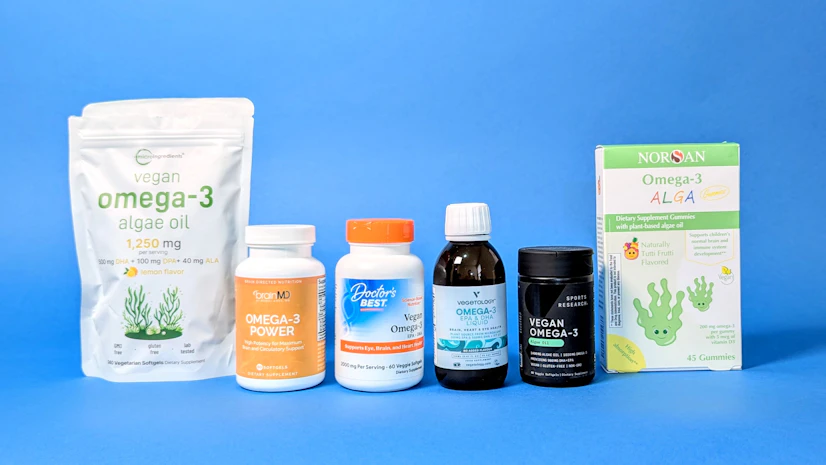
Photo by Innerbody Research
A vegan lifestyle requires tough choices about the foods one eats and the products one buys. For many, it requires supplements, too, and one nutrient in which vegans may be deficient is omega-3 fatty acids.
Normally, we associate omega-3s with fish. Part of the reason some fish are so rich in omega-3s is that they eat algae, and (wouldn’t you know it) algae are vegan. So, with a supplement derived from algae oil, vegans don’t have to compromise their health for their values.
This guide highlights the six best vegan omega-3 supplements on the market, but it goes beyond a simple list of recommendations. It also examines the qualities of a great vegan omega-3 and the benefits of supplementation, which we factored into our choices.
You can see what those choices are directly below, and then read further to understand how we made them.
Summary of our recommendation:
- Best capsules for most people: Doctor’s Best Vegan Omega-3
- Best higher-dose alternative: BrainMD Omega-3 Power
- Best for cognitive benefits: Sports Research Vegan Omega-3
- Best liquid for most people: Vegetology Omega-3 EPA & DHA Liquid
- Best gummies: Norsan Omega-3 Alga Gummies
- Budget pick: Micro Ingredients Vegan Omega-3 Algae Oil

If your goal is reducing inflammation, Doctor’s Best offers a winning formula that strongly aligns with science.
Its 2:1 ratio of EPA to DHA, and the 1.3g overall serving, are consistent with clinical research showing positive anti-inflammatory results. The company conducts third-party testing (though they should make it easier to access the results of it). Also note that this isn’t the least algae-forward in terms of taste. You can buy it on iHerb for the lowest price, or find it on Amazon at a price still lower than buying direct.
Jump to:
Why you should trust us
Over the past two decades, Innerbody Research has helped tens of millions of readers make more informed decisions about staying healthy and living healthier lifestyles.
This guide represents approximately 50 hours of research into the science of vegan omega-3 supplementation. Over those hours, we explored how vegan sources of omega-3 compare to their non-vegan counterparts, the health benefits of supplementation, and the doses needed to realize those benefits. We combed the supplement market, too, to identify the brands whose products most closely align with the research.
Additionally, like all health-related content on this website, this guide was thoroughly vetted by one or more members of our Medical Review Board for accuracy and will continue to be monitored for updates by our editorial team.
How we evaluated vegan omega-3 supplements
Our assessments of the best vegan omega-3 supplements hinged on four criteria that are likely to influence consumers’ purchasing decisions:
- Effectiveness: Is the dose both high enough and well-proportioned enough to yield desirable results?
- Safety: What measures are taken to assure the consumer about health risks?
- Cost: Which supplement offers the greatest cost-effectiveness?
- Ease of regimen: Which supplement would be the easiest to incorporate into daily use?
All of our recommendations performed admirably in these categories, but only one rose to the top in each.
Effectiveness
Advantage: Doctor’s Best Vegan Omega-3
To gauge effectiveness, we focused on whether a single supplement could meet the health needs of most people who’d take a vegan omega-3 supplement. Considering that inflammation appears to be somewhere at the root of nearly every ailment that omega-3s could address (sleep, cognitive function, mental health, cardiovascular health), anti-inflammation potential formed the center of our rubric. And Doctor’s Best Vegan Omega-3 showed the greatest potential. It provides 1.3g of total omega-3s, which is consistent with doses used in successful omega-3 research on inflammation.39 Moreover, it provides its omega-3s in a 2:1 EPA-to-DHA ratio, which has been found to be effective against inflammatory diseases.40
That being said, a couple of our other recommendations may be better suited to address particular health issues. BrainMD offers higher doses of DHA and EPA, which ought to be more effective for cardiovascular health; Sports Research’s DHA-prominent formulation shows better potential for cognitive health.
Our remaining recommendations are more geared toward helping vegans increase their intake of DHA and EPA, rather than improving specific health conditions. To that end, they’re more than sufficient.
Safety
Advantage: Sports Research Vegan Omega-3
Omega-3 supplements are generally regarded as safe by the United States Food & Drug Administration, but they do have safety concerns. They have interactions with medications such as glucocorticoids, NSAIDs, and anticoagulants; antiplatelet action, which can increase bleeding time; and the potential to elevate the risk of atrial fibrillation.23 24 1 22 While medication interactions depend on individual use and can’t be fully avoided, brands that possess certain qualities can mitigate the chances of bleeding and atrial fibrillation by avoiding too-high doses, as these risks arise only with amounts exceeding 5g and 1g, respectively.
Sports Research Vegan Omega-3 does that. It delivers enough omega-3s to be useful for cognitive health, but only barely exceeds a 1g dose. Vegetology and Norsan also provide sub-1g doses, but unlike Sports Research, they don’t provide third-party test results. Only with Sports Research do you have the added assurance of purity and potency, without having to hound customer support for certificates of analysis.
Cost
Advantage: Micro Ingredients Vegan Omega-3 Algae Oil
Most of our recommendations have base prices around $26, but because they’re mostly 30-serving units, the per-serving cost comes to about $0.87. Micro Ingredients also has a base price of around $26, but it provides 80 servings per bag, which amounts to just $0.34 per serving. Even when compared to the lowest subscription price point in this guide (Vegetology, $19.59), Micro Ingredients is almost twice as cost-effective.
With that low cost, you also get a 30-day satisfaction guarantee. It isn’t as generous as Doctor’s Best or Vegetology on this front (90-day guarantees each), but 30 days is fairly standard, and the fact that you can return opened items puts it ahead of BrainMD.
Ease of regimen
Advantage: Norsan Omega-3 Alga Gummies
Omega-3 capsules tend to be big. Like, distance-between-finger-joints big. For many, it would be a chore to swallow two of them every day, as most of our capsule recommendations would have you do. But our Norsan recommendation is a gummy supplement, and a tasty one at that. Our testers had no problem chewing a small handful of them. They rather enjoyed the experience.
We could say that Vegetology is a worthy mention here, as our recommendation is a liquid supplement, but it isn’t pleasant to consume. It’s an oil, after all. We don’t know many people who are keen to drink straight oil.
Instead, if gummies aren’t your thing, we’d recommend Micro Ingredients as our runner-up since it uses pebble-sized capsules that go down very easily. Even though you’re supposed to take three per day, we found the three Micro Ingredients caps much less of an inconvenience than the two larger ones you’d take with Doctor’s Best, BrainMD, or Sports Research.
How the best vegan omega-3 supplements compare
Before we get into the science behind vegan omega-3 supplements, take a look at this quick-reference chart comparing our top recommendations on key points (prices are for standard, non-bulk purchases):
What are vegan omega-3 supplements?
First, a preamble. But stick with us.
Omega-3 fatty acids come primarily in three forms:
- Alpha-linolenic acid (ALA)
- Eicosapentaenoic acid (EPA)
- Docosahexaenoic acid (DHA)
ALA is most abundant in flaxseed, chia seeds, and English walnuts, whereas the most generous sources of EPA and DHA are cold-water fish.1 Most vegans ought to have no difficulty obtaining ALA through dietary sources, but in the latter two they are often deficient. One reason for that is that, of course, vegans don’t consume animal protein.2 Another is that vegans statistically consume plenty of a different fatty acid (omega-6) that interferes with the body’s conversion of ALA into EPA/DHA.3 From a health standpoint, although the vegan diet has much to recommend it, it exposes one to the risk of deficiencies both exo- and endogenous.4
So, when we talk about vegan omega-3 supplements, we’re referring to products that provide EPA and/or DHA in large enough amounts to bridge this dietary gap in a vegan diet. More specifically, we mean supplements derived from algae, the richest non-animal-based source of these omega-3s. 1 In fact, algae, as a dietary object in marine ecosystems, are part of why cold-water fish are so omega-3-rich.
Why take a vegan omega-3 supplement?
The National Academy of Medicine recommends that adults consume 1.1–1.6g of omega-3 fatty acids every day. For vegans, a tablespoon of flaxseed or an ounce of walnuts would more than cover the range, but exclusively with ALA. 1 It’s true that ALA converts to DHA/EPA in the body, but only at a rate of 2–10%.28 Therefore, to obtain sufficient DHA/EPA, a supplemental intervention is in order.
Without supplementation, unfortunate health outcomes may occur in such areas as:
Dermatological health
A fatty acid deficiency may, in general, lead to rough, scaly skin and dermatitis. 1 ALA is a strong preventive, but DHA plays a key role, too, as it strengthens the skin’s structural proteins, reduces inflammation, and promotes the differentiation of skin cells.5 Of note, a vegan diet already may be a boon to healthy skin, so let’s say conscientious omega-3 supplementation is the brace that supports the camel’s back.6
Sleep health
Less EPA and DHA equals less sleep, say the authors of a 2021 regression analysis.7 The reason may be that EPA and DHA influence melatonin production.8 Without enough of the former, the body doesn’t have enough of the latter to carry you off to the land of Zs and enumerated sheep. Illustrating the effects of omega-3s on sleep health, a 2022 study found that participants with poor sleep who received 576mg DHA and 284mg EPA per day showed significant improvement in sleep efficiency.9
Cognitive and mental health
Omega-3s have a well-publicized association with the brain centered around cognitive function, and one supported by multiple studies. A 2023 analysis of cohort studies, for instance, notes that elevated levels of DHA and EPA appear to reduce the risk of cognitive decline, and a 2022 review concludes that the “ingestion of omega-3 fatty acids increases learning, memory, cognitive well-being, and blood flow in the brain.”10 11
But with their association with cognitive function, omega-3s may also influence mental health. A 2016 study, in which the researchers highlight the link between omega-3 deficiency and a “depressive-like state,” supports this assertion.12 The same goes for a 2019 meta-analysis that found up to 1g/day of omega-3, in which at least 60% of the supplement consisted of EPA specifically, “would have beneficial effects on depression.”13
Cardiovascular health
Cardiovascular health is another well-publicized benefit of omega-3s. Earlier research, circa the turn of the 21st century, reported that 1g/day of omega-3s could improve heart disease outcomes and 2–4g could help manage hypertriglyceremia.14 More recently, the VITAL study found that these effects are more likely to yield significant reductions specifically in heart attack risk (as opposed to heart disease risk) in specific populations: Black Americans, people with multiple cardiovascular risks, and those who don’t normally consume sufficient dietary DHA/EPA.15
Other research has noted that omega-3s have antiplatelet effects, meaning they may help prevent blood-clotting disorders (e.g., thrombosis).16
Anti-inflammation
Inflammation is the common thread connecting most of the health issues we’ve named. Research suggests that it may contribute to inconsistent sleep patterns, impaired cognitive performance, depression, and cardiovascular disease.34 35 36 37 What omega-3s appear to do is modulate systemic inflammation, potentially preventing serious pathologies from taking hold.38
Is vegan omega-3 as good as fish oil?
Most omega-3 studies administer fish oil to participants, but they likely would have yielded similar results had they used a vegan alternative. Indeed, research indicates that there’s no meaningful difference between omega-3 from fish and omega-3 from algae:
- In 2005, an eight-week randomized trial showed that healthy people who consumed 940mg of vegetarian DHA/day increased their omega-3 index from 4.8% to 8.4%.17
- In a 2008 trial of the same length, participants who took 2–6g/day of fish oil saw their omega-3 content increase from 4% to 6.5%.18
At the very least, these two studies suggest that vegan omega-3s are as effective as their non-vegan counterparts. In fact, in terms of pure numbers, vegan supplementation may be more effective.
Are vegan omega-3 supplements safe?
Algae oil (from which vegan omega-3s are derived) is generally recognized as safe by the U.S. Food & Drug Administration, and animal studies have not uncovered any notable adverse events.19 20 21
It’s only when you start consuming very high doses that more serious risks might arise:
- Increased bleeding time owing to antiplatelet action, likely starting at 5g/day1
- Increased risk of atrial fibrillation, especially for doses greater than 1g/day22
- Drug interactions with medications that affect blood clotting (e.g, anticoagulants and NSAIDs), as well as glucocorticoids23 24
Who are vegan omega-3 supplements for (and not for)?
The most obvious audience for a vegan omega-3 supplement would be vegans and vegetarians, especially those who are keen to improve their skin, sleep, cognitive function, mental health, and heart health.
The benefits of vegan omega-3s aren’t exclusive to people on plant-based diets:
- Allergic to seafood? Although a fish oil supplement ought to be safe, a vegan alternative might give you added peace of mind.25 26
- Not a fan of fishy aftertastes? Vegan omega-3 circumvents this common complaint about fish oil supplements.
With all that said, you should be aware that no omega-3 supplement, vegan or otherwise, is a surefire solution for what ails you. Don’t expect it to fill a diagnosed attention deficit, clear away a chronic skin condition, or alleviate all cardiovascular conditions. Omega-3’s benefits for cognition and skin are milder, and its cardiovascular benefits don’t extend to something as serious as heart disease.27 For severe cognitive, dermatological, or cardiovascular health conditions, you’ll want a medical workup and prescription medication instead.
Think of an omega-3 supplement as the basic care and maintenance of a car. It’s good for keeping the vehicle in working order, but it won’t do for functional failures or major repairs.
One last thing, regarding capsules: don’t expect vegan omega-3 supplements to be any smaller than their fish oil counterparts. If you’d rather not deal with large caps, then a liquid or gummy alternative is in order.
How to choose a great vegan omega-3 supplement
Vegans typically have no trouble consuming sufficient ALA, so a great vegan omega-3 supplement is one that delivers generous amounts of the other two major omega-3 fatty acids: DHA and EPA.
How much? Researchers at the European Food Safety Authority (EFSA) recommend at least 250–500mg of combined DHA/EPA per day, so that’s a good starting point.29 But higher doses may be appropriate for certain health conditions. Studies have seen successful outcomes with the following amounts:
- General heart health: around 1g omega-3s per day30
- Lower triglycerides: 2–4g omega-3s per day31
- Mental health: around 1.0–1.4g omega-3s (with a ratio of 2:3 or 2:5 DHA to EPA)13 32
- Cognitive function: a wide range of potentially effective doses, with several successful randomized, controlled trials using 900–1750mg DHA and 300–600 EPA.33
- Anti-inflammation: 1.3g omega-3s per day may be optimal (with a ratio of 2:1 EPA to DHA)39 40
Keep in mind, though, that these amounts and ratios aren’t firm. Studies have administered a dizzying variety of DHA and EPA doses, together or in isolation, in almost as many permutations of ratios, to good effect. Just think of the numbers here as reference values.
Also, dosing aside, every great supplement undergoes third-party testing to ensure both potency and safety. Ideally, the manufacturer will post the test results on the product page or else provide certificates of analysis on request, but that’s more of a nice-to-have than a requirement.
Doctor’s Best Vegan Omega-3
Best capsules for most people

Photo by Innerbody Research
Pros
- 1.3g dose of omega-3s is clinically relevant for anti-inflammation
- 2:1 ratio of EPA to DHA, potentially optimal for anti-inflammation
- Includes other omega-3 fatty acids
- Half-servings may be ideal for anti-inflammatory benefits
- Third-party tested
- Free shipping
- 60-day satisfaction guarantee
Cons
- Higher up-front cost than our other recommendations
- No direct subscriptions
- Does not provide test results
- Smells and tastes more algae-forward than our other recommendations
Earlier, we mentioned that inflammation may be at the root of many cardiovascular, cognitive, mental, and sleep problems.34 35 36 37 We also mentioned, elsewhere, that a 1.3g dose of omega-3s, with a 2:1 ratio of EPA to DHA, may be ideal for combating inflammation.39 40 Doctor’s Best Vegan Omega-3 hits the dose and ratio exactly (800mg EPA, 400mg DHA, 100mg other omega-3s), which is why it’s the brand we recommend for most people seeking relief from the broadest range of omega-3-relevant health conditions.
You may not even need the whole 1.3g dose to benefit, either. In a 2015 study, a 400/200mg split of EPA and DHA was sufficient to improve knee performance in mild-to-moderate cases of osteoarthritis, considered to have an inflammatory pathology.41 42 That’s half the amount of EPA and DHA in a two-capsule serving of Doctor’s Best, so you may see related improvements with just one capsule, end up stretching your one-month supply to two, and effectively getting twice the value for your money.
There are a couple of things we wish Doctor’s Best did better, though. One is to specify what constitutes the 100mg of non-EPA/DHA omega-3 fatty acids, which would give us a clearer picture of the supplement’s potential. The other is to be willing to share its third-party test results, which the company has explicitly denied us by email. These aren’t dealbreakers, but they are disappointing.
Another possible issue with Doctor’s Best is the smell and taste: it’s kind of like a kelp salad at a Japanese restaurant. By no means does it smell or taste horrible — overall, it’s pretty innocuous — but it’s just a bit more algae-forward than our other recommendations.
Pricing and returns
We recommend buying this product from iHerb or Amazon. At either place, you can save considerable money, but your best price is at iHerb.
If you buy directly from the company’s website, Doctor’s Best Vegan Omega-3 costs $41.28 and comes with free shipping. Up front, it’s the most expensive of our recommendations in terms of base price, and second only to Norsan in per-serving cost ($1.38 versus Norsan’s $2.93). But remember what we said about half-servings being clinically efficacious. If a one-capsule daily serving is all you need, the per-serving cost drops to $0.69, making it the second-most cost-effective product in this guide.
Also, Doctor’s Best, along with Vegetology, offers the best return policy among our recommended brands, allowing you to request a refund within 90 days. It’s a satisfaction guarantee, at that, so it applies to opened items. The same can’t exactly be said about BrainMD, our higher-dose alternative.
BrainMD Omega-3 Power
Best higher-dose alternative (e.g., for cardiovascular health)

Photo by Innerbody Research
Pros
- 1.6g of omega-3s (60mg more EPA and 180mg more DHA than Doctor’s Best)
- Includes other omega-3 fatty acids
- Third-party tested
- Bulk purchasing options are available
- Affordable up-front price points
- Sold in two sizes: 60ct and 120ct
- 60-day return period
Cons
- Return policy may not extend to all opened items
- Does not provide test results
Because cardiovascular health concerns appear to require higher omega-3 doses to yield meaningful benefits, BrainMD gets our nod for best higher-dose alternative with its 860mg of EPA, 580g of DHA, and 160mg of other omega-3s. Are there more strongly dosed vegan omega-3 supplements on the market? Sure. In fact, one of our other recommended brands, Norsan, makes a liquid product with 2g (2,000mg) of total omega-3s. But we wanted to split the difference between potential heart benefits and the dose-dependent risk of atrial fibrillation that attends doses greater than 1g.22 BrainMD’s 1.6g dose represents a nice balance.
You’ll notice that BrainMD contains non-EPA/DHA omega-3s, like Doctor’s Best. And like Doctor’s Best, the label doesn’t specify what those other omega-3s are. Nor does BrainMD provide test results or certificates of analysis. Again: disappointing shortcomings, but nothing to make us turn away from the brand.
Pricing and returns
BrainMD gives you a wealth of purchasing options, including two bottle sizes. It’s all laid out in this table:
| 60ct (30 servings) per bottle | 120ct (60 servings) per bottle | |
|---|---|---|
| 1 bottle, one-time | $26.96 | $51.95 |
| 1 bottle, subscription | $22.91 | $44.16 |
| 3 bottles, one-time | N/A | N/A |
| 3 bottles, subscription | $64.68 ($21.56 per bottle) | $124.68 ($41.56 per bottle) |
| 6 bottles, one-time | N/A | N/A |
| 6 bottles, subscription | $121.26 ($20.21 per bottle) | $233.76 ($38.96 per bottle) |
In terms of the up-front price tag, BrainMD is actually less expensive than Micro Ingredients, our budget pick. The really meaningful difference boils down to the per-serving cost, as Micro Ingredients provides 1.3–2.6 times more servings per package and is consequently half the cost on a per-serving basis.
BrainMD’s return policy is sort of a downer, though. It’s a 60-day return window, which is great, but it may not apply to all opened products, which is bad. In most cases, a return nets you store credit, is all.
Sports Research Vegan Omega-3
Best for cognitive benefits

Photo by Innerbody Research
Pros
- DHA and EPA amounts may be effective for cognitive benefits
- Higher proportion of DHA, may also help with inflammation
- Third-party tested
- Batch-specific certificates of analysis available through Nutrasource
- Affordable up-front price points
- 45-day return period for refund (applies to opened products)
- No algae smell or taste
Cons
- Doesn’t quite hit clinical doses of DHA or EPA for cognitive benefits
- Only subscriptions unlock free shipping (otherwise, a relatively high shipping cost)
For cognitive benefits, clinical trials have seen success with DHA and EPA doses in 900–1750mg and 300–600mg ranges, respectively.33 Sports Research provides 700mg DHA and 280mg EPA, so it doesn’t quite cross into clinical relevancy, but it gets close. Effective doses and ratios are more fluid than firm, so Sports Research Vegan Omega-3 gives you good odds of seeing those potential increases to learning, memory, and neuroprotection we’ve talked about.10 11
Notably, Sports Research provides significantly more DHA than EPA, which may be important. DHA is the predominant omega-3 in the brain, serving to maintain neuronal structure and function, and people with Alzheimer’s disease appear to have low serum levels of the stuff.43 44 So the hypothesis goes that maintaining solid DHA levels should help keep the brain in sharp working order. A 2022 study, in which higher DHA concentrations were associated with larger hippocampal volumes, supports the hypothesis.45
Another thing to note is that you can find detailed third-party test results of Sports Research Vegan Omega-3 through Nutrasource, so there’s some hard assurance that your supplement contains the doses printed on the label and doesn’t contain significant amounts of harmful substances.
Pricing and returns
Sports Research Vegan Omega-3 costs $26.95 as a one-time purchase and $22.91 on subscription — prices pretty much in line with BrainMD at the non-bulk level.
Where Sports Research does better than BrainMD is in its return policy, which applies to opened items. It also gives you 45 days to initiate a return. Not as generous as Doctor’s Best or Vegetology, but 15 days longer than Norsan or Micro Ingredients.
Vegetology Omega-3 EPA and DHA Liquid
Best liquid for most people
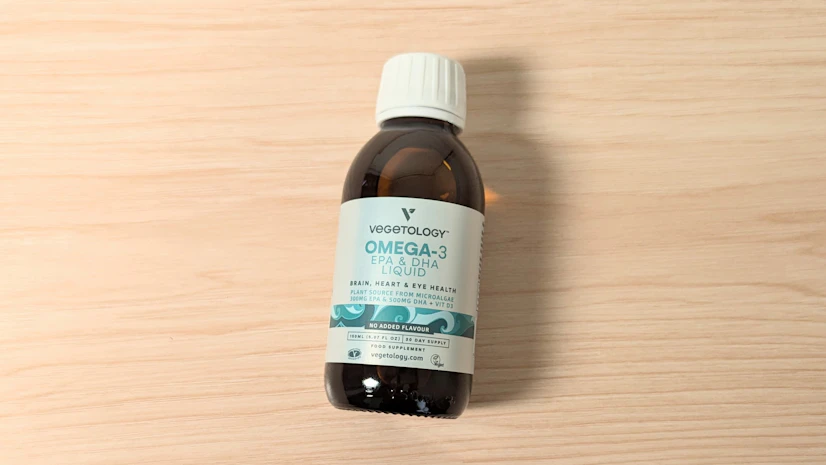
Photo by Innerbody Research
Pros
- Total omega-3 dose (835mg) is higher than most liquid supplements
- Third-party tested
- Relatively flavorless
- Low up-front cost
- Ships worldwide
- 90-day satisfaction guarantee
Cons
- Oily (because it’s straight oil)
- Shipping may take longer for non-U.K. residents
- 40cal per serving
With 300mg EPA and 500mg DHA, Vegetology is a more general supplement geared toward helping vegans reach their minimum thresholds. In that context, it’s a generously dosed product, although its total omega-3s fall short of what you can get with Doctor’s Best, BrainMD, or Sports Research.
Here, though, we have a third omega-3 fatty acid actually specified on the label. It’s docosapentaenoic acid (DPA), which is relatively scarce in dietary sources.46 DPA may be key to helping your body utilize its other omega-3s, as it “serves as a storage depot for EPA and DHA” per a 2015 review.47
The Vegetology product we recommend is a liquid, so it ought to interest anyone who’d rather not swallow two enormous capsules every day. But being a liquid, it will impart a more noticeable taste than a capsule would. The problem here is less about the liquid’s flavor (which, in our case, was neutral since we got the unflavored variety) and more about the fact that it’s delivered via oil. Therefore, it tastes (and feels) like oil. Every teaspoon adds 40cal to your daily intake, by the way, so keep that in mind.
Pricing and returns
Vegetology Omega-3 EPA & DHA Liquid is $27.99 as a one-time purchase and $19.59 on subscription. The high end is a little higher than BrainMD or Sports Research, and the low end is a little lower.
Vegetology is based in the United Kingdom, so shipping times to the United States may take longer compared to our other recommendations. Even so, the company has a great return policy: a satisfaction guarantee with a 90-day return window, which puts it on par with Doctor’s Best in the customer convenience regard.
Norsan Omega-3 Alga Gummies
Best gummies

Photo by Innerbody Research
Pros
- Total omega-3 dose (800mg) is higher than most gummy supplements
- Tastes great
- Bundling options are available
- Free shipping
Cons
- Large four-gummy serving size
- High per-serving cost
- Awkward serving count (45 gummies and 11.25 servings per pack)
- No direct subscriptions
- Very soft texture, should be handled delicately
- Does not provide test results
Norsan is perhaps better known for its ultra-high-dose omega-3 capsules, but its Alga Gummies are more moderately dosed. At 220mg EPA and 440mg DHA, they’re the tastier alternative to Vegetology’s liquid supplement. Plus, we should mention, an 800mg total omega-3 quantity is significantly higher than what most vegan omega-3 gummies provide.
When we say tastier, we mean they’re downright tasty. Tutti frutti–flavored, they’re like miniature gelatin desserts with a creamy texture. If we have any gripes about said texture, it’s that it’s maybe too soft, such that a gummy could easily break apart as you tear it out of its blister pack. Still, our testers had a much more pleasant experience sampling Norsan than they did Vegetology, so much so that one of them called over their partner and said, “Hey, you gotta try this.”
Pricing and returns
One pack of Norsan Omega-3 Alga Gummies costs $33.00. No direct subscriptions, but are bulk options: two packs for $62.70 ($31.35 per), and three packs for $89.10 ($29.70 per). The up-front price isn’t that much more than Doctor’s Best, BrainMD, Sports Research, or Vegetology.
The per-serving cost, however, is way higher. Each pack of Alga contains 45 gummies, and a serving size is four gummies. So you get very few servings per pack, and they don’t even divide down to a whole number. If you’re taking them as a daily supplement, you’ll need the three-pack bulk to make it through a month, in which case Norsan is effectively the most expensive product in this guide.
At least shipping is free. We wish the return period were longer, but 30 days is fairly standard, and it applies to opened products.
Micro Ingredients Vegan Omega-3 Algae Oil
Budget pick

Photo by Innerbody Research
Pros
- 660mg dose of omega-3s is sufficient to meet minimum thresholds
- Only $0.34 per serving (the lowest per-serving cost in this guide)
- Third-party tested
- Very small capsules
- Free returns
Cons
- Lowest overall omega-3 dose in this guide
- No direct subscriptions
- Does not provide test results
- Opened items are nonrefundable
- Return policy applies only to U.S. orders
Rounding out our recommendations is our budget pick, Micro Ingredients Omega-3 Algae Oil. Don’t let the name mislead you: we’re talking about softgel capsules, not a liquid. Very small capsules, at that. They’re maybe one-third the size of a Doctor’s Best, BrainMD, or Sports Research capsule. You have to take three caps per serving, but each one goes down noticeably easier than any of the capsule brands we just named.
The total omega-3 dose is lower than anything else in this guide, but at 660mg, it’s plenty to get you across the 250–500mg threshold recommended by the EFSA.29 Also, like Vegetology, it contains DPA, so you have that added potential benefit.47
Pricing and returns
Micro Ingredients doesn’t do subscriptions (not at this time, at least), but it does specialize in cost-effective supplements. For the Vegan Omega-3 Algae Oil capsules, you pay $26.99 for 80 servings, which factors down to just $0.34 per serving. The base price may be about equal to BrainMD, Sports Research, and Vegetology, but the per-serving cost is significantly lower.
The return window is only the standard 30-day affair, but the policy applies to opened items, as with Norsan.
FAQ about vegan omega-3s
Sources
Innerbody uses only high-quality sources, including peer-reviewed studies, to support the facts within our articles. Read our editorial process to learn more about how we fact-check and keep our content accurate, reliable, and trustworthy.
National Institutes of Health Office of Dietary Supplements. (2025). Omega-3 fatty acids: Fact sheet for health professionals. U.S. Department of Health & Human Services.
Sinclair, A. J., Wang, Y., & Li, D. (2022). What is the evidence for dietary-induced DHA deficiency in human brains? Nutrients, 15(1), 161.
Burns-Whitmore, B., et al. (2019). Alpha-linolenic and linoleic fatty acids in the vegan diet: Do they require dietary reference intake/adequate intake special Consideration? Nutrients, 11(10), 2365.
Key, T. J., Papier, K., & Tong, T. Y. (2021). Plant-based diets and long-term health: Findings from the EPIC-Oxford study. The Proceedings of the Nutrition Society, 81(2), 190-198.
Parke, M. A., et al. (2021). Diet and skin barrier: The role of dietary interventions on skin barrier function. Dermatology Practical & Conceptual, 11(1), e2021132.
Flores-Balderas, X., et al. (2023). Beneficial effects of plant-based diets on skin health and inflammatory skin diseases. Nutrients, 15(13), 2842.
Murphy, R., et al. (2021). Association of omega-3 levels and sleep in U.S. adults, National Health and Nutrition Examination Survey, 2011-2012. Sleep Health, 8, 294-297.
Lavialle, M., et al. (2008). An (n-3) polyunsaturated fatty acid–deficient diet disturbs daily locomotor activity, melatonin rhythm, and striatal dopamine in Syrian hamsters. The Journal of Nutrition, 138(9), 1719-1724.
Yokoi-Shimizu, K., Yanagimoto, K., & Hayamizu, K. (2022). Effect of docosahexaenoic acid and eicosapentaenoic acid supplementation on sleep quality in healthy subjects: A randomized, double-blinded, placebo-controlled trial. Nutrients, 14(19).
Wei, B., et al. (2023). The relationship of omega-3 fatty acids with dementia and cognitive decline: Evidence from prospective cohort studies of supplementation, dietary intake, and blood markers. The American Journal of Clinical Nutrition, 117(6), 1096-1109.
Dighriri, I. M., et al. (2022). Effects of omega-3 polyunsaturated fatty acids on brain functions: A systematic review. Cureus, 14(10), e30091.
Morgese, M. G., et al. (2016). Lifelong nutritional omega-3 deficiency evokes depressive-like state through soluble beta amyloid. Molecular Neurobiology, 54(3), 2079-2089.
Liao, Y., et al. (2019). Efficacy of omega-3 PUFAs in depression: A meta-analysis. Translational Psychiatry, 9(1), 190.
Kris-Etherton, P. M., et al. (2002). Fish consumption, fish oil, omega-3 fatty acids, and cardiovascular disease. Circulation, 106(2).
Manson, J. E., et al. (2019). Marine n-3 fatty acids and prevention of cardiovascular disease and cancer. The New England Journal of Medicine, 380(1), 23-32.
Di Nicolantonio, J. J., & O’Keefe, J. (2019). Importance of maintaining a low omega-6/omega-3 ratio for reducing platelet aggregation, coagulation, and thrombosis. Open Heart, 6(1), e001011.
Geppert, J., et al. (2005). Docosahexaenoic acid supplementation in vegetarians effectively increases omega-3 index: A randomized trial. Lipids, 40(8), 807.
Harris, W. S. (2014). Achieving optimal n–3 fatty acid status: The vegetarian’s challenge ... or not. The American Journal of Clinical Nutrition, 100, 449S-452S.
U.S. Food & Drug Administration. (2020). GRAS notice No. GRN 000913. FDA.
Fedorova-Dahms, I., et al. (2011). Safety evaluation of algal oil from Schizochytrium sp. Food and Chemical Toxicology, 49(1), 70-77.
Matulka, R. A., et al. (2021). Safety evaluation of odd-chain fatty acid algal oil. Food and Chemical Toxicology, 156, 112444.
Fatkin, D., Cox, C. D., & Martinac, B. (2022). Fishing for links between omega-3 fatty acids and atrial fibrillation. Circulation, 145(14).
National Center for Complementary and Integrative Health. (n.d.) 5 things to know about omega-3s for heart disease. NCCIH.
Memorial Sloan Kettering Cancer Center. (2025). Omega-3. MSK.
Demain, J. G. (2023). Fish oil safety in a shellfish allergic patient. American Academy of Allergy, Asthma & Immunology.
Mark, B. J., Beaty, A. D., & Slavin, R. G. (2008). Are fish oil supplements safe in finned fish-allergic patients? Allergy and Asthma Proceedings, 29(5), 528-529.
Alzheimer’s Drug Discovery Foundation. (2015). Omega-3 fatty acids (DHA, EPA, and fish). ADDF.
Anderson, B. M., & Ma, D. W. (2009). Are all n-3 polyunsaturated fatty acids created equal? Lipids in Health and Disease, 8, 33.
EFSA Panel on Dietetic Products, Nutrition, and Allergies. (2012). Scientific opinion on the Tolerable Upper Intake Level of eicosapentaenoic acid (EPA), docosahexaenoic acid (DHA), and docosapentaenoic acid (DPA). EFSA Journal, 10(7), 2815.
Siscovick, D. S., et al. (2017). Omega-3 polyunsaturated fatty acid (fish oil) supplementation and the prevention of clinical cardiovascular disease: A science advisory from the American Heart Association. Circulation, 135(15), e867-3884.
Skulas-Ray, A. C., et al. (2019). Omega-3 fatty acids for the management of hypertriglyceridemia: A science advisory from the American Heart Association. Circulation, 140(12), e673-e691.
Ginty, A. T., & Conklin, S. M. (2015). Short-term supplementation of acute long-chain omega-3 polyunsaturated fatty acids may alter depression status and decrease symptomology among young adults with depression: A preliminary randomized and placebo-controlled trial. Psychiatry Research, 229(1-2), 485-489.
Andriambelo, B., et al. (2023). New perspectives on randomized controlled trials with omega-3 fatty acid supplements and cognition: A scoping review. Ageing Research Reviews, 85, 101835.
Dzierzewski, J. M., et al. (2020). Sleep inconsistency and markers of inflammation. Frontiers in Neurology, 11, 564534.
Mekhora, C., Lamport, D. J., & Spencer, J. P. (2024). An overview of the relationship between inflammation and cognitive function in humans, molecular pathways, and the impact of nutraceuticals. Neurochemistry International, 181, 105900.
Yin, Y., et al. (2024). “Inflamed” depression: A review of the interactions between depression and inflammation and current anti-inflammatory strategies for depression. Pharmacological Research, 207, 107322.
American Heart Association. (2024). Inflammation and heart disease. AHA.
Zivkovic, A. M., et al. (2011). Dietary omega-3 fatty acids aid in the modulation of inflammation and metabolic health. California Agriculture, 65(3), 106.
Schmidt, E. B., et al. (1991). n-3 fatty acids and leukocyte chemotaxis: Effects in hyperlipidemia and dose-response studies in healthy men. Arteriosclerosis and Thrombosis: A Journal of Vascular Biology, 11(2).
Zhang, Y., Brown, R. E., Zhang, P., Zhao, Y., Ju, X., & Song, C. (2018). DHA, EPA, and their combination at various ratios differently modulated Aβ25-35-induced neurotoxicity in SH-SY5Y cells. Prostaglandins, Leukotrienes and Essential Fatty Acids, 136, 85-94.
Peanpadungrat, P. (2015). Efficacy and safety of fish oil in treatment of knee osteoarthritis. Journal of the Medical Association of Thailand, 98(Suppl. 3), S110-S114.
Berenbaum, F. (2013). Osteoarthritis as an inflammatory disease (Osteoarthritis is not osteoarthrosis!). Osteoarthritis and Cartilage, 21(1), 16-21.
Weiser, M. J., Butt, C. M., & Mohajeri, M. H. (2016). Docosahexaenoic acid and cognition throughout the lifespan. Nutrients, 8(2), 99.
Tully, A. M., et al. (2003). Low serum cholesteryl ester-docosahexaenoic acid levels in Alzheimer's disease: A case-control study. The British Journal of Nutrition, 89(4), 483-489.
Satizabal, C. L., et al. (2022). Association of red blood cell omega-3 fatty acids with MRI markers and cognitive function in midlife. Neurology, 99(23), e2572-e2582.
Von Schacky, C., & Harris, W. S. (2018). Why docosapentaenoic acid is not included in the Omega-3 Index. Prostaglandins, Leukotrienes & Essential Fatty Acids, 135, 18-21.
Byelashov, O. A., Sinclair, A. J., & Kaur, G. (2015). Dietary sources, current intakes, and nutritional role of omega-3 docosapentaenoic acid. Lipid Technology, 27(4), 79-82.

Copyright © Innerbody Research 1997 - 2025. All Rights Reserved.