Lumen Review
We test this handheld metabolism tracker to see whether its data-driven recommendations can really help people lose weight.

Photo by Innerbody Research
In 2024, while nearly 50% of Americans polled by Gallup reported being dissatisfied with their current weight, only around 27% stated that they were actively working to lose weight.1 It’s easy to see why so many people don’t bother trying, given all the hindrances to healthy eating and exercise that many of us contend with — socioeconomic disparities, car dependency, and the cultural, social, and generational factors that encourage us to make less-than-healthy food choices.2 3 4 Add to that the more personal obstacles, like genetics and age, and you have a veritable ecosystem working against your weight-loss efforts.
Against these challenges, most of us have only a vaguely defined path toward our weight goals — calories in and calories out, a directive that amounts to saying “go toward your destination.”
But it’s 2026, when practically everything is data-driven, so why not weight loss, as well? That’s the idea behind Lumen, a handheld metabolism tracker that can generate a personalized nutrition plan based on metabolic information derived from your breath. Sounds like something out of a sci-fi flick, but it’s based on a solid scientific concept, and it could very well give you the motivation needed to overcome the obstacles standing between you and your ideal weight.
Our Findings
Lumen is a mix of mostly good along with some frustrating. The good is that it’s a sound and accurate approach to determining your current metabolic status, as well as a generous source of nutritional recommendations for your weight-related health goals (as long as you have a premium membership). What people may find frustrating are a somewhat physically demanding learning curve at the start, a measurement process that’s a tad slow, and limitations to the usefulness of support channels. Lumen also comes with an ongoing subscription expense for the higher-level features, which is likely to put off some potential customers. But if you can tolerate these few negative qualities, it can be a valuable tool for navigating the complexities of macronutrition and weight loss.
Pros
- A portable form of a clinically used metabolic analysis device
- Supported by numerous clinical studies
- Daily nutrition goals shift according to breath readings, helping to foster a small-goal mindset
- The device is small enough to take on the go, especially in a bag
- With a premium subscription, the app multitasks as a calorie counter, recipe book, and nutritional library
- HSA/FSA eligible
- Two profiles can be registered to a single device on the Duo plan
- A discounted Lumen device can be purchased on the Duo plan, as well
- Available for both Android and iOS
- Syncs with Google Fit, Apple Health, Garmin, Oura, Whoop, Strava, MyFitnessPal, and many other apps
- Comes with a charging dock and protective travel pouch
Cons
- Ongoing subscription cost for the app’s advanced features
- The Duo plan comes at an additional cost
- Requires a specific breathing pattern that may be difficult for some users at the outset
- Return policy applies only to unopened products
- Email-only customer support
- Slow customer support turnaround
Jump to:
Why you should trust us
Over the past two decades, Innerbody Research has helped tens of millions of readers make more informed decisions about staying healthy and living healthier lifestyles.
We built our Lumen review first on the scientific research related to its underlying concepts: indirect calorimetry and the respiratory exchange ratio. Then we bought the thing and handed it off to our tester, someone who’s currently working to lose a few pounds. Our tester used the Lumen device and app daily for several weeks, kept records of their experience, and relayed the information to us. Meanwhile, our team continued to explore the scientific and commercial landscape that Lumen occupies so that we could weigh our testers’ results against clinical evidence and compare Lumen with similar metabolism-tracking devices.
Additionally, like all health-related content on this website, this guide was thoroughly vetted by one or more members of our Medical Review Board for accuracy and will continue to be monitored for updates by our editorial team.
How we evaluated Lumen
We based our assessment of Lumen on four criteria that we felt would most likely influence consumer decisions concerning an electronic health device:
- Effectiveness: How useful is Lumen for helping people achieve relevant health goals, like weight loss?
- Cost: What are the up-front and long-term expenses?
- User experience: How easy is it to get started with Lumen and maintain a routine?
- Customer support: If you encounter a technical problem, how quickly and easily can you get it resolved?
In the following sections, we summarize Lumen’s performance in each category.
Effectiveness
Lumen’s mechanism of action, so to speak, rests on the scientific principles of indirect calorimetry and the respiratory exchange ratio. The former is a method that measures the volumes and concentrations of oxygen and carbon dioxide in your breath, and the latter is a numerical value derived therefrom. From this measurement, you can determine the proportion of carbohydrates and fat that your body is currently using and, in turn, use the data to guide you toward health goals such as weight loss.5 6 In other words, Lumen is backed by sound scientific evidence.
So, the question that remains is: How accurate is the Lumen device?
The best answer is found in the multiple clinical studies that have been conducted with Lumen, such as:
- A 2021 validation study that found Lumen performed in a “comparable manner with a laboratory standard metabolic cart, providing the ability for real-time metabolic information for users under any circumstances”7
- A 2025 study on metabolic fuel utilization that validated Lumen’s measurements against standard indirect calorimetry equipment8
The first study was funded by MetaFlow, the company that makes Lumen, but the second was independent. Even with the self-funded study, the researchers employed reasonable methods, giving us little reason to doubt their conclusions.
Our conclusion, then, is that Lumen passes the effectiveness check from a technical standpoint (your health outcomes are on you to work toward). We deducted a point, however, because Lumen’s overall real-world effectiveness is unavoidably tied to other evaluative criteria, namely cost and user experience, where our impressions were less overwhelmingly optimistic.
Cost
Lumen doesn’t have any direct competitors on the commercial market, so we’re looking at its cost points in isolation.
Currently, Lumen costs $299 for the device and 12 months of premium app membership, which grants you access to all of the personalized features (nutrition plan, macro recommendations). Once your membership ends, you can retain your access by paying either $19/month or $159 per year. Without the premium membership, you have no access to advanced features such as nutrition planning, food logging, and granular insights: your access is limited to taking breath measurements for metabolic readings.
Sans membership, the cost isn’t bad. Lumen is an advanced health device, after all, one that replaces the alternative of visiting a clinic for a respiratory exchange ratio reading. Pricing at clinics is $50-$100 per visit by some estimates, so a few days’ worth of Lumen readings gives you the cost advantage in comparison.
The costs of subscription, though, are less than ideal. True, you don’t have to have a premium membership to get value out of Lumen — in fact, after a year of personalized plans and recommendations, you might have a good sense of how to interpret your readings yourself — but not everyone is self-regulatory enough to see results without external input.
User experience
You ought to face no hitch with any of Lumen’s premium-level features, like food logging, which is not only speedy but also linked to a large nutritional database. And the breath measurements are easy enough once you get the hang of it (and as long as you don’t have any respiratory contraindications).
The thing is, getting the hang of it involves a learning curve. Our tester, who considers their pulmonary fitness to be just fine, initially struggled to maintain long enough exhalations at the correct intensity. It took them at least 15 minutes of trying before they did it properly.
Each measurement requires patience, too. You can’t swoop right into one as soon as you initiate a session; you have to wait while the device “warms up,” which takes 35-40 seconds. While that isn’t a terribly long wait time, it can be a drag when you’ve just woken up, are preparing to eat a meal, or are trying to wind down in bed.
There’s also an issue with the interface of in-app chat support, in that the keyboard obscures the text field. As you type your messages to the support agent (or, more likely, the AI chatbot), you can’t see what you’re inputting. Plus, this is a mobile interface we’re talking about, so typing errors can be expected.
These negatives are small in the grand scheme, but they amount to a fair amount of frustration over time.
Customer support
For most people, the only way to reach Lumen customer support is through the website’s contact portal. Afterward, a team member is supposed to reply via email. We prefer that companies have multiple communication channels, so Lumen’s already not looking so great in this category.
At first, though, the Lumen team surprised us with how quickly they answered our questions. For example, when we notified them that we couldn’t register our device, they responded within hours to tell us about temporary technical problems that would soon be resolved. So, maybe we could be a little lenient about the mono-channel customer support?
No, because we soon needed to clarify confusion about a recently updated pricing model, and that’s when communication slowed to a drip. We sent multiple inquiries to the team, and for several days the only responses we received were automated forms telling us not to send additional support requests while an open ticket was in place. Not until the fourth business day did we receive a proper answer to our question. At least it was a satisfactory answer.
Technically, premium Lumen members (i.e., anyone who purchases Lumen and has an active subscription) have a second pathway to customer support, but it’s only an AI chatbot accessible through the app. Also, we found it less than helpful. When we asked it about the current pricing, it only kept repeating that “the price of a new Lumen device includes a one-time payment.”
Here’s the kicker. The app’s chat feature is called “Talk to a Lumen expert,” so we figured requesting a human representative would escalate the line of inquiry up to a real person who’d chat with us. What it actually did was submit another ticket into Lumen’s email support system.
What is the Lumen metabolism tracker?
Lumen is a device that analyzes your breath to determine whether you’re burning predominantly carbohydrates or fat at the time of measurement. The business end of the device is a nozzle through which you inhale and exhale, and the other side is ventilated to let your breath pass through.
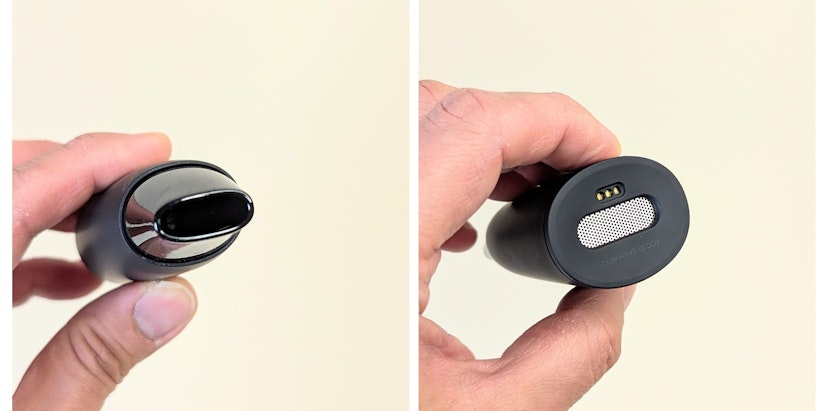
Photo by Innerbody Research
You take at least one Lumen reading per day, as soon as you wake up. Additional readings are optional, but they can help you better understand how your body responds to certain macronutrients. Lumen offers multiple situational recommendations:
- Pre-workout
- Post-workout
- Pre-meal (can guide your next food choice)
- Post-meal (reveals how your body has responded to your most recent food choice)
- Fasting (helps you determine your ideal fasting window)
- Bedtime
- Custom (a situation specific to your lifestyle — e.g., pre- or post-drink, perhaps)
Each reading requires that you open the linked mobile app and follow the on-screen instructions. The process involves inhaling for 4sec, holding your breath for 10, and exhaling for 6. The device then transmits your breath data to the mobile app, which displays your metabolic data on a scale of 1-5:
- 1-2: Your body is primarily burning fat.
- 3: Your body is burning a roughly equal proportion of fat and carbohydrates.
- 4-5: Your body is primarily burning carbohydrates.
If you have a premium membership, the app generates a personalized nutrition plan based on your results, which includes recommended macros (carbohydrates, protein, fat) and recipes.
The nutrition plan isn’t static. It can change from day to day, depending on your readings. For example, on a day that you’re burning predominantly carbohydrates, you might be limited to just 90g of carbs for the day, but the next day should allow you a more generous quantity if you’re burning a higher proportion of fat.
After two weeks of readings, you should receive a Flex score, a value that “tracks your progress to metabolic flexibility.” A higher score (which is what you want) indicates that your body can more easily switch between burning carbs and burning fat based on their availability, rather than burning carbs by default and storing excess energy in fat cells.
Metabolic flexibility is a real scientific concept, by the way, one that can be measured via indirect calorimetry.9 Speaking of ...
The science behind Lumen: Metabolism and indirect calorimetry
Dietary metabolism is the process by which your body converts food into energy. This process deals in three principal substances (formally called substrates):10
- Carbohydrates
- Lipids (fat)
- Amino acids (protein)
During digestion, each substrate undergoes combustion, resulting in a specific ratio between the oxygen (O2) consumed by the body and carbon dioxide (CO2) produced.11 This unique gaseous cocktail is then carried on your breath.
In a clinic, a gold-standard methodological tool called indirect calorimetry can measure your breath to provide a precise reading of its O2:CO2 proportions.12 The results are expressed as a respiratory exchange ratio.
Historically, indirect calorimetry has been relegated to clinical settings: to obtain a measurement, you had to visit a hospital and be hooked up to a machine via oxygen mask. Lumen, however, condenses the calorimetry equipment into a handheld version about the size of a kitchen knife handle.

Photo by Innerbody Research
Several studies, including clinical trials, have validated either Lumen’s accuracy compared with traditional indirect calorimetry or its utility for supporting users in their metabolic health goals (e.g., weight loss, prediabetes management).7 13 14
These studies were funded by MetaFlow, Lumen’s parent company, but at least one independent research team verified Lumen’s accuracy against standard indirect calorimetry equipment. Their findings give us reason to trust the broad validity of the self-funded research.
Lumen’s uses and benefits
For many users, Lumen’s usefulness rests in its ability to provide personalized nutrition recommendations based on your current metabolic status. Thus, it can potentially provide benefits for people who are striving for any of the following health goals:
- Weight loss: “Weight reduction programs in people with overweight or obesity can be informed by indirect calorimetry,” say the authors of a 2024 study.6 That’s because it allows you to adjust your diet according to your metabolic needs, helping you to prevent overconsumption of the substrates that would work against your weight-loss efforts.
- Diabetes management: With diabetes, one must carefully balance their carb and fat intake to keep their blood sugar levels in balance.15 Failure to do so can lead to serious health complications, including but not limited to seizures, shortness of breath, loss of consciousness, and death.16 17
- Improved physical performance: Say that you’re training for an athletic event, like a marathon, which calls for a particular ratio of carbs and fats.18 Indirect calorimetry, via Lumen, would allow you to determine whether you’re hitting your macros and therefore optimize your training regimen.
Remember, though, that personalized recommendations are locked behind a premium membership. If you’d rather not pay an ongoing subscription fee, Lumen’s capabilities are limited to revealing whether you’re burning predominantly carbs or fat at a given time. If you know what to do with that information, then it’s all you need. But if you don’t, Lumen may have limited utility.
What’s it like to use Lumen?
Between the device, app, and website, Lumen presents a multifaceted user experience (UX). Apart from the breath readings, the useful features are locked behind a premium subscription. Some of those added features (e.g., the app’s social media “Community” tab), weren’t especially compelling for our tester, though we can also see how users might appreciate them. But most of Lumen’s premium features are integral to its utility as a health tool.
In these sections, we discuss the UX elements that we believe will have the greatest bearing on a consumer’s impression.
In-the-box accessories
Besides the Lumen device itself, the box includes two accessories:
- A charging dock (with cable)
- A carry pouch
The charging dock ensures that your device is neatly and securely positioned, so it isn’t lying messily on your desk and likely to roll off onto your unforgiving floor. The carry pouch is cushioned yet low-profile, allowing you to throw Lumen into a bag or pocket without fear of damaging it. These are small inclusions, but thoughtful ones.
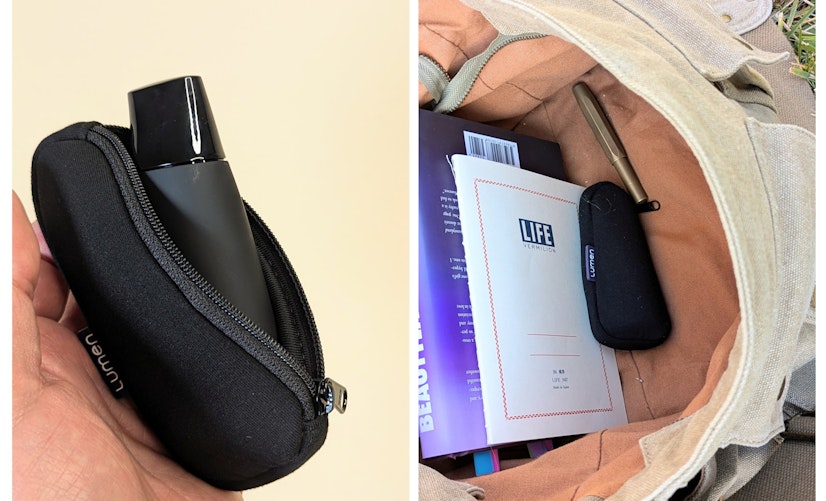
Photo by Innerbody Research
Getting started
Lumen’s start-up process is simple enough — questions about your health focus and medical history — until the app moves you into the required breathing routine.
For Lumen to get an accurate metabolic reading, you need to breathe out of and into the device in a specific pattern:
- Inhale from the device: 4sec
- Hold your breath away from the device: 10sec
- Exhale into the device: 6sec
At steps 1 and 3, you need to be breathing consistently at a certain strength. Too hard or too soft, and you’ll be prompted to try again.
Insider Tip: The measurements are visually guided in the app. As you take a measurement, a ball on the screen rises according to the strength of your exhalation or inhalation. You want it to rise only enough that it occupies a circle in the center of the screen.
The pattern by itself isn’t a big deal. Neither is the strength bit, in isolation. But when you combine them in a single go, you might soon start questioning your respiratory fitness. Our tester, for instance, found themselves running out of air before they could complete an inhale for the required duration, at the required strength. Ultimately, it was a 15-minute ordeal (excluding breaks to keep from hyperventilating) before they could obtain proper readings.
To be fair, once they grew accustomed, the breathing requirements ceased to be a challenge. But we’re talking about someone without any serious pulmonary shortcomings. It’s easy to imagine what health concerns would contraindicate someone from using Lumen (more on that under “Who is Lumen for?”).
Warming up the device
Here’s another drag. Every time you start up your Lumen device (i.e., realistically, every time you take a measurement), the app needs to “warm it up.” We reckon this means “reestablish synchronization.”
That’s all well and good, except it takes some time. By our clock, it’s 35-40 seconds from the moment you initiate a session to the time that your device is ready to use in earnest. Not a terribly long wait, but enough that taking a measurement is by no means an in-and-out procedure.
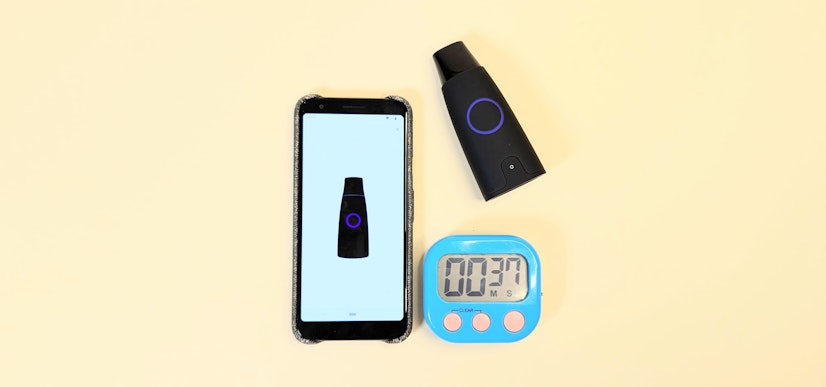
Photo by Innerbody Research
Recipes and cheat sheets
For premium members, Lumen cultivates a set of recipes based on their metabolic needs. We don’t mean just a few recipes, either. We’re talking dozens each for breakfast, lunch, dinner, and snacks.
There are also informational resources integrated into the Lumen app (again, for premium members). The most useful of them are the nutritional cheat sheets: comprehensive lists of foods appropriate for low-, medium-, and high-carb days.
These features may not be all that useful to people who are knowledgeable about macronutrition and cooking, but they could certainly be a boon to anyone needing a little extra guidance toward their health goals.
Food logging
In addition to tracking metabolism, the Lumen system also serves as a decent calorie counter and recipe book.
The food logging aspect of the app is connected to a nutritional database that easily retrieves accurate macros. You don’t have to be precise about your food descriptions, either. Our tester would input something like “Aldi salmon,” and the pertinent option would invariably be among the populated list. The food log also recalls your recently eaten food items, by default, so users who regularly eat the same foods (as our tester does) can complete their meal entries within seconds.
(By the way, this tester of ours was the same one who went hands-on with Nourish, a quality telehealth platform with an awful app. To them, in terms of food logging capability, Lumen versus Nourish is like comparing a Kawasaki motorcycle to a wobbly shopping cart.)
Support chat (app)
Premium Lumen members have access to a support chat function in their app. This feature, called “Talk to a Lumen expert,” is disappointing for two reasons:
- You’re not talking to a Lumen expert. You’re talking to an AI chatbot, and one that seems devoted to evading your question. If you ask to speak with a real person, the chatbot enters a ticket into Lumen’s email-based customer support system (discussed in the next section).
- You can’t see the text field. The keyboard interface covers it (see image below).

Photo by Innerbody Research
In other words, the chat support feature is a facade, only ostensibly better than the website’s customer support infrastructure.
Customer support (website)
Apart from the support chat, which is available only to premium members, the only way to reach Lumen’s customer support is through the contact page on its website. Submitting an inquiry creates a request ticket, to which the support team responds via email.
Our experience here started out positively (a sufficient response within hours, about a technical issue), but it soon devolved into a negative one. During our testing period, Lumen updated its pricing structure, but in a way that left us with questions. We channeled those questions through the contact page and waited. And waited. And were still waiting until this review was about to be published.
How much does Lumen cost?
Between the time we purchased the product and wrote this review, Lumen changed its pricing structure. Or, rather, it reverted to something of its previous structure. Whereas we were able to buy Lumen for $199 with one free month of premium membership, it now costs $299 and comes with 12 months of premium membership. (The product page claims this is a discount from the “normal” price of $599.)
| Previous pricing | Current pricing | |
|---|---|---|
| Device | $199 | $299 |
| Comes with ... | 1-month premium membership | 12-month premium membership |
| Additional cost (1 year) | $209 ($19/month for premium) | NA |
| Total cost of ownership (1 year) | $408 | $299 |
So, while the up-front cost is now higher, the total one-year cost of ownership is lower. Indeed, off the bat, buyers stand to receive 11 more months of app access than they previously had, for only half the cost they would’ve paid under a monthly subscription.
But after your 12-month membership ends, you’ll have to pay an ongoing fee to retain the advanced features (nutrition planning, food logging, insights). Per customer support, that’ll be $19 per month or $159 per year for individuals.
In other words, if you want your Lumen to be more than just a metabolic status reader, your expenses will be ongoing.
Insider Tip: Here’s a way to minimize both financial and opportunity costs. Because premium members have access to a wealth of personalized recommendations, you can use the default membership period to internalize as much as you can about the nutritional insights associated with specific Lumen reading scores. Then, when your membership ends, you can continue to apply the knowledge you’ve gained without having to pay more money than you have to.
Can you share your Lumen?
Under the Duo plan, two users can share a Lumen device under separate profiles. Lumen claims that you can buy Duo alongside a Lumen device, but we don’t see this option anywhere on the website. The only way we’ve found is to upgrade your membership after setting up your app account.
In terms of pricing, Duo costs either $38 per month or $240 per year. The monthly option is equal to two individual payment plans, so it nets you no savings. (Note: the Memberships page alleges that it’s $24 for a monthly subscription and $13 for a yearly one, but these are clearly mistakes on the part of whoever wrote the website copy.)
Alternatively, a second Lumen device can be purchased at a discounted $130 price point under a Duo plan. Because this option adds an unnecessary expense to the total cost, we recommend it only to those who can’t stomach sharing a mouthpiece with another person.
Who is Lumen for?
At the premium level, Lumen is potentially useful for anyone seeking data-driven guidance toward health goals such as weight loss and fitness training — perhaps especially in the case of:
Unrealistic expectations
For many people, fitness health goals are abstract in both purpose (“lose weight”) and duration (“before summer,” “eventually”). With Lumen, though, your health journey is presented just one day at a time, effectively reframing your goal as a more sustainable, piecemeal effort. As Dr. Marvin told Bob, it’s about baby steps, and that’s a healthy mindset to have. To quote a 2019 paper, it’s “wise advice ... to start behavior change with modest goals and reward even the smallest steps toward them.”19
Emotional eating
With emotional eating, self-regulation goes out the window in favor of instant gratification. But research suggests that having data-based input, as with Lumen, may help keep emotional eating in check. For example, in a 2024 study of people with obesity, the researchers found that “practical integration of biofeedback using indirect calorimetry ... improved self-regulation and [enhanced] weight loss.”20
Neurodivergence
Some neurodivergent populations, such as people with ADHD, tend not to be attuned to internal cues like hunger and satiety, so they might end up overeating or forgetting to eat.21 22 For them, having a visual cue, like a data reading, can be a “helpful starting point for making more mindful decisions.”23
Regardless of the user or use case, Lumen stands apart from general health trackers (e.g., MyFitnessPal, Lifesum) in that it operates descriptively, rather than prescriptively. That is, Lumen doesn’t base its recommendations solely on generally adequate health advice, but rather it responds to your body’s needs to generate insights.
In that way, it’s like having a guide in tow to set out each day’s course. Even if your destination is a straight shot in one direction, the guide can optimize the journey by accounting for every hill, valley, and obstruction, as well as your physical condition, the foreseeable terrain, the expected weather, and the distance already covered. Much more helpful than someone pointing and saying, “Go thataway.”
Lumen can be similarly useful without a premium membership, as long as you know what each metabolic reading score indicates.
Who should look elsewhere?
Lumen’s terms of use state that it isn’t suitable for anyone with “existing medical conditions such as diabetes, metabolic disorders, or lung disease.” The lung disease thing we understand — Lumen requires forceful, regulated breathing — but diabetes and metabolic disorders? Indirect calorimetry has been used clinically to help with such health conditions, so it’s a surprising prohibition.24
The same terms of use exclude people who are pregnant and those with specific dietary restrictions, two other populations who’ve been subject to studies with indirect calorimetry (including with Lumen itself).25 13 But these are more understandable, as typically few health products are confirmed safe to use during pregnancy, and some diets (e.g., the McDougall diet) wouldn’t jibe with elements of the Lumen system, like the Flex score.
Outside of the terms of use, there are other groups for whom Lumen would be a poor choice:
- Meal preppers: It’s impossible to prep a week’s worth of meals when you don’t know what your macro recommendations are beyond a day.
- People with other respiratory difficulties: Anyone who struggles to inhale or exhale for sustained periods may have trouble adhering to Lumen’s required breathing pattern.
- People who are doing well with other programs: If you’re already advancing toward your health goals with another program, you have no reason to add Lumen to your regimen. Our tester, for example, has been steadily losing weight through the Nourish telehealth platform. They appreciated trying Lumen for free, but they also don’t intend to buy it for themselves.
Are there any alternatives to Lumen?
Lumen doesn’t seem to have any direct competitors (i.e., other commercially available indirect calorimeters), but there are other, potentially more affordable options that serve roughly the same purposes. We discuss a few of them below.
Ketone breath sensors
Ketone breath sensors are designed to determine whether you’ve entered ketosis, a metabolic state in which your body burns fat instead of glucose.26 You’ve probably heard about ketosis in association with keto and other low-carb diets, and that’s exactly what these breath sensors are meant to support, so aside from “don’t eat too many carbohydrates,” they won’t give you any specific recommendations as to carb intakes.
With something like the Keyto Key to Health, which costs roughly as much as a year of Lumen, you still get a personalized nutrition plan and insights, but research casts some doubt on how accurate such devices are.27
Continuous glucose monitors (CGMs)
A CGM is a small device that attaches to an area of fatty tissue, like the back of the upper arm. Though CGMs are meant specifically to help people with diabetes manage their blood sugar levels, they are used for general weight loss guidance as well.28
There are platforms, such as Nutrisense, that base personalized nutrition plans and dietitian coaching on CGM data, though at a cost starting at $179 per month.
Other health-tracking apps
For the more self-regulatory among us, basic health-tracking apps, like MyFitnessPal, are more than enough to maintain a calorie deficit for sustained weight management. They also typically cost much less than systems such as Lumen and Keyto.
A dietitian
A dietitian can give you regular feedback on your diet and lifestyle to help you reach your health goals. The feedback isn’t as regular as you get from a tech-based solution like Lumen, but it’s no less personalized or valuable. Some people (e.g., our tester, who has lost significant weight using the dietitian telehealth platform Nourish) would argue that a dietitian’s input is even better than what you can get from a device.
Lumen FAQ
Sources
Innerbody uses only high-quality sources, including peer-reviewed studies, to support the facts within our articles. Read our editorial process to learn more about how we fact-check and keep our content accurate, reliable, and trustworthy.
Brenan, M. (2024). 43% of Americans say they are overweight; 55% want to slim down. Gallup.
Anekwe, C. V., et al. (2020). Socioeconomics of obesity. Current Obesity Reports, 9(3), 272-279.
Lee, A., Cardel, M., & Donahoo, W. T. (2019). Social and environmental factors influencing obesity. Endotext [Internet].
Yang, J., et al. (2025). Perceived motivators and barriers to consuming a plant-based diet: A qualitative research study. BMC Nutrition, 11, 108.
Delsoglio, M., Achamrah, N., Berger, M. M., & Pichard, C. (2019). Indirect calorimetry in clinical practice. Journal of Clinical Medicine, 8(9), 1387.
Van Dessel, K., et al. (2024). Basal metabolic rate using indirect calorimetry among individuals living with overweight or obesity: The accuracy of predictive equations for basal metabolic rate. Clinical Nutrition ESPEN, 59, 422-435.
Lorenz, K. A., Yeshurun, S., Aziz, R., Ortiz-Delatorre, J., Bagley, J. R., Mor, M., & Kern, M. (2021). A handheld metabolic device (Lumen) to measure fuel utilization in healthy young adults: Device validation study. Interactive Journal of Medical Research, 10(2), e25371.
Hayes, A. M., et al. (2025). Role of habitual diet in metabolic fuel utilization and metabolic flexibility, evidence in Kenyan and U.S. cohorts. European Journal of Clinical Nutrition, 1-9.
Goodpaster, B. H., & Sparks, L. M. (2017). Metabolic flexibility in health and disease. Cell Metabolism, 25(5), 1027-1036.
López de Nava, A. S., & Raja, A. (2022). Physiology, metabolism. StatPearls [Internet].
Mtaweh, H., et al. (2018). Indirect calorimetry: History, technology, and application. Frontiers in Pediatrics, 6, 257.
Moonen, H. P. F. X., Beckers, K. J. H. & Van Zanten, A. R. H. (2021). Energy expenditure and indirect calorimetry in critical illness and convalescence: Current evidence and practical considerations. Journal of Intensive Care, 9, 8.
Roberts, J., et al. (2022). The efficacy of a home-use metabolic device (Lumen) in response to a short-term low and high carbohydrate diet in healthy volunteers. Journal of the International Society of Sports Nutrition, 20(1).
Buch, A., et al. (2023). The effects of metabolism tracker device (Lumen) usage on metabolic control in adults with prediabetes: Pilot clinical trial. Obesity Facts, 16(1), 53-61.
American Diabetes Association. (n.d.). Understanding carbs. ADA.
Mayo Clinic. (2025). Diabetic hypoglycemia. Mayo Clinic.
Mayo Clinic. (2025). Hyperglycemia in diabetes. Mayo Clinic.
Johns Hopkins Medicine. (n.d.). Runner's diet. Johns Hopkins Medicine.
Berkman, E. T. (2018). The neuroscience of goals and behavior change. Consulting Psychology Journal, 70(1), 28-44.
M. Lim, J. Z., et al. (2025). Efficacy of providing energy expenditure information to guide weight loss interventions in people with obesity: A randomized controlled trial. Clinical Obesity, 15(1), e12703.
Egbert, A. H., et al. (2018). Attention-deficit/hyperactivity disorder symptoms are associated with overeating with and without loss of control in youth with overweight/obesity. Childhood Obesity, 14(1), 50-57.
Cobbaert, L., et al. (2024). Neurodivergence, intersectionality, and eating disorders: A lived experience-led narrative review. Journal of Eating Disorders, 12, 187.
Today’s Dietitian. (2025). What RDs need to know about Lumen. Today’s Dietitian.
Gupta, R. D., et al. (2017). Indirect calorimetry: From bench to bedside. Indian Journal of Endocrinology and Metabolism, 21(4), 594-599.
Dal, N., & Tek, N. (2025). Energy expenditure in healthy pregnant women: A systematic review. Nutrition Reviews, 83(2), e223-e236.
Cleveland Clinic. (2022). Ketosis. Cleveland Clinic.
Alkedeh, O., & Priefer, R. (2021). The ketogenic diet: Breath acetone sensing technology. Biosensors, 11(1), 26.
Constantino, A. K. (2025). FDA approves first-ever glucose monitoring system for weight loss from Signos. CNBC.

Copyright © Innerbody Research 1997 - 2025. All Rights Reserved.