Parietooccipital Sulcus
Tim Taylor is a senior writer at Innerbody Research focusing on human anatomy and physiology. Tim earned both his Bachelor of Science degree in Biology and his Master's degree in Teaching from the University of Pittsburgh.

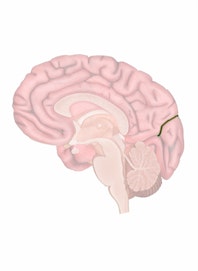
The parieto-occipital sulcus helps to form the border between the parietal and occipital lobes. The middle surface of the occipital lobe is marked by the calcarine and the parieto-occipital sulci, which form the boundaries of the wedge-shaped lobule called the cuneus.
Get the Innerbody Newsletter
Be the first to know about our latest reviews and biggest discounts
No spam! Your privacy is important to us.

Copyright © Innerbody Research 1997 - 2025. All Rights Reserved.
Innerbody Research does not provide medical advice, diagnosis, or treatment. You must consult your own medical professional.