Advanced Decay
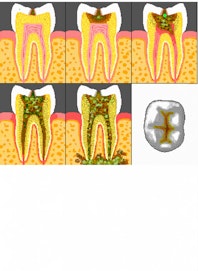
Advanced decay in teeth essentially has three causes: (1) bacteria in the mouth; (2) food for bacteria, and (3) susceptibility to decay such as heredity or age. Tooth decay is a gradual process, which ordinarily begins with the outer layer of enamel and then penetrates into the dentin and perhaps even on into the pulp. There is a general consensus that the process of decay begins with plaque formation. Plaque is food debris and their products that form a sticky, concentrated film that adheres to the teeth. Decay usually begins with a small-pitted area on the surface of the bone that enlarges to create a soft spot of partially dissolved enamel. This stage of decay is usually painless. The process is kept alive by the addition of sugar in our food that promotes bacterial growth. The longer this process is untreated, the greater the rate of destruction until the decay reaches the dentin, the main substance of the tooth. Dentin is part mineral and part living cells, and decay spreads much faster in dentin than in enamel, and will enlarge forming a cavity. Inflammation of the pulp of the tooth, which contains living cells, nerves, and blood vessels occurs and most likely at this stage, produces pain. Survival of the tooth is critical at this stage, and prolonged irritation or inflammation of the tooth may cause its death, or it may lead to abscess formation, a severely inflamed, hollow area under the root. This may require tooth extraction. Antibiotics are normally given before extraction and also to prevent bacteria from spreading through the blood stream causing serious illness. The best cure for tooth decay is prevention. The best way to reduce susceptibility to decay is through the use of fluorides. You can reduce the food supply for bacteria by reducing sugar in your diet. The build-up of plaque can be minimized considerably by frequent brushing and the use of dental floss. Regular, professional care is essential for longevity of tooth life.

Copyright © Innerbody Research 1997 - 2025. All Rights Reserved.