The Human Brain
Explore the brain's complex functions and composition with Innerbody's 3D anatomical model.
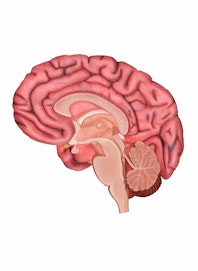
The brain is one of the most complex and magnificent organs in the human body. Our brain gives us awareness of ourselves and of our environment, processing a constant stream of sensory data. It controls our muscle movements, the secretions of our glands, and even our breathing and internal temperature. Every creative thought, feeling, and plan is developed by our brain. The brain's neurons record the memory of every event in our lives.
In fact, the human brain is so complicated that it remains an exciting frontier in the study of the body; doctors, psychologists, and scientists are continually endeavoring to learn exactly how the many structures of the brain work together intricately to create our powerful human mind.
Anatomy of the Brain
There are different ways of dividing the brain anatomically into regions. Let's use a common method and divide the brain into three main regions based on embryonic development: the forebrain, midbrain and hindbrain. Under these divisions:
- The forebrain (or prosencephalon) is made up of our incredible cerebrum, thalamus, hypothalamus and pineal gland among other features. Neuroanatomists call the cerebral area the telencephalon and use the term diencephalon (or interbrain) to refer to the area where our thalamus, hypothalamus and pineal gland reside.
- The midbrain (or mesencephalon), located near the very center of the brain between the interbrain and the hindbrain, is composed of a portion of the brainstem.
- The hindbrain (or rhombencephalon) consists of the remaining brainstem as well as our cerebellum and pons. Neuroanatomists have a word to describe the brainstem sub-region of our hindbrain, calling it the myelencephalon, while they use the word metencephalon in reference to our cerebellum and pons collectively.
Before exploring these different regions of the brain, first let's define the important types of cells and tissues that are the building blocks of them all.
Histology
Brain cells can be broken into two groups: neurons and neuroglia.
Neurons, or nerve cells, are the cells that perform all of the communication and processing within the brain. Sensory neurons entering the brain from the peripheral nervous system deliver information about the condition of the body and its surroundings. Most of the neurons in the brain's gray matter are interneurons, which are responsible for integrating and processing information delivered to the brain by sensory neurons. Interneurons send signals to motor neurons, which carry signals to muscles and glands.
Neuroglia, or glial cells, act as the helper cells of the brain; they support and protect the neurons. In the brain there are four types of glial cells: astrocytes, oligodendrocytes, microglia, and ependymal cells.
- Astrocytes protect neurons by filtering nutrients out of the blood and preventing chemicals and pathogens from leaving the capillaries of the brain.
- Oligodendrocytes wrap the axons of neurons in the brain to produce the insulation known as myelin. Myelinated axons transmit nerve signals much faster than unmyelinated axons, so oligodendrocytes accelerate the communication speed of the brain.
- Microglia act much like white blood cells by attacking and destroying pathogens that invade the brain.
- Ependymal cells line the capillaries of the choroid plexuses and filter blood plasma to produce cerebrospinal fluid.
The tissue of the brain can be broken down into two major classes: gray matter and white matter.
- Gray matter is made of mostly unmyelinated neurons, most of which are interneurons. The gray matter regions are the areas of nerve connections and processing.
- White matter is made of mostly myelinated neurons that connect the regions of gray matter to each other and to the rest of the body. Myelinated neurons transmit nerve signals much faster than unmyelinated axons do. The white matter acts as the information highway of the brain to speed the connections between distant parts of the brain and body.
Now let's begin exploring the main structures of our awesome human brain.
Hindbrain (Rhombencephalon)
Brainstem
Connecting the brain to the spinal cord, the brainstem is the most inferior portion of our brain. Many of the most basic survival functions of the brain are controlled by the brainstem.
The brainstem is made of three regions: the medulla oblongata, the pons, and the midbrain. A net-like structure of mixed gray and white matter known as the reticular formation is found in all three regions of the brainstem. The reticular formation controls muscle tone in the body and acts as the switch between consciousness and sleep in the brain.
The medulla oblongata is a roughly cylindrical mass of nervous tissue that connects to the spinal cord on its inferior border and to the pons on its superior border. The medulla contains mostly white matter that carries nerve signals ascending into the brain and descending into the spinal cord. Within the medulla are several regions of gray matter that process involuntary body functions related to homeostasis. The cardiovascular center of the medulla monitors blood pressure and oxygen levels and regulates heart rate to provide sufficient oxygen supplies to the body's tissues. The medullary rhythmicity center controls the rate of breathing to provide oxygen to the body. Vomiting, sneezing, coughing, and swallowing reflexes are coordinated in this region of the brain as well.
The pons is the region of the brainstem found superior to the medulla oblongata, inferior to the midbrain, and anterior to the cerebellum. Together with the cerebellum, it forms what is called the metencephalon. About an inch long and somewhat larger and wider than the medulla, the pons acts as the bridge for nerve signals traveling to and from the cerebellum and carries signals between the superior regions of the brain and the medulla and spinal cord.
Cerebellum
The cerebellum is a wrinkled, hemispherical region of the brain located posterior to the brainstem and inferior to the cerebrum. The outer layer of the cerebellum, known as the cerebellar cortex, is made of tightly folded gray matter that provides the processing power of the cerebellum. Deep to the cerebellar cortex is a tree-shaped layer of white matter called the arbor vitae, which means 'tree of life'. The arbor vitae connects the processing regions of cerebellar cortex to the rest of the brain and body.
The cerebellum helps to control motor functions such as balance, posture, and coordination of complex muscle activities. The cerebellum receives sensory inputs from the muscles and joints of the body and uses this information to keep the body balanced and to maintain posture. The cerebellum also controls the timing and finesse of complex motor actions such as walking, writing, and speech.
Midbrain (Mesencephalon)
The midbrain, also known as the mesencephalon, is the most superior region of the brainstem. Found between the pons and the diencephalon, the midbrain can be further subdivided into 2 main regions: the tectum and the cerebral peduncles.
- The tectum is the posterior region of the midbrain, containing relays for reflexes that involve auditory and visual information. The pupillary reflex (adjustment for light intensity), accommodation reflex (focus on near or far away objects), and startle reflexes are among the many reflexes relayed through this region.
- Forming the anterior region of the midbrain, the cerebral peduncles contain many nerve tracts and the substantia nigra. Nerve tracts passing through the cerebral peduncles connect regions of the cerebrum and thalamus to the spinal cord and lower regions of the brainstem. The substantia nigra is a region of dark melanin-containing neurons that is involved in the inhibition of movement. Degeneration of the substantia nigra leads to a loss of motor control known as Parkinson's disease.
Forebrain (Prosencephalon)
Diencephalon
Superior and anterior to the midbrain is the region known as the interbrain, or diencephalon. The thalamus, hypothalamus, and pineal glands make up the major regions of the diencephalon.
- The thalamus consists of a pair of oval masses of gray matter inferior to the lateral ventricles and surrounding the third ventricle. Sensory neurons entering the brain from the peripheral nervous system form relays with neurons in the thalamus that continue on to the cerebral cortex. In this way the thalamus acts like the switchboard operator of the brain by routing sensory inputs to the correct regions of the cerebral cortex. The thalamus has an important role in learning by routing sensory information into processing and memory centers of the cerebrum.
- The hypothalamus is a region of the brain located inferior to the thalamus and superior to the pituitary gland. The hypothalamus acts as the brain's control center for body temperature, hunger, thirst, blood pressure, heart rate, and the production of hormones. In response to changes in the condition of the body detected by sensory receptors, the hypothalamus sends signals to glands, smooth muscles, and the heart to counteract these changes. For example, in response to increases in body temperature, the hypothalamus stimulates the secretion of sweat by sweat glands in the skin. The hypothalamus also sends signals to the cerebral cortex to produce the feelings of hunger and thirst when the body is lacking food or water. These signals stimulate the conscious mind to seek out food or water to correct this situation. The hypothalamus also directly controls the pituitary gland by producing hormones. Some of these hormones, such as oxytocin and antidiuretic hormone, are produced in the hypothalamus and stored in the posterior pituitary gland. Other hormones, such as releasing and inhibiting hormones, are secreted into the blood to stimulate or inhibit hormone production in the anterior pituitary gland.
- The pineal gland is a small gland located posterior to the thalamus in a sub-region called the epithalamus. The pineal gland produces the hormone melatonin. Light striking the retina of the eyes sends signals to inhibit the function of the pineal gland. In the dark, the pineal gland secretes melatonin, which has a sedative effect on the brain and helps to induce sleep. This function of the pineal gland helps to explain why darkness is sleep-inducing and light tends to disturb sleep. Babies produce large amounts of melatonin, allowing them to sleep as long as 16 hours per day. The pineal gland produces less melatonin as people age, resulting in difficulty sleeping during adulthood.
Cerebrum
The largest region of the human brain, our cerebrum controls higher brain functions such as language, logic, reasoning, and creativity. The cerebrum surrounds the diencephalon and is located superior to the cerebellum and brainstem. A deep furrow known as the longitudinal fissure runs midsagittally down the center of the cerebrum, dividing the cerebrum into the left and right hemispheres. Each hemisphere can be further divided into 4 lobes: frontal, parietal, temporal, and occipital. The lobes are named for the skull bones that cover them. Frighteningly, these lobes are some of the areas of the brain attacked by Alzheimer's disease. If you want to find out your own genetic risk for late-onset Alzheimer's, learn more about DNA health testing and how you can discuss the results of this testing together with your healthcare provider.
The surface of the cerebrum is a convoluted layer of gray matter known as the cerebral cortex. Most of the processing of the cerebrum takes place within the cerebral cortex. The bulges of cortex are called gyri (singular: gyrus) while the indentations are called sulci (singular: sulcus).
Deep to the cerebral cortex is a layer of cerebral white matter. White matter contains the connections between the regions of the cerebrum as well as between the cerebrum and the rest of the body. A band of white matter called the corpus callosum connects the left and right hemispheres of the cerebrum and allows the hemispheres to communicate with each other.
Deep within the cerebral white matter are several regions of gray matter that make up the basal nuclei and the limbic system. The basal nuclei, including the globus pallidus, striatum, and subthalamic nucleus, work together with the substantia nigra of the midbrain to regulate and control muscle movements. Specifically, these regions help to control muscle tone, posture, and subconscious skeletal muscle. The limbic system is another group of deep gray matter regions, including the hippocampus and amygdala, which are involved in memory, survival, and emotions. The limbic system helps the body to react to emergency and highly emotional situations with fast, almost involuntary actions.
With so many vital functions under the control of a single incredible organ - and so many important functions carried out in its outer layers - how does our body protect the brain from damage? Our skull clearly offers quite a bit of protection, but what protects the brain from the skull itself? Read on!
Meninges
Three layers of tissue, collectively known as the meninges, surround and protect the brain and spinal cord.
- The dura mater forms the leathery, outermost layer of the meninges. Dense irregular connective tissue made of tough collagen fibers gives the dura mater its strength. The dura mater forms a pocket around the brain and spinal cord to hold the cerebrospinal fluid and prevent mechanical damage to the soft nervous tissue. The name dura mater comes from the Latin for "tough mother," due to its protective nature.
- The arachnoid mater is found lining the inside of the dura mater. Much thinner and more delicate than the dura mater, it contains many thin fibers that connect the dura mater and pia mater. The name arachnoid mater comes from the Latin for "spider-like mother", as its fibers resemble a spider web. Beneath the arachnoid mater is a fluid-filled region known as the subarachnoid space.
- As the innermost of the meningeal layers, the pia mater rests directly on the surface of the brain and spinal cord. The pia mater's many blood vessels provide nutrients and oxygen to the nervous tissue of the brain. The pia mater also helps to regulate the flow of materials from the bloodstream and cerebrospinal fluid into nervous tissue.
Cerebrospinal Fluid
Cerebrospinal fluid (CSF) --- a clear fluid that surrounds the brain and spinal cord --- provides many important functions to the central nervous system. Rather than being firmly anchored to their surrounding bones, the brain and spinal cord float within the CSF. CSF fills the subarachnoid space and exerts pressure on the outside of the brain and spinal cord. The pressure of the CSF acts as a stabilizer and shock absorber for the brain and spinal cord as they float within the hollow spaces of the skull and vertebrae. Inside of the brain, small CSF-filled cavities called ventricles expand under the pressure of CSF to lift and inflate the soft brain tissue.
Cerebrospinal fluid is produced in the brain by capillaries lined with ependymal cells known as choroid plexuses. Blood plasma passing through the capillaries is filtered by the ependymal cells and released into the subarachnoid space as CSF. The CSF contains glucose, oxygen, and ions, which it helps to distribute throughout the nervous tissue. CSF also transports waste products away from nervous tissues.
After circulating around the brain and spinal cord, CSF enters small structures known as arachnoid villi where it is reabsorbed into the bloodstream. Arachnoid villi are finger-like extensions of the arachnoid mater that pass through the dura mater and into the superior sagittal sinus. The superior sagittal sinus is a vein that runs through the longitudinal fissure of the brain and carries blood and cerebrospinal fluid from the brain back to the heart.
Physiology of the Brain
Metabolism
Despite weighing only about 3 pounds, the brain consumes as much as 20% of the oxygen and glucose taken in by the body. Nervous tissue in the brain has a very high metabolic rate due to the sheer number of decisions and processes taking place within the brain at any given time. Large volumes of blood must be constantly delivered to the brain in order to maintain proper brain function. Any interruption in the delivery of blood to the brain leads very quickly to dizziness, disorientation, and eventually unconsciousness.
Sensory
The brain receives information about the body's condition and surroundings from all of the sensory receptors in the body. All of this information is fed into sensory areas of the brain, which put this information together to create a perception of the body's internal and external conditions. Some of this sensory information is autonomic sensory information that tells the brain subconsciously about the condition of the body. Body temperature, heart rate, and blood pressure are all autonomic senses that the body receives. Other information is somatic sensory information that the brain is consciously aware of. Touch, sight, sound, and hearing are all examples of somatic senses.
Motor Control
Our brain directly controls almost all movement in the body. A region of the cerebral cortex known as the motor area sends signals to the skeletal muscles to produce all voluntary movements. The basal nuclei of the cerebrum and gray matter in the brainstem help to control these movements subconsciously and prevent extraneous motions that are undesired. The cerebellum helps with the timing and coordination of these movements during complex motions. Finally, smooth muscle tissue, cardiac muscle tissue, and glands are stimulated by motor outputs of the autonomic regions of the brain.
Processing
Once sensory information has entered the brain, the association areas of the brain go to work processing and analyzing this information. Sensory information is combined, evaluated, and compared to prior experiences, providing the brain with an accurate picture of its conditions. The association areas also work to develop plans of action that are sent to the brain's motor regions in order to produce a change in the body through muscles or glands. Association areas also work to create our thoughts, plans, and personality.
Learning and Memory
The brain needs to store many different types of information that it receives from the senses and that it develops through thinking in the association areas. Information in the brain is stored in a few different ways depending on its source and how long it is needed. Our brain maintains short-term memory to keep track of the tasks in which the brain is currently engaged. Short-term memory is believed to consist of a group of neurons that stimulate each other in a loop to keep data in the brain's memory. New information replaces the old information in short-term memory within a few seconds or minutes, unless the information gets moved to long-term memory.
Long-term memory is stored in the brain by the hippocampus. The hippocampus transfers information from short-term memory to memory-storage regions of the brain, particularly in the cerebral cortex of the temporal lobes. Memory related to motor skills (known as procedural memory) is stored by the cerebellum and basal nuclei.
Homeostasis
The brain acts as the body's control center by maintaining the homeostasis of many diverse functions such as breathing, heart rate, body temperature, and hunger. The brainstem and the hypothalamus are the brain structures most concerned with homeostasis.
In the brainstem, the medulla oblongata contains the cardiovascular center that monitors the levels of dissolved carbon dioxide and oxygen in the blood, along with blood pressure. The cardiovascular center adjusts the heart rate and blood vessel dilation to maintain healthy levels of dissolved gases in the blood and to maintain a healthy blood pressure. The medullary rhythmicity center of the medulla monitors oxygen and carbon dioxide levels in the blood and adjusts the rate of breathing to keep these levels in balance.
The hypothalamus controls the homeostasis of body temperature, blood pressure, sleep, thirst, and hunger. Many autonomic sensory receptors for temperature, pressure, and chemicals feed into the hypothalamus. The hypothalamus processes the sensory information that it receives and sends the output to autonomic effectors in the body such as sweat glands, the heart, and the kidneys.
Sleep
While sleep may seem to be a time of rest for the brain, this organ is actually extremely active during sleep. The hypothalamus maintains the body's 24 hour biological clock, known as the circadian clock. When the circadian clock indicates that the time for sleep has arrived, it sends signals to the reticular activating system of the brainstem to reduce its stimulation of the cerebral cortex. Reduction in the stimulation of the cerebral cortex leads to a sense of sleepiness and eventually leads to sleep.
In a state of sleep, the brain stops maintaining consciousness, reduces some of its sensitivity to sensory input, relaxes skeletal muscles, and completes many administrative functions. These administrative functions include the consolidation and storage of memory, dreaming, and development of nervous tissue.
There are two main stages of sleep: rapid eye movement (REM) and non-rapid eye movement (NREM). During REM sleep, the body becomes paralyzed while the eyes move back and forth quickly. Dreaming is common during REM sleep and it is believed that some memories are stored during this phase. NREM sleep is a period of slow eye movement or no eye movement, culminating in a deep sleep of low brain electrical activity. Dreaming during NREM sleep is rare, but memories are still processed and stored during this time.
Reflexes
A reflex is a fast, involuntary reaction to a form of internal or external stimulus. Many reflexes in the body are integrated in the brain, including the pupillary light reflex, coughing, and sneezing. Many reflexes protect the body from harm. For instance, coughing and sneezing clear the airways of the lungs. Other reflexes help the body respond to stimuli, such as adjusting the pupils to bright or dim light. All reflexes happen quickly by bypassing the control centers of the cerebral cortex and integrating in the lower regions of the brain such as the midbrain or limbic system.
READ THIS NEXT



-new-upper.jpg?auto=format,compress&fit=max&w=262&q=75)



Copyright © Innerbody Research 1997 - 2025. All Rights Reserved.