The Stomach, Gallbladder, and Pancreas
Explore the anatomy and roles of the stomach, gallbladder, and pancreas with Innerbody's interactive 3D model.
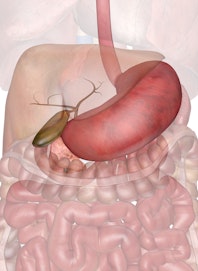
The stomach, gallbladder, and pancreas are three of the most important digestive organs in the human body. These organs work together to produce and store secretions that digest our food into its most basic building blocks. Once digested, these small molecules pass into our intestines to be absorbed and to feed our body's tissues. These three major organs also produce hormones that help to coordinate their functions and even lead to the feeling of fullness after consuming a meal.
Anatomy of the Stomach, Gallbladder, and Pancreas
Stomach
A hollow muscular organ about the size of 2 closed fists, the stomach is located inferior to the diaphragm and lateral to the liver on the left side of the abdominal cavity. The stomach forms part of the gastrointestinal tract between the esophagus and the duodenum (the first section of the small intestine).
The wall of the stomach contains several layers of epithelium, smooth muscle, nerves, and blood vessels. The innermost layer of the stomach is made of epithelium containing many invaginations known as gastric pits. The cells of the gastric pits produce gastric juice - an acidic mixture of mucus, enzymes and hydrochloric acid.
The hollow portion of the stomach serves as the storage vessel for food before it moves on to the intestines to be further digested and absorbed. At the inferior end of the stomach is a band of smooth muscle called the pyloric sphincter. The pyloric sphincter opens and closes to regulate the flow of food into the duodenum.
Gallbladder
The gallbladder is a 3-inch long pear-shaped sac located on the posterior border of the liver. Connected to the bile ducts of the liver through the cystic duct, the gallbladder receives bile transported from the liver for storage on a regular basis to prepare for the digestion of future meals. During digestion of a meal, smooth muscles in the walls of the gallbladder contract to push bile into the bile ducts that lead to the duodenum. Once in the duodenum, bile helps with the digestion of fats.
Pancreas
The pancreas is a 6-inch long heterocrine gland located inferior to the stomach and surrounded by the duodenum on its medial end. This organ extends laterally from the duodenum toward the left side of the abdominal cavity, where it tapers to a point.
The pancreas is considered a heterocrine gland because it has both endocrine and exocrine gland functions. Small masses of endocrine cells known as pancreatic islets make up around 1% of the pancreas and produce the hormones insulin and glucagon to regulate glucose homeostasis in the blood stream. The other 99% of the pancreas contains exocrine cells that produce powerful enzymes that are excreted into the duodenum during digestion. These enzymes together with water and sodium bicarbonate secreted from the pancreas are known as pancreatic juice.
Physiology of the Stomach, Gallbladder, and Pancreas
Digestion
The stomach, gallbladder, and pancreas work together as a team to perform the majority of the digestion of food.
- Food entering the stomach from the esophagus has been minimally processed --- it has been physically digested by chewing and moistened by saliva, but is chemically almost identical to unchewed food.
- Upon entering the stomach, each mass of swallowed food comes into contact with the acidic gastric juice, which contains hydrochloric acid and the protein-digesting enzyme pepsin. These chemicals begin working on the chemical digestion of the molecules that make up the food.
- At the same time, the food is mixed by the smooth muscles of the stomach wall to increase the amount of contact between the food and the gastric juice. The secretions of the stomach also continue the process of moistening and physically softening the food until the food becomes an acidic semi-liquid material known as chyme.
- At this point, the stomach begins to push the chyme through the pyloric sphincter and into the duodenum.
- In the duodenum, the bulk of digestion is completed thanks to the preparation of chyme by the stomach and the addition of secretions from the gallbladder and pancreas. Bile from the gallbladder acts as an emulsifier to break large masses of fats into smaller masses. Pancreatic juice contains bicarbonate ions to neutralize the hydrochloric acid of chyme. Enzymes present in the pancreatic juice complete the chemical digestion of large molecules that began in the mouth and stomach.
- The completely digested food is then ready for absorption by the intestines.
Storage
The stomach, gallbladder, and pancreas all function together as storage organs of the digestive system. The stomach stores food that has been ingested and releases it in small masses to the duodenum. The release of small masses of food at a time improves the digestive efficiency of the intestines, liver, gallbladder, and pancreas and prevents undigested food from making its way into feces.
As they are accessory organs of the digestive system, the gallbladder and pancreas have no food passing through them. They do, however, act as storage organs by storing the chemicals necessary for the chemical digestion of foods. The gallbladder stores bile produced by the liver so that there is a sufficient supply of bile on hand to digest fats at any given time. The pancreas stores the pancreatic juice produced by its own exocrine glands so that it is prepared to digest foods at all times.
Secretion
The stomach, gallbladder, and pancreas all share the common function of secretion of substances from exocrine glands. The stomach contains 3 different exocrine cells inside of its gastric pits: mucous cells, parietal cells, and chief cells.
- Mucous cells produce mucus and bicarbonate ion that cover the surface of the stomach lining, protecting the underlying cells from the damaging effects of hydrochloric acid and digestive enzymes.
- Parietal cells produce hydrochloric acid to digest foods and kill pathogens that enter the body through the mouth.
- Chief cells produce the protein pepsinogen that is turned into the enzyme pepsin when it comes into contact with hydrochloric acid. Pepsin digests proteins into their component amino acids.
The mixture of mucus, hydrochloric acid, and pepsin is known as gastric juice. Gastric juice mixes with food to produce chyme, which the stomach releases into the duodenum for further digestion.
The gallbladder stores and secretes bile into the duodenum to aid in the digestion of chyme. A mixture of water, bile salts, cholesterol, and bilirubin, bile emulsifies large masses of fats into smaller masses. These smaller masses have a higher ratio of surface area to volume when compared to large masses, making it easier for them to be digested.
The pancreas stores and secretes pancreatic juice into the duodenum to complete the chemical digestion of food that began in the mouth and stomach. Pancreatic juice contains a mixture of enzymes including amylases, proteases, lipases, and nucleases.
- Carbohydrates entering the small intestine are broken down into monosaccharides by enzymes such as pancreatic amylase, maltase, and lactase.
- Proteins in the duodenum are chemically digested into amino acids by pancreatic enzymes such as trypsin and carboxypeptidase.
- Pancreatic lipase breaks triglycerides into fatty acids and monoglycerides.
- The nucleic acids DNA and RNA are broken down by nucleases into their component sugars and nitrogenous bases.
Hormones
Several hormones are used to regulate the functions of the stomach, gallbladder, and pancreas. The hormones gastrin, cholecystokinin, and secretin are secreted by organs of the digestive system in response to the presence of food and change the function of the stomach, gallbladder, and pancreas. Our pancreas produces the hormones insulin and glucagon to affect the behavior of cells throughout the body.
Gastrin
Gastrin is a hormone produced by the walls of the stomach in response to the filling of the stomach with food. Food stretches the stomach walls and raises the normally acidic pH of the stomach. G cells in the gastric glands of the stomach respond to these changes by producing gastrin. G cells release gastrin into the blood where it stimulates the exocrine cells of the stomach to produce gastric juice. Gastrin also stimulates smooth muscle tissue of the gastrointestinal tract to increase the mixing and movement of food. Finally, gastrin relaxes the smooth muscles that form the pyloric sphincter, causing the pyloric sphincter to open. The opening of the pyloric sphincter allows food stored in the stomach to begin entering the duodenum for further digestion and absorption in the intestines.
Cholecystokinin (CCK)
Cholecystokinin, a hormone produced in the walls of the small intestine, is released into the bloodstream in response to the presence of chyme in the intestine that contains high levels of proteins and fats. Proteins and fats are more difficult for the body to digest than carbohydrates are, so CCK is important in making changes to the digestive system to handle these types of foods. CCK travels through the bloodstream to the stomach, where it slows the emptying of the stomach to give the intestines more time to digest the protein- and fat-rich chyme. CCK also stimulates the gallbladder and pancreas to increase their secretion of bile and pancreatic juice to improve the digestion of fats and proteins. Finally, CCK is detected by receptors in the satiety center of the hypothalamus that control the feeling of hunger. The satiety center reads the presence of CCK as an indication that the body is no longer hungry for food.
Secretin
Secretin is another hormone produced by the intestinal walls, but unlike CCK, it is produced in response to the acidity of chyme that the stomach releases into the duodenum. Secretin flows through the bloodstream to the stomach, where it inhibits the production of hydrochloric acid by parietal cells. Secretin also binds to receptors in the gallbladder and pancreas, stimulating them to secrete increased amounts of bile and pancreatic juice. Sodium bicarbonate present in pancreatic juice neutralizes the acidity of the chyme to prevent damage to the walls of the duodenum and provides a neutral pH environment for the digestion of chyme.
Insulin
Insulin is a hormone produced by the beta cells of the pancreatic islets of the pancreas. The pancreas produces insulin in response to the presence of high levels of glucose in the blood. Insulin stimulates cells, particularly in the liver and skeletal muscles, to absorb glucose from the blood and use it as an energy source or store it as glycogen. Insulin also stimulates adipocytes to absorb glucose to build triglycerides for energy storage. Our body produces higher levels of insulin following a meal in order to remove glucose molecules from the blood before they can reach high concentrations and become toxic to the body's cells.
Glucagon
Glucagon is a hormone produced by the alpha cells of the pancreatic islets of the pancreas. Glucagon acts as an antagonist to insulin by stimulating the release of glucose into the bloodstream to raise blood glucose levels between meals. Hepatocytes in the liver store glucose in large macromolecules known as glycogen. Glucagon binding to receptors on hepatocytes triggers the breakdown of glycogen into many glucose molecules, which are then released into the bloodstream.
READ THIS NEXT



Copyright © Innerbody Research 1997 - 2025. All Rights Reserved.