Dermatomes

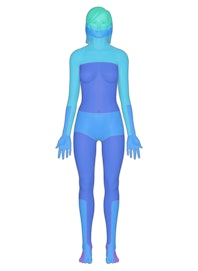
Dermatomes represent specific regions of nerve reception of sensory impulses. The peripheral nervous system will produce a pattern of skin innervated by cutaneous neurons of a certain spinal or cranial nerve. Dermatomes are located on the anterior body and the posterior body and are consecutive in the neck and torso regions. In the appendages, however, adjacent dermatome patterns overlap and the arrangement of the dermatomes is markedly different on the anterior portion of the body as opposed to the posterior aspect. The apparently uneven dermatome arrangement in the arm and leg areas can probably be attributed to the uneven rate of nerve growth into the limb buds. Actually, the dermatomes overlap only slightly.
The pattern of the dermatome is of major clinical significance when a physician wants to anesthetize a particular portion of the body. As certain areas of the body are much more sensitive than others, it is sometimes necessary to block more than one dermatome to produce a desired result. Because adjacent dermatomes overlap in the arms, legs, groin and buttocks areas, at least three spinal nerves must be blocked to achieve a loss of feeling in these regions. Abnormally functioning dermatomes provide important clues about injury to the spinal cord or specific spinal nerves. For example, if a dermatome is stimulated but no sensation is perceived, it can be inferred that the nerve to that specific dermatome has been injured.

Copyright © Innerbody Research 1997 - 2025. All Rights Reserved.