Eyes and Vision

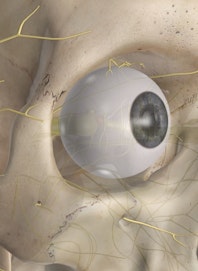
Our sensory organs for vision, the eyes are at the front of the head, but the actual visual sense is provided by areas of the brain at the back and sides. Seeing an object and recognizing it for what it is involves image processing by cells in the retina and brain. Three such types of cells are involved in this processing; some respond best to a clearly defined slit of light (or dark), others generally react to any location or orientation of the image, and some to specific features.
Before those signals ever reach the brain, however, they must be captured and translated into nerve signals by the various photoreceptor cells of the eye. There are two types of photoreceptor cells that, because of their shapes, are called rods and cones. Rods are sensitive enough to respond to a single photon, the basic unit of light, but together they create only one coarse, gray image, which is just adequate for seeing in poor light. Fine detail and color come from the cones, but they need a lot more light and work best in broad daylight. Inside the human eye, there are eighteen times more rods than cones --- arranged in such a way as to produce the best possible combination of night and day vision --- and all of them transmitting data to the optic nerve on the way to the brain.
In order to track these visual images within the field of vision, the eye must be capable of quick and extensive movement. For this, each eye is held in place by three pairs of taut, elastic muscles that constantly balance the pull of the others. The muscles of each eye work together to move the eyes in unison. Because of the constant tension in these muscles, they can move the eye very quickly, much faster than any other body movement. The eye muscles work together to carry out no less than seven coordinated movements and allow the eye to track many different kinds of moving objects. The first three movements (tremor, drift and flick) are the result of the constant, opposing muscle tension.
The result is what is generally treated as our primary sense organ. Naturally so, since our vision can pick out detail in the darkest night, yet at the same time the human eye can detect over 10,000,000 different colors!
READ THIS NEXT



-new-upper.jpg?auto=format,compress&fit=max&w=262&q=75)



Copyright © Innerbody Research 1997 - 2025. All Rights Reserved.