Oral Cavity (Cross-section View)

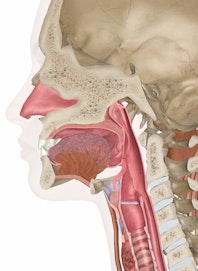
The first section of the mouth is known as the oral cavity, or the mouth cavity. This space is bordered in the front and to the sides by the two alveolar arches, which contain the teeth. Toward the back it is bordered by the isthmus of the fauces. The palate is the area at the top of the mouth and keeps the nasal cavity and mouth separate. There are two portions of the palate: the soft and hard palate. The soft palate is the back area of the palate. The hard palate is the front portion of the palate. The tongue is anchored to the floor of the mouth and slung at the rear from muscles attached to a spiky outgrowth at the base of the skull. The salivary glands are located in different areas of the mouth. These small glands are responsible for the production of saliva. The pharynx is in the back of the mouth and connects the mouth, nose and larynx
This entire structure is also called the mouth; the structures within the mouth allow us to taste and masticate (chew) food, to swallow food and drink, and to manipulate the air that comes up from the voice box so that we can form words.

Copyright © Innerbody Research 1997 - 2025. All Rights Reserved.